
The Nourishing Table · Evening Apothecary
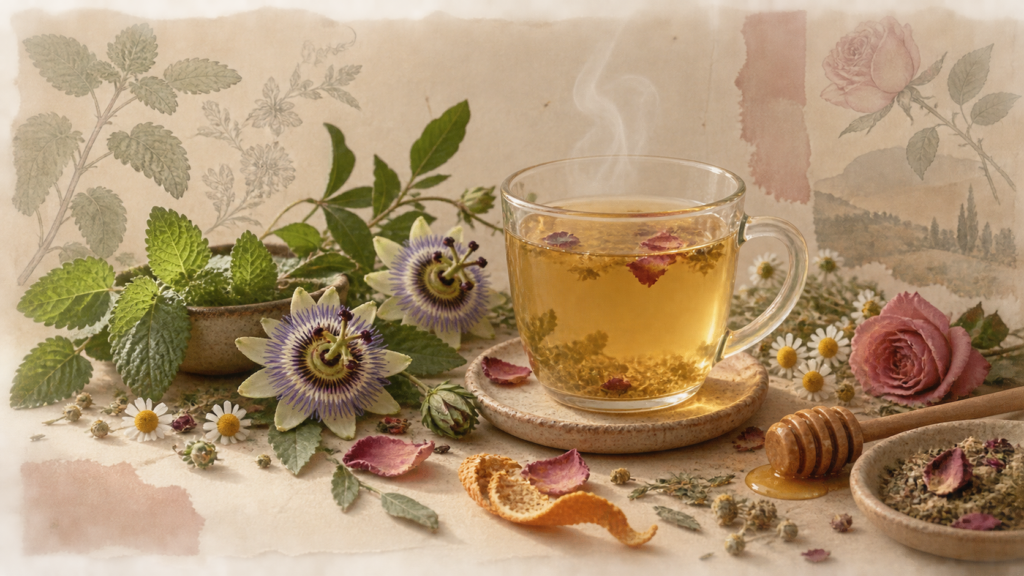
A soft floral blend for evenings when your body is ready to rest but your thoughts are still carrying the day.
Quiet Mind Tea combines lemon balm, passionflower, chamomile and rose petals with a curl of orange peel. The flavor is lightly floral, softly citrusy and pleasantly herbal—not heavy, syrupy or overly sweet.
This is less about forcing sleep and more about giving the evening a clear turning point. Measure the herbs, cover the cup while it steeps, put the phone down and let the warmth signal that the busy part of the day is ending.
What You’ll Need
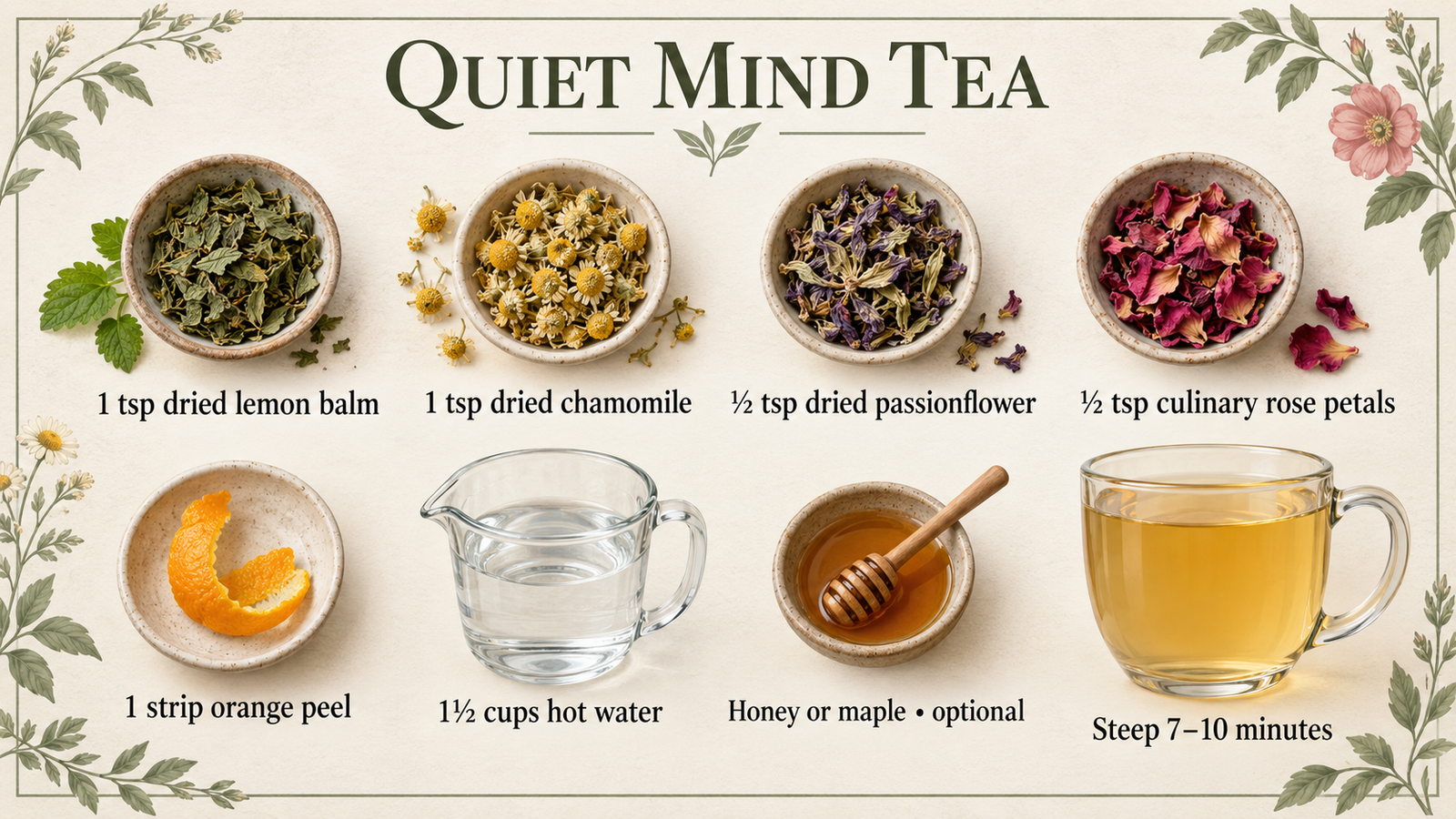
Ingredients
- 1 teaspoon dried lemon balm
- 1 teaspoon dried chamomile
- ½ teaspoon dried passionflower
- ½ teaspoon culinary-grade rose petals
- 1 strip orange peel
- 1½ cups hot water
- Honey or maple syrup, optional
Helpful tools
- A tea infuser, teapot or heat-safe jar
- A kettle
- A handled mug
- A small spoon
- A lid or saucer to cover the tea while it steeps
How to Make Quiet Mind Tea
Combine the herbs
Add the lemon balm, chamomile, passionflower, rose petals and orange peel to an infuser or teapot.
Add hot water
Pour over 1½ cups of hot water. The water should be freshly heated, but it does not need to boil aggressively.
Cover and steep
Cover the mug or pot and steep for 7–10 minutes. Covering helps keep the fragrant plant oils in your cup.
Strain and soften
Strain into a handled glass mug. Add a small amount of honey or maple syrup if desired, then sip warm.

What Each Herb Has Been Used For
Herbalists often build blends by giving each plant a role: one may soften tension, another brings aroma, and another rounds out the flavor. Here is what people, traditional apothecary practices and modern research say about this cup.
Lemon balm
Traditionally used for: nervous tension, restlessness, a low mood and digestive uneasiness that shows up during stressful days.
What research says: Lemon balm is often described as a mild calming herb. In a small randomized crossover trial, a standardized lemon balm extract increased self-rated calmness and reduced alertness during a laboratory stress task. The study used an extract rather than tea, but it supports why lemon balm remains popular in evening blends.
Passionflower
Traditionally used for: a busy mind, nervous restlessness and difficulty settling at bedtime.
What research says: Small human studies have explored passionflower for anxiety and sleep. A pilot randomized trial involving 36 adults with generalized anxiety found improvement with a passionflower extract over four weeks. NCCIH notes that limited research suggests possible help with anxiety and sleep, while larger studies are still needed.
Chamomile
Traditionally used for: winding down, digestive comfort and easing everyday tension before sleep.
What research says: Chamomile contains apigenin and other plant compounds that researchers have studied for calming and sleep-related effects. Results are still developing, but chamomile remains one of the most familiar caffeine-free bedtime teas. For a deeper look, visit our complete chamomile guide.
Rose petals
Traditionally used for: emotional comfort, gentle digestive support and fragrant self-care rituals across Persian, Middle Eastern and South Asian traditions.
What research says: Modern studies more often examine rose aroma, extracts or rose water than an everyday petal tea. In this recipe, culinary rose contributes soothing fragrance and turns an ordinary cup into a sensory ritual.
Orange peel
Traditionally used for: brightening digestive blends, lifting heavy herbal flavors and adding a familiar citrus aroma.
What it brings here: Orange peel contains aromatic oils and citrus flavonoids, but the small strip in this cup is mostly doing delicious work—balancing the floral herbs and making the tea smell fresh.
Honey or maple
Traditionally used for: making stronger herbs easier to sip and adding a sense of warmth and comfort.
What it brings here: A little sweetness rounds out passionflower’s earthy edge. Start with a small amount; rose and orange become easier to notice when the tea is not overly sweet.
Make It a Quiet Evening Ritual
Try drinking this tea 30–60 minutes before bed or whenever you are transitioning out of work mode. Dim one light, set your phone face down and choose one low-demand activity while the herbs steep: stretch, read two pages, fold laundry slowly, sit on the porch or talk to someone you trust.
It also works beautifully as a friend ritual. Brew a small pot, skip the pressure to host perfectly and let the tea be the activity. A quiet catch-up can be just as restorative as a solo night.

Ways to Adjust the Blend
If it tastes too earthy
Reduce the passionflower slightly, add a longer strip of orange peel or use a teaspoon of honey.
If you want more floral flavor
Add a few extra culinary rose petals, but keep them light; too much rose can taste perfumed.
If you want a simpler cup
Use lemon balm and chamomile alone. The blend will be softer and more familiar.
For a make-ahead blend
Mix the dried herbs in the same proportions and store away from heat, moisture and direct light. Add fresh orange peel when brewing.
Questions You Might Have
Will this tea make me sleepy?
Many people use these herbs as part of a bedtime routine, and the blend may feel relaxing. Responses vary, so try it on an evening when you do not need to drive or stay especially alert.
Can I drink it every night?
Occasional culinary tea use is different from concentrated extracts or supplements. If you want to use passionflower or a multi-herb blend regularly—especially with medicines—check with a pharmacist or qualified clinician.
Can I use tea bags?
Yes. Use plain chamomile and lemon balm bags, then add a small amount of correctly identified dried passionflower and culinary rose. Always purchase ingestible herbs from a reputable supplier.
Can I serve it cold?
Yes. Brew it at full strength, cool it and pour over ice. Add orange slices only when serving so the peel does not become bitter during storage.
Articles & References
- Attenuation of laboratory-induced stress after lemon balm extract — randomized crossover clinical trial indexed by PubMed.
- Passionflower in the treatment of generalized anxiety — pilot double-blind randomized controlled trial indexed by PubMed.
- Passionflower: Usefulness and Safety — National Center for Complementary and Integrative Health.
- Chamomile: Usefulness and Safety — National Center for Complementary and Integrative Health.
This article is for general educational purposes and is not medical advice.
Keep This One Close
Save or Share This Tea for a Quieter Evening
Screenshot the card, save it to your evening-routine folder or send it to the friend who needs a soft place to land this week.

The Sunday Soft Reset
A calmer start to your week.
Get Lifvyt’s weekly collection of gentle wellness reads, nervous-system resets and practical tools — plus the free 5-Minute Nervous System Reset Guide.
By signing up, you’ll receive the free guide and one gentle Lifvyt email each week. Unsubscribe anytime.