

Before you hunt for seven new recipes, start with the spinach, tortillas and half jar of salsa already waiting for a purpose. This simple paper meal plan gives those ingredients jobs, protects the busiest nights and keeps your grocery list pleasantly short.

This guide helps with planning; it cannot tell whether a specific food is safe. Keep your refrigerator at 40°F or below, chill perishables promptly and use official storage guidance when you are unsure. The USDA advises using most refrigerated cooked leftovers within three to four days.
The goal is not to assign a perfect dinner to every night. The goal is to make the next useful choice obvious—even on Wednesday, when the day has already used all its plot twists.
What “shop your kitchen first” actually means
You take a five-minute look through the refrigerator, freezer and pantry before choosing meals or opening a grocery app. Then you build a small plan around what needs using, what you already enjoy and how many dinners you will realistically eat at home.
This is consistent with the U.S. Environmental Protection Agency’s household food-waste guidance: check what you have, note what should be used soon and plan purchases around the meals you expect to make. USDA MyPlate also recommends using ingredients across more than one meal when planning for smaller households.
An anchor
A food that needs a clear job this week. Think spinach, thawed chicken, opened yogurt or the zucchini beginning its soft-launch into retirement.
A bridge ingredient
One ingredient prepared once and used in two different meals. Roasted peppers can go into a rice bowl tonight and tortillas tomorrow.
A meal formula
A flexible structure instead of a strict recipe: grain + protein + vegetable + sauce, or tortilla + filling + crunchy topping.
A flex night
A protected space for leftovers, freezer food, plans that change or a fully respectable sandwich. It keeps the plan from becoming homework.
What you need
- One sheet of paper or an open notebook
- A pen or pencil
- 20 minutes and a timer
- Your calendar for the next seven days
- A quick look inside the refrigerator
- A quick look inside the freezer and pantry
Optional: place a small tray or bin in the refrigerator for foods to use first. A simple visual cue works better than expecting yourself to remember that half cabbage exists.
The 20-minute paper meal plan, step by step
-
Minutes 0–3: mark the nights that are already spoken for
Draw seven lines and label them with the days. Add work shifts, late appointments, kids’ activities, dinner out and any night when cooking is unlikely.
Choose effort before choosing food. Mark each dinner night as:
- Green: 30–45 minutes is realistic.
- Yellow: 15–20 minutes, one pan or assembly only.
- Red: leftovers, freezer backup, takeout or sandwiches.
This prevents an ambitious Sunday plan from assigning homemade lasagna to the evening you get home at 8:15.
-
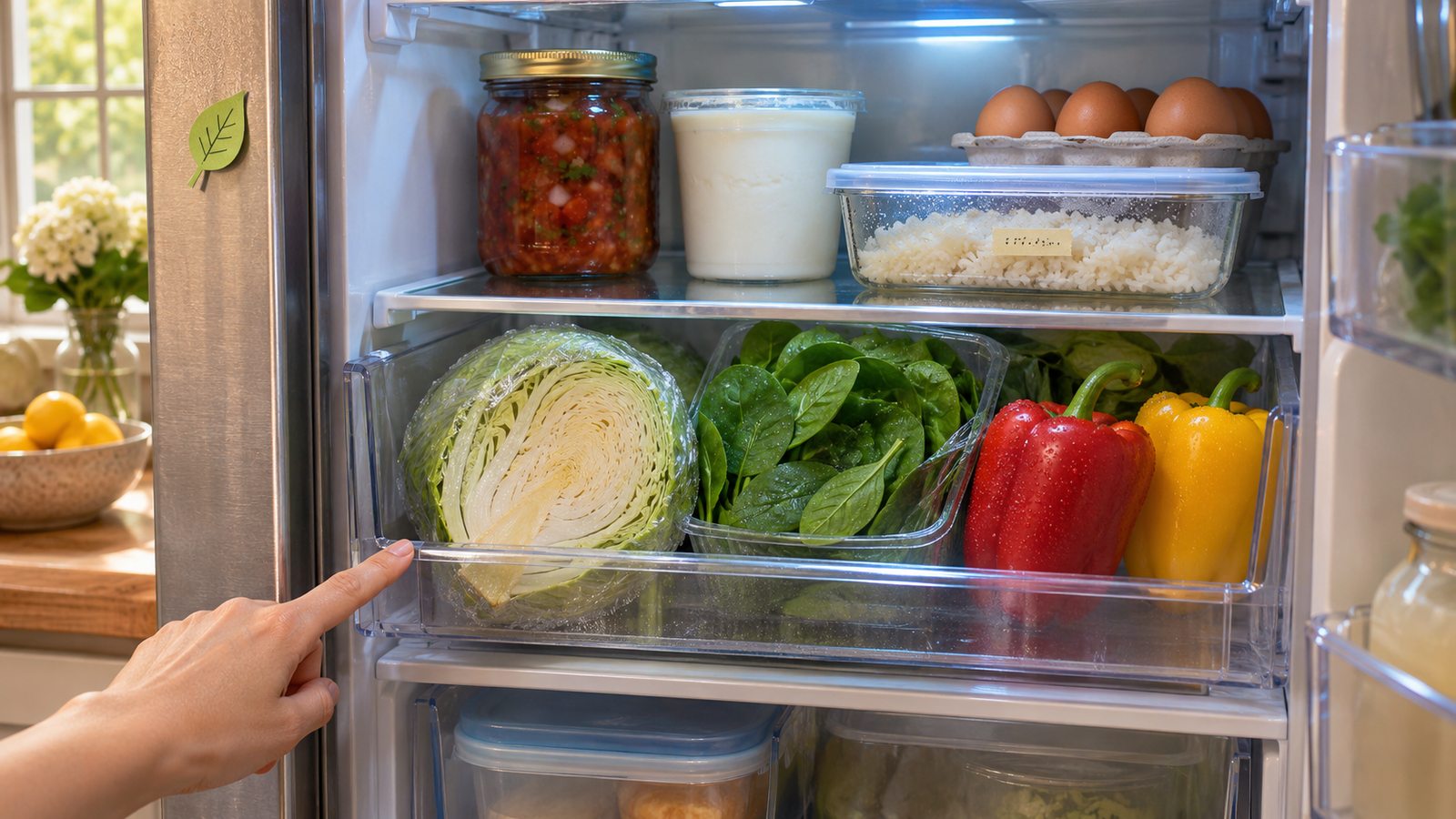
Minutes 3–7: make a “use first” list
Look, do not reorganize. Write down three to five perishables or opened foods that need a job. Check dates and storage guidance rather than relying only on appearance or smell to judge safety.
Useful anchors might be:
- spinach, herbs, berries or cut vegetables;
- opened yogurt, cheese, salsa or broth;
- thawed foods that must be cooked soon;
- leftovers that are still within a safe storage window.
-
Minutes 7–10: choose three meal formulas
Pick structures that fit your anchors and energy levels. You do not need seven separate recipes. Three formulas plus leftovers and flex nights are usually easier to execute.
- Bowl: rice or another grain + beans, eggs, tofu, chicken or fish + vegetable + sauce.
- Wrap or taco: tortilla + warm filling + crunchy vegetable + sauce or salsa.
- Soup or skillet: broth or tomato base + protein + vegetables + grain, pasta or bread.
- Sheet-pan dinner: protein + two vegetables + seasoning; add bread, rice or potatoes if wanted.
- Assembly meal: hummus, cheese, eggs, canned fish or beans + vegetables + crackers, toast or fruit.
For fifteen almost-no-cook combinations, use LIFVYT’s assembly-meal guide as a backup list.
-
Minutes 10–13: create one ingredient bridge
Choose one cooked component that can change personalities. Keep the second meal genuinely different so Tuesday does not feel like Monday wearing a hat.
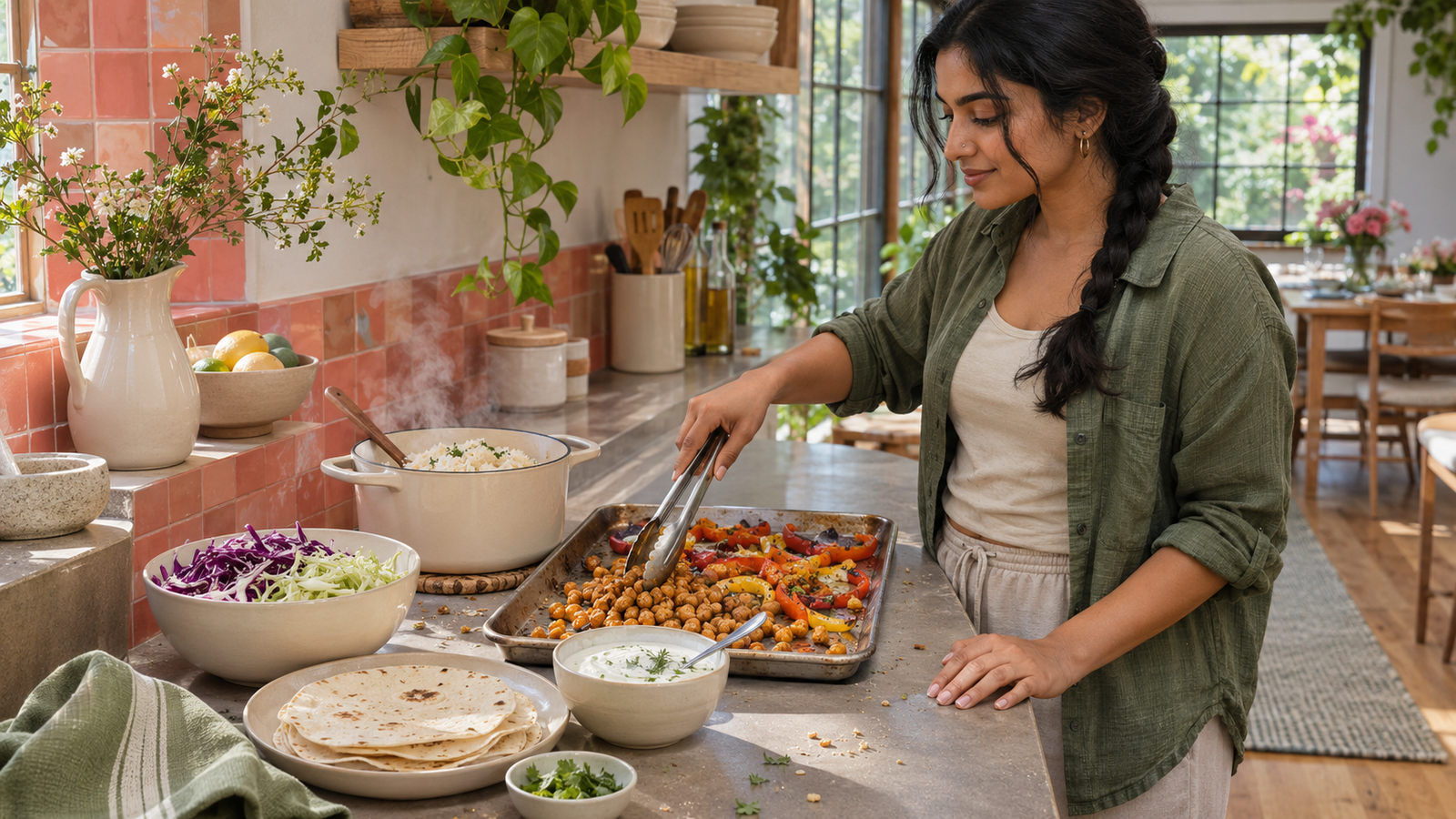
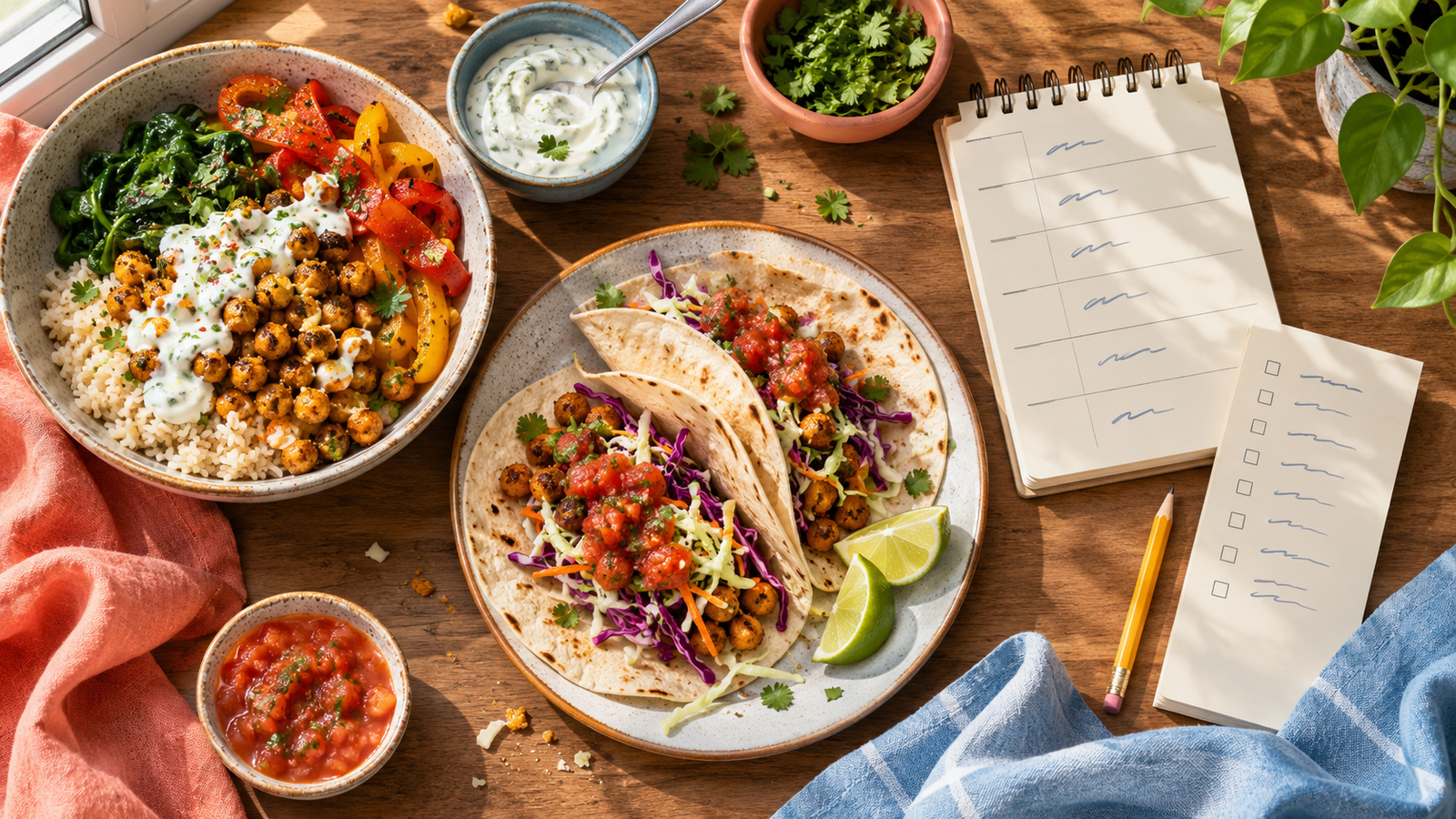
Example: roast chickpeas and peppers once. Serve them over rice with spinach and yogurt-herb sauce on night one. Put the rest in tortillas with cabbage, salsa and lime on night two.
Other useful bridges include roasted vegetables, cooked beans, shredded chicken, baked tofu, grains and a versatile sauce. If you would rather cook a complete dish, creamy butter beans with spinach can become dinner with toast and a next-day lunch over pasta or rice.
-
Minutes 13–16: put the most perishable foods first
Assign delicate produce and thawed foods to the earliest suitable night. Shelf-stable pasta, canned beans and freezer meals can wait.
If you cook extra, cool it promptly in shallow containers, label the date and freeze portions you will not use within the USDA’s three-to-four-day refrigerated leftover window. Exact storage times vary by food, so check USDA guidance rather than stretching a general rule.
-
Minutes 16–18: add two flex spots
One flex spot can be planned leftovers. The other can be a freezer meal, eggs and toast, takeout or dinner elsewhere. If your schedule changes, move the flex meal—not every other dinner like a tiny edible game of Tetris.
-
Minutes 18–20: write the gap list
Now write only what the plan is missing. Add quantities when helpful: “two limes,” “one small yogurt” or “spinach for two dinners.” Group the list by produce, refrigerated, freezer and pantry so shopping is faster.
Before finishing, ask: Will I really use the whole package? A larger size or two-for-one deal saves money only when the food is eaten.
Read the plan from the point of view of tired-you. Is there a meal that needs three pans on a yellow night? Are all the leftovers assigned? Is Friday still pretending you will cook when you know you will meet a friend? Fix those now. The plan should serve your week, not grade it.
A complete example you can copy
Imagine you have rice, chickpeas, tortillas, half a cabbage, spinach, two peppers, eggs, plain yogurt and salsa. Your calendar shows a calm Monday, late Tuesday, normal Wednesday, uncertain Thursday and plans Friday.
| Night | Energy | Plan | What it uses |
|---|---|---|---|
| Monday | Green | Roasted chickpea-and-pepper rice bowls with spinach and yogurt-herb sauce | Peppers, spinach, yogurt; cook extra chickpeas and peppers |
| Tuesday | Yellow | Chickpea tacos with cabbage, salsa and lime | Bridge ingredients, tortillas, cabbage, salsa |
| Wednesday | Yellow | Egg-and-spinach fried rice | Cooked rice kept safely chilled, eggs, remaining spinach |
| Thursday | Red/flex | Leftovers if safely stored; otherwise freezer soup or eggs on toast | Uses a safe leftover or a planned backup |
| Friday | Out | Dinner with a friend | No groceries assigned |
Gap list: two limes, fresh herbs if wanted, and one freezer soup for the backup slot. That is the whole list—not an aspirational cart full of ingredients for a second, imaginary household.
Common mistakes—and the easy fix
Planning seven brand-new recipes
Fix: choose three formulas, one bridge ingredient and two flex spots. Familiar food is allowed to be the plan.
Ignoring the calendar
Fix: assign effort before meals. A busy evening needs assembly, leftovers or a backup—not optimism in casserole form.
Using leftovers too late
Fix: label the date, place leftovers where you can see them and freeze portions that will not be eaten within official safety guidance.
Buying “just in case” produce
Fix: every highly perishable purchase needs a named meal. Pantry and freezer staples can cover surprises.
Making the backup too complicated
Fix: pick one real emergency dinner: frozen soup, eggs and toast, canned beans with rice, or a supermarket rotisserie chicken and salad kit.
Treating the plan like a contract
Fix: move meals when life changes while protecting the most perishable ingredients first.
Make the habit easier next week
- Keep the previous plan. Circle meals people actually ate and enjoyed.
- Write three reliable meal formulas inside the notebook cover.
- Give one refrigerator shelf or bin a “use first” purpose.
- Keep one freezer backup you genuinely like.
- When energy is low, borrow a proven LIFVYT dinner such as one-pot coconut curry chickpeas instead of searching from scratch.
Make the first plan small: three dinner formulas, one ingredient bridge, two flex spots and one short gap list.
Tonight’s next step is simply to write down the three foods in your kitchen that need a job. That is enough to begin.
Your 20-minute follow-along list
Put this article beside your notebook and complete one line at a time. You do not need to remember the whole system.
-
Mark the week
Write the next seven days. Cross out dinners away from home, then label each remaining night green, yellow or red for the amount of cooking energy you expect to have.
-
Choose three foods to use first
Look in the refrigerator and write the three safe foods most likely to be forgotten or spoil soon.
-
Pick three dinner formulas
Choose from a bowl, wrap or taco, soup or skillet, sheet-pan dinner, or assembly meal. Match the easiest formulas to your busiest nights.
-
Choose one bridge ingredient
Pick one component you can prepare once and use differently twice—such as roasted vegetables, rice, beans, chicken, tofu or a sauce.
-
Schedule perishables first
Put delicate produce and thawed foods on the earliest suitable nights. Label and promptly refrigerate cooked leftovers; freeze portions you will not use within official safety guidance.
-
Protect two flex spots
Reserve one night for safe leftovers and one for a freezer meal, eggs and toast, takeout, a sandwich or changed plans.
-
Write only the gaps
List the missing items and quantities needed for the meals you chose. Check the kitchen once more before shopping.
Sources
- U.S. Environmental Protection Agency: Preventing Wasted Food at Home — planning around food on hand, realistic meal counts, shopping lists and dated leftover storage.
- USDA MyPlate: Efficient Eats—Planning and Prepping — weekly planning and repurposing ingredients across meals.
- USDA Food Safety and Inspection Service: How Do I Handle Leftovers Safely? — prompt chilling, shallow containers and the three-to-four-day refrigerated leftover guideline.
- USDA Food Safety and Inspection Service: Clean, Separate, Cook and Chill — basic kitchen food-safety practices.
Food-safety disclaimer: This article is for general education and meal-planning inspiration. Storage times and safe handling vary by food, preparation and household needs. Follow current USDA guidance, product instructions and advice from a qualified professional for allergies, medical diets or individual concerns. When safety is uncertain, discard the food.
The Sunday Soft Reset
A calmer start to your week.
Get Lifvyt’s weekly collection of gentle wellness reads, nervous-system resets and practical tools — plus the free 5-Minute Nervous System Reset Guide.
By signing up, you’ll receive the free guide and one gentle Lifvyt email each week. Unsubscribe anytime.