
A cardigan you never reach for might be someone else’s favorite layer. A clothing swap gives those overlooked pieces another chance—and gives you a reason to see friends that doesn’t require booking a table or buying a new outfit.
If you’re wondering how to host a clothing swap, start with a small group, a few clear rules and an end time. This guide walks you through a relaxed, 90-minute version you can run in a living room.
A quick note: This is a suggested plan for a small private gathering. Follow garment care labels, respect guests’ privacy and check a recipient’s current rules before donating anything.
What is a clothing swap?
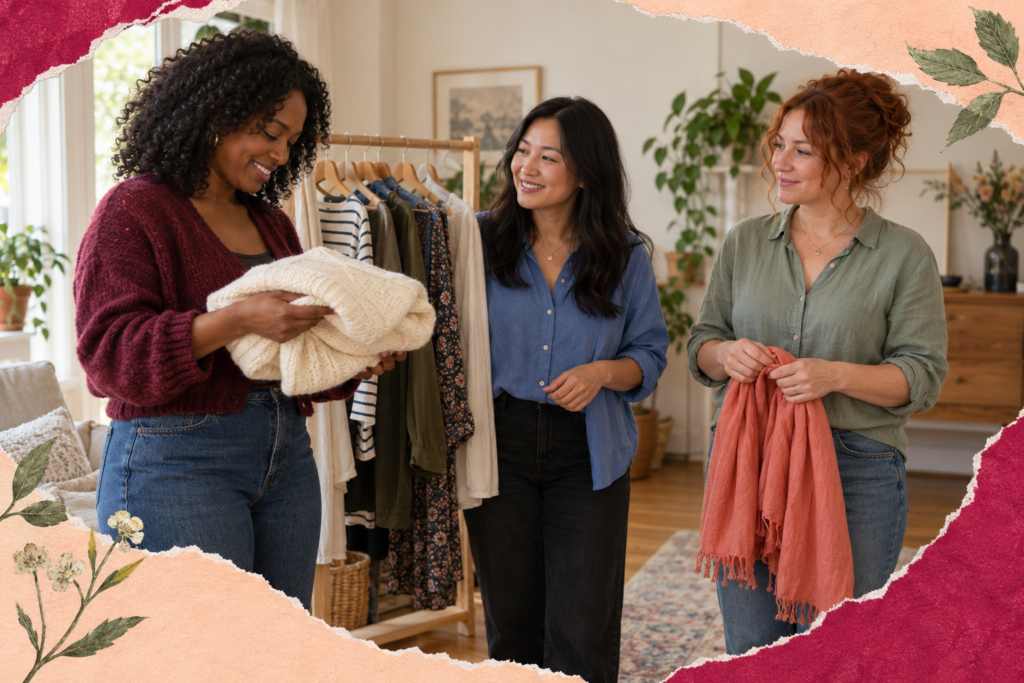
People bring clothing or accessories they’re ready to give away and choose pieces others have brought. Some events use tokens; others let people take items without making a matching contribution.
For example, George Washington University’s free clothing exchange, The Loop, does not require visitors to donate before choosing clothing. That’s a useful reminder: you can build your gathering around sharing instead of keeping score.
At home, make the arrangement explicit. This version is a free exchange, not a sale, loan or equal-value trade. Invite guests to bring only things they can comfortably let go of. An expensive coat that needs a financial return belongs in a separate resale plan.
1. Invite a small group—and plan for actual fit
Before choosing a date, ask privately what categories and sizes people would enjoy finding. Keep that information out of a group chat unless they want to share it.
If one guest would be the only person in their size range, don’t promise a full clothing swap will serve everyone equally. Ask whether an accessories-focused gathering would be more appealing, or build a group with more overlap. Scarves and bags broaden the options, but accessories have fit and preference limits too.
Confirm step-free access, seating, pets and the available changing space if those details could affect someone’s visit. Give a firm finish time so people can plan around work, childcare or simply wanting their evening back.
An invitation you can copy
Cozy clothing swap at mine on Sunday, 2–3:30! Bring up to five clean, good-condition adult clothing pieces, scarves or bags you’re happy to give away. You’re welcome even if you have nothing to bring. We’ll browse, then take turns choosing. No pressure to take anything. Please bring a bag and take home any of your items that remain. Message me privately about sizing, access or changing-space needs.
2. Set a clear standard for what comes in
For your first event, keep the categories narrow: everyday adult clothing, scarves and bags. Leave shoes, underwear and swimwear out of this particular swap to simplify sorting and fit. That’s an event boundary, not a universal rule about secondhand items.
Ask guests to check each piece in daylight:
- Clean and fully dry: follow its care label. Don’t use perfume to cover an odor.
- Ready to use: check fastenings, seams, pockets and lining. Repair loose buttons or open seams before bringing it.
- Honestly described: mention shrinkage, a missing size label or any minor wear someone might miss.
- Free of personal belongings: check every pocket. The swap does not need a surprise house key.
If something needs work, keep it for a separate repair session. Our beginner tote-bag mending guide offers a small practice project, while the first repair café visit guide explains how to prepare for help.
3. Make a room easy to browse
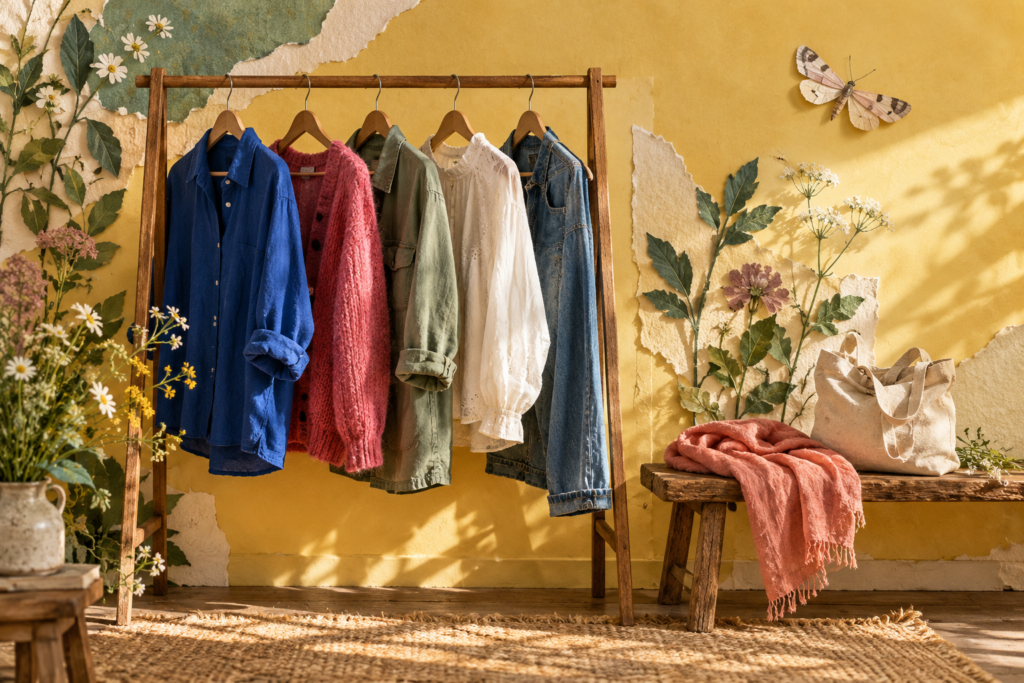
Use a clear table for folded items and a stable rail, if you already have one, for hanging pieces. A rail is optional. West Sussex County Council’s swap guide recommends deciding acceptable items in advance and providing clear sorting and display space.
Gather these basics
- A table or other comfortable-height surface, with room between groups of clothes.
- Scrap-paper labels, a pen and a few spare hangers if needed.
- A mirror, a chair and a private changing area with a closing door, if available.
- A bag for each guest’s belongings and a separate spot for pieces being returned to the swap.
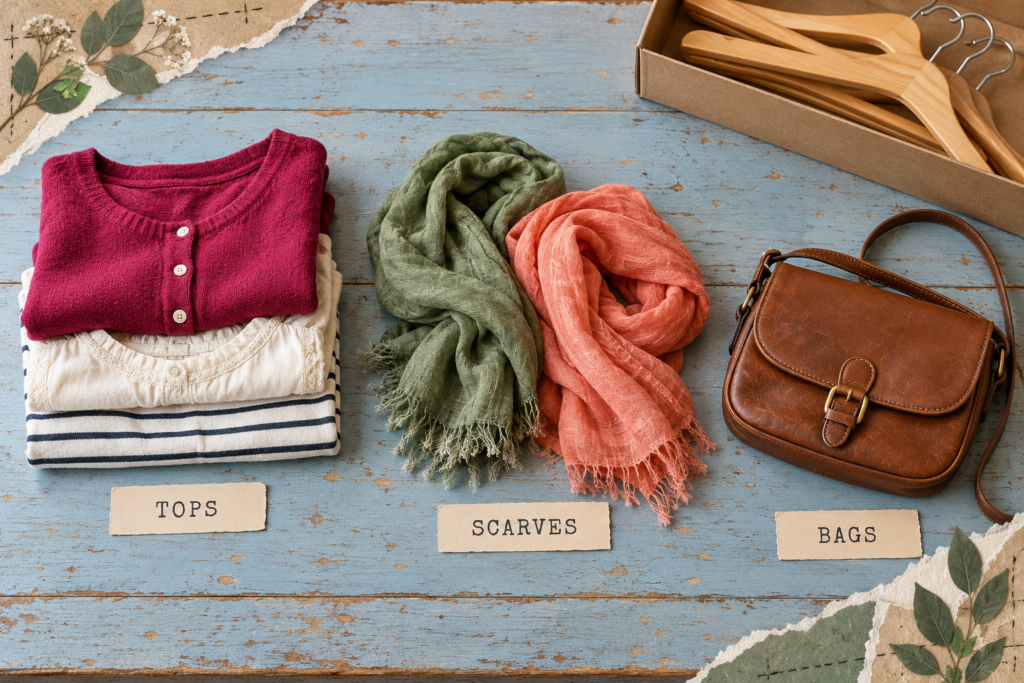
Sort by garment type—tops, layers, scarves, bags—then keep size labels easy to find. For unlabelled clothing, a flat measurement can help: lay a top flat, measure underarm to underarm and label it “flat width,” not “bust size.” Readers can compare it with a garment they own; it isn’t a guaranteed fit.
Keep bags, cables and clothes out of walking routes. Don’t overload a rail, lean an unsecured heavy mirror against a wall or put garments on stairs. Place drinks on a separate surface.
Guests’ own coats and bags should stay away from the swap display. That lovely jacket by the door may still be someone’s ride home.
4. Explain the picking rules before anyone starts
For a small group, use this turn-taking system. It gives everyone an opening chance without needing tokens or price comparisons.
- Browse for ten minutes without claiming anything. Guests can inspect labels and ask questions, but don’t make private piles.
- Draw names for the first round. In that order, each person chooses one item or passes. A choice is a temporary hold until they check the fit.
- Reverse the order for round two. Again, one item or a pass. Leave unchosen items on display.
- Try and decide. Allow time for the changing space. Return unwanted picks promptly so others can see them.
- Open the remaining items to browsing. Ask before taking something someone else is holding. If two people want an unclaimed piece at once, draw names rather than arguing about who deserves it.
Say upfront that there is no promise of an equal number of items or a perfect size match. People may leave with one thing, several things or nothing. Donating more doesn’t give someone ownership of the whole rail.
A realistic 90-minute timetable
- 0–15 minutes: arrive, check items and arrange them.
- 15–25: explain the rules and browse.
- 25–45: take two selection rounds.
- 45–70: try things, return unsuitable picks and browse what remains.
- 70–90: make final decisions, pack leftovers and clear the room.
A single changing room may need more time. Keep the group small or encourage guests to wear a simple base layer for trying outer layers, if they’re comfortable doing so. Never make that a condition of joining.
5. Choose for your real life
Before taking something home, ask: Can I move and sit comfortably in it? Would I wear it with something I already own? Am I willing to follow its care instructions?
“It’s free” is a very persuasive stylist. It is not always a good one. Leave the beautiful but uncomfortable piece for someone else, and avoid collecting a bag of alterations you don’t actually want to do.
6. Finish with a leftover plan, not a mystery pile
The easiest default is that each guest takes back their unchosen items. Keep track using small owner-initial labels attached without damaging fabric, or ask guests to identify their pieces during the final clear-up.
If you offer a donation run, make it an explicit opt-in. Name the person doing it, the intended recipient and a drop-off day. Check what the organization currently accepts before collecting bags. Leave no bags outside a closed shop or full collection point.
King County’s textile guidance lists reuse, repair and recovery routes, including donations of clean, dry textiles. Availability and acceptance rules differ by location; a donation is not a guarantee that an item will be recycled.
Confirm with guests that accepted swap items become the new owner’s to keep. If someone is unsure about giving a piece away, it can go back in their own bag before the swap starts.
If a group feels like too much, try a two-person swap
Invite one friend for half an hour. Each bring three pieces, place them on the table, then inspect and try whatever appeals. Take your own leftovers home. There’s no need for a picking order when you’re choosing from each other’s things.
You can also make it accessories-only or skip swapping altogether and help each other plan outfits from what you already own. A useful afternoon doesn’t need to become a recurring event with a logo.
Your next step: send one clear invitation
Pick a date, choose a small group and explain what happens to leftovers. Those three decisions do more for a good swap than a beautiful display.
Keep the room welcoming, the rules gentle and the clothes optional. The best result is a gathering people enjoyed—and a few useful pieces finding someone who will actually wear them.
Sources and further reading
- West Sussex County Council: How to host a clothes swap — event planning and display basics.
- Sustainable GW: The Loop & Textile Reuse — a current example of a free clothing exchange without a required matching donation.
- King County: Circular economy—textiles — reuse, repair and local donation options.
Sources checked October 31, 2026. The small-group numbers, invitation, timetable and picking system are LIFVYT’s suggested hosting format.
Disclaimer: General lifestyle guidance for a private gathering. Follow garment care instructions, protect guests’ privacy and confirm local donation requirements. No particular fit, savings or environmental outcome is guaranteed.
The Sunday Soft Reset
A calmer start to your week.
Get Lifvyt’s weekly collection of gentle wellness reads, nervous-system resets and practical tools — plus the free 5-Minute Nervous System Reset Guide.
By signing up, you’ll receive the free guide and one gentle Lifvyt email each week. Unsubscribe anytime.