
Soft Spaces · Cozy hosting for real homes
A cozy guest space without a guest room starts with one honest question: where can someone sleep comfortably without turning your entire home into a luggage carousel?
You can welcome someone warmly and still need your living room back. This guide is for an occasional adult overnight guest, a shared room and a setup you can undo. No renovation. No basket containing seventeen products your guest now feels obliged to admire.
Start with the guest, before the bedding
Tell them exactly what you can offer before they book their visit. A sofa bed in a shared living room is different from a private bedroom; neither benefits from being described as “basically a suite.”
Try: “We’d love to have you Friday to Sunday. You’d have the sofa bed in the living room. We can make it yours after 9 p.m., and the kids usually come downstairs around 7. Would that work for you?”
Ask whether they need a particular bed height, an accessible route to the bathroom, space for equipment, or a place to work privately. Confirm pets, fragrance preferences and any food allergies that affect what you plan to serve. A quick conversation is more useful than guessing.
If your only option is a low mattress and getting up from the floor would be difficult for them, discuss another arrangement. The best hosting decision may be helping them find a nearby place and sharing meals at yours.
Choose the sleeping setup your room can actually hold
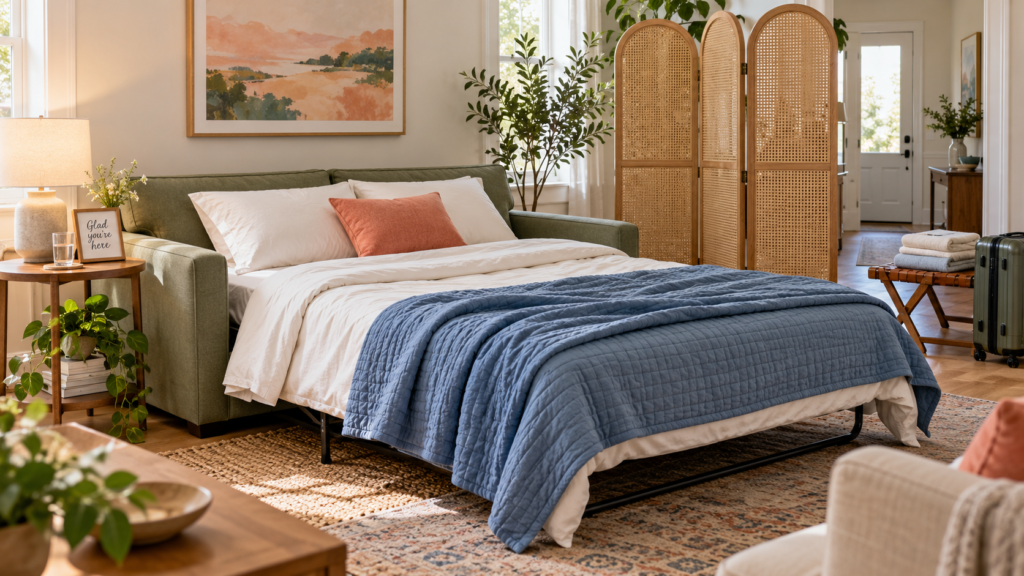
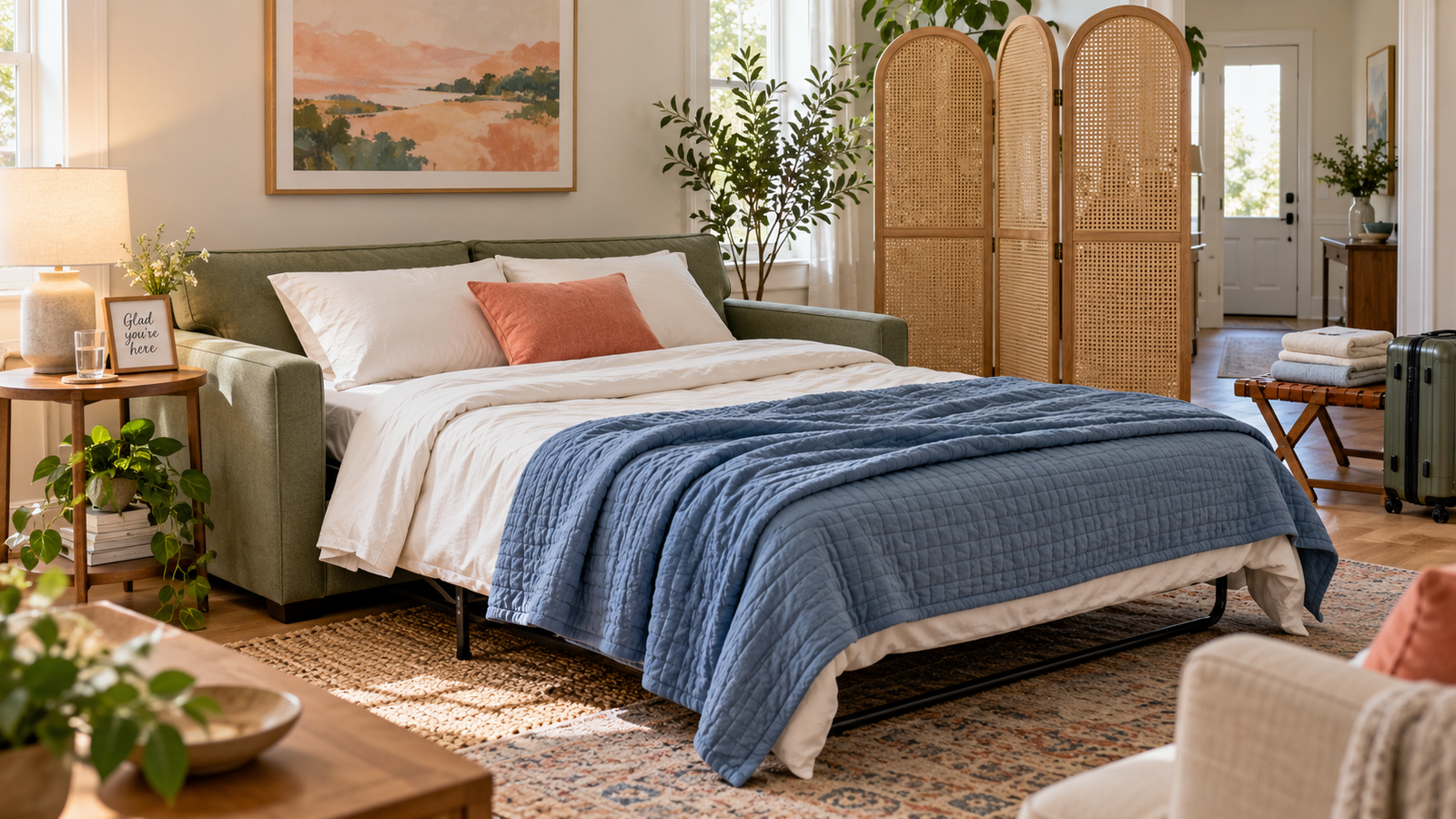
Open or assemble the sleeping surface before the visit. Measure its fully extended footprint, then walk around it with a bag in your hand. Can the door open? Can your guest reach the bathroom without squeezing sideways past the coffee table?
Existing sleeper sofa
Useful when seating must return the next day. Check the opening mechanism, mattress condition and whether your sheets fit before bedtime.
Daybed or suitable sofa
A daybed can stay dressed as seating. For an ordinary sofa, check the usable length and ask the guest whether that arrangement suits them; armrests reduce sleeping space.
Temporary mattress
Borrow before buying for a one-off visit. For an inflatable model, test it in advance and follow its instructions for inflation, support and storage.
Do not buy a topper to solve a bed you have not tested. Lie on the prepared surface yourself for several minutes. Notice bars, sagging, a sliding sheet or a pillow that keeps falling into a gap. Fix the specific problem you find. Check that any added layer is suitable for the mattress and remove it before folding a mechanism unless its instructions allow it.
Make the room private by agreement, not just by decoration
A folding screen can interrupt a sightline, but it does not create a soundproof room. The useful part is agreeing when the room becomes the guest’s space and where everyone else will sit during that time.
Choose a stable screen if you use one, position it without blocking doors or walkways, and account for children or pets who may bump into it. Skip improvised sheets hung from unstable furniture. A screen is optional; a respectful household plan is not.
For example: “After we make the bed, we’ll watch TV in our room. The kitchen opens off this space, so we’ll set out what we need for breakfast tonight.” If early household noise is unavoidable, say so. Honest expectations feel kinder than a surprise blender concert.
Give belongings a home that is not the floor beside the bed
Clear one defined area for a bag: a sturdy luggage stand, an empty chair that can safely support it, or a clean patch beside a wall outside the walking route. Let your guest know what is theirs to use.
Offer a few hangers or an empty shelf if the stay is longer. For a small apartment, a basket for clothes and a hook for a towel may be enough. Wayfair’s practical hosting guide also recommends making room for luggage and setting out bedroom essentials in shared spaces.1
Keep your everyday items elsewhere for the visit. A drawer that is “mostly empty, except for our tax papers” is still your drawer.
Build a bedside setup they can use in the dark
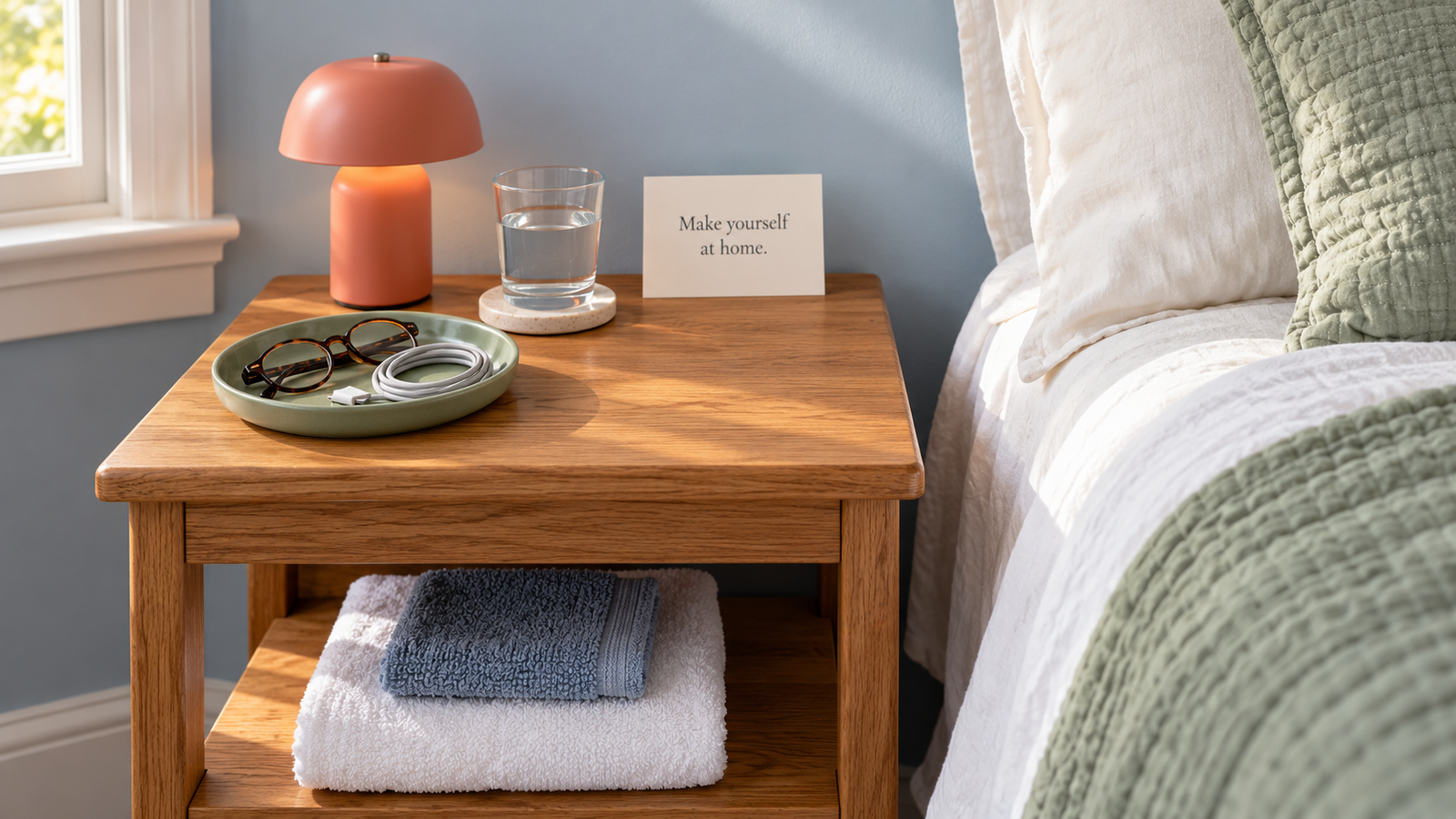
Use a stable side table or a clear section of an existing surface within easy reach. Leave space for the guest’s glasses, phone or book. Then add only what is useful:
- A light they control: demonstrate the switch before bedtime. A cordless lamp can help when an outlet is awkwardly placed.
- Water and a coaster: keep them away from electronics and the edge.
- Charging access: point out the outlet and check that any spare cable fits their device. Route cords away from feet and bedding.
- A clean towel and washcloth: show where to hang them and where used towels go.
- A short welcome note: “Glad you’re here” is enough. Put Wi-Fi details on a separate private note if needed.
Show the bathroom, the light switches and the spare toilet paper once. That small tour removes the need for a whispered hallway investigation later.
For more room-lighting examples, see LIFVYT’s cozy lighting guide. Here, the aim is simple: your guest can turn a light on without getting out of bed, and see the route through an unfamiliar room.
Add cozy with layers they can remove
Start with clean sheets and a sleeping pillow. Add a lighter cover and leave an extra blanket nearby, rather than building one very warm pile. Your idea of pleasantly toasty may be someone else’s indoor July.
Use existing textiles to make the space feel intentional: ivory sheets, a blue quilt and a coral cushion; or sage bedding with a patterned throw. Remove decorative cushions before sleep and give them a designated daytime home.
Fresh air when conditions allow, clean textiles and a tidy surface do more here than a strong scent. Keep fragrance optional. Choose a lamp over a burning bedside candle, particularly in a temporary setup full of unfamiliar fabrics.
Give the morning a little structure
Tell your guest what they can help themselves to and what time you need the shared room back. Put a mug and breakfast basics where you can reach them without entering the sleeping area.
A useful version sounds like: “Tea and coffee are on the counter; please help yourself. I start work here at 9, so we’ll fold the bed away around 8:30. Your bag can stay by the cupboard.”
Divide the setup if another adult is hosting with you: one person handles bedding, another clears the bathroom and explains breakfast. Hosting should not quietly become one person’s second shift.
Pack it away as a kit, not a mystery pile

Before the visit, choose the storage spot. A breathable fabric bag, an existing linen shelf or a clean under-bed container can work; measure first. A full quilt and two pillows may need more space than a single basket, and that is fine.
- Separate used linens after departure. Keep them out of the clean kit until they have been washed and thoroughly dried according to their care labels.
- Group the matching set. Keep fitted sheet, top sheet and pillowcases together, with the mattress size noted on a small tag.
- Store the extras nearby. Put the spare towel, bedside lamp and charging cable in a predictable place. They do not all need to fit in one bag.
- Reset the room. Restore the table and seating, and return borrowed household items.
- Leave one note for next time. “Bring the blue lamp” or “guest preferred a thinner pillow” is more useful than starting from zero again.
Your first trial run: do it before company arrives
On an ordinary evening, open the bed, make it, turn the main room light off, then walk the route to the bathroom. Check the bedside lamp and where you would put your bag. Time the pack-away process if the room needs to become an office in the morning.
You will learn more from that ten-minute rehearsal than from another hour of shopping. If the room cannot do everything, choose what matters most for this particular visit and explain the rest.
Keep exploring: If this space also earns its keep during the week, try a cozy home office setup for real life. For something low-key to do together before turning in, plan a cozy puzzle night.
Sources & further reading
- Wayfair: How to Host Guests When You Don’t Have a Guest Room — practical suggestions for luggage, sleeping areas, linens and bedside essentials. Accessed October 13, 2026.
- Etsy Merchandising: 4 fall shopping moments — September 2026 context for interest in cozy at-home gatherings, based on July–August 2026 platform data. This is a broad seasonal signal, not a measurement of demand for guest-room advice.
This is a practical home guide for occasional adult guests. Sleeping arrangements for babies and young children require their own age-appropriate guidance.
The Sunday Soft Reset
A calmer start to your week.
Get Lifvyt’s weekly collection of gentle wellness reads, nervous-system resets and practical tools — plus the free 5-Minute Nervous System Reset Guide.
By signing up, you’ll receive the free guide and one gentle Lifvyt email each week. Unsubscribe anytime.