

Lifvyt Journal
Morning Stretches for Nervous System Regulation: A 10-Minute Soft Reset
A gentle morning routine for the days when your body wakes up stiff, tense, overstimulated, or already negotiating with the day before your feet hit the floor.

Your Morning Does Not Have to Start in Survival Mode
Morning stretches for nervous system regulation can help your body wake up with less tension, more breath, and a clearer sense of “I am here, and I do not have to sprint into the day.”
Some mornings begin softly. Other mornings begin with a stiff neck, tight hips, a racing mind, and a phone already acting like it has breaking news from your personal inbox.
A gentle stretch routine gives your body a pause before the day starts asking questions.
This is not a workout in the intense, sweat-on-the-floor, motivational-speech kind of way.
It is more like a quiet check-in. Neck, shoulders, spine, ribs, hips, breath, legs. Everyone gets a small hello before the day becomes loud.
When you stretch slowly, you give your body movement without shock. You invite circulation, ease stiffness, create space for deeper breathing, and help your nervous system receive a steady message: we are not in an emergency right now.
That message matters.
The Quiet Truth
A regulated morning does not require a perfect routine. It usually begins with one slower breath, one softened muscle, and one small choice not to rush your body awake.
The Lifvyt Rule: Do Not Shock Your Body Awake
A lot of people wake up and immediately go from sleep to stress.
Alarm. Phone. Coffee. Kids. Work. News. Noise. A to-do list with the emotional tone of a court summons.
Your body may still be half-asleep, but your brain is already trying to run a staff meeting.
Morning stretching helps create a bridge. It says, “Let’s arrive first.” Not perform. Not fix everything. Arrive.
Why Gentle Morning Stretching Helps the Nervous System
Your nervous system is constantly reading signals.
Fast movement, shallow breathing, bright screens, urgency, and noise can all feel activating. Slow movement, longer exhales, warmth, pressure, rhythm, and soft attention can feel more settling.
Stretching can also help reduce muscle stiffness and tension, support flexibility, and make everyday movement feel easier. That matters because a tight, uncomfortable body can make the whole morning feel more irritating than it needs to be.
Physical activity is also connected with better sleep, mood, and daily function. The goal here is not to “hack” your nervous system. The goal is to give it better morning information.
When someone wakes up tense, I do not only think about muscles. I think about the whole pattern: sleep quality, stress load, posture, hydration, pain, hormones, emotional pressure, and how quickly the day begins. A gentle morning stretch routine is not a cure-all, but it can be a simple body cue that helps the day start with less alarm.
Save This Routine
The 10-Minute Morning Nervous System Stretch
1 minute: Bedside Neck Release
1 minute: Shoulder Rolls With Long Exhale
2 minutes: Cat-Cow Stretch
1–2 minutes: Child’s Pose or Supported Forward Fold
1 minute: Seated Side Body Stretch
2 minutes: Low Lunge or Hip Flexor Stretch
1–2 minutes: Legs-on-the-Couch or Wall Reset
Do the whole routine when you have time.
Do three moves when the morning is chaotic.
Do one move when the house is already awake and someone is asking where their sock is like you personally manage the national sock archive.
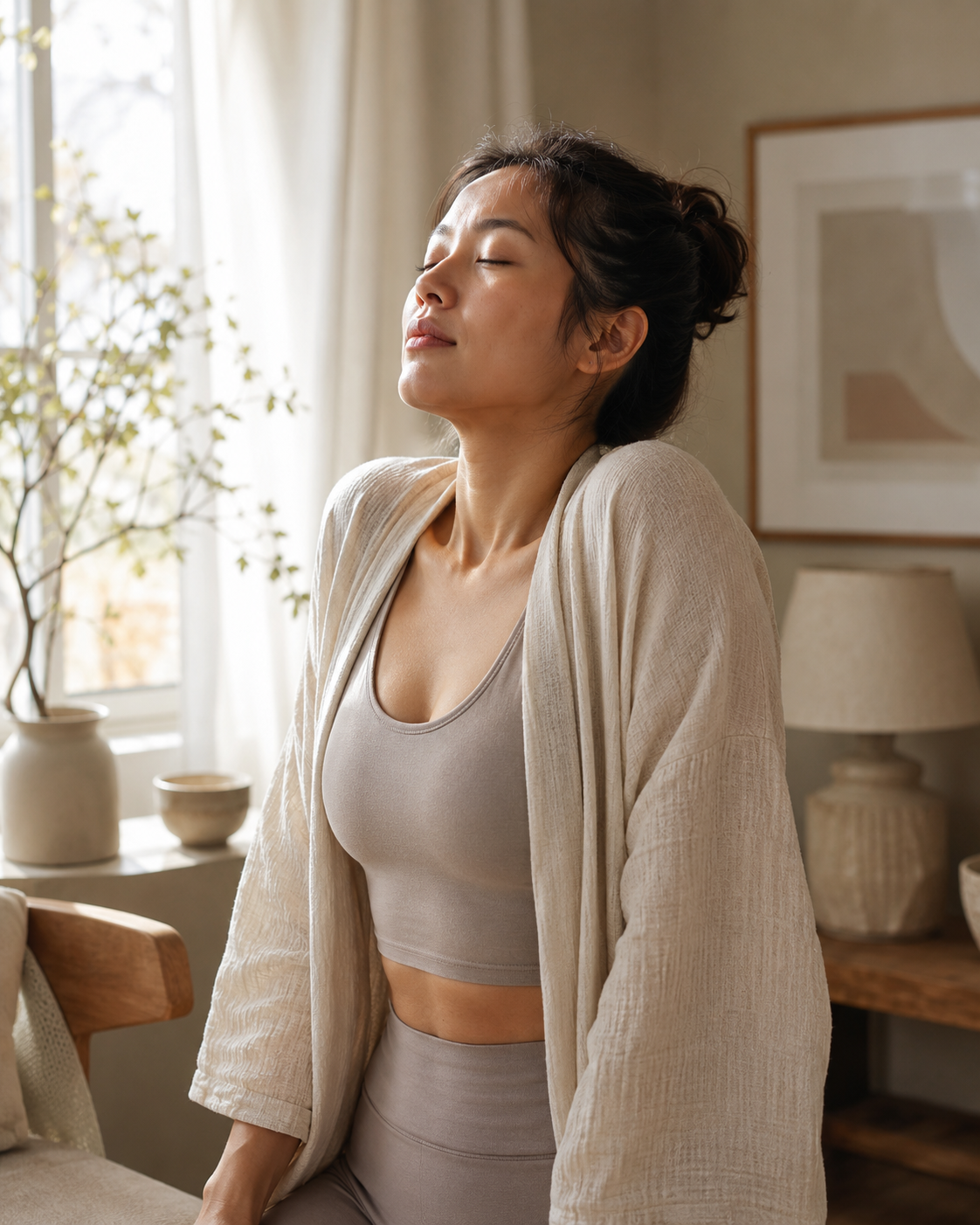
1. Bedside Neck Release
The neck often tells the truth before the mouth does.
If you sleep curled up, clench your jaw, look down at your phone, or carry stress in your shoulders, the morning can start with tightness before you even stand up.
This stretch helps soften the neck, jaw, and upper shoulders. It is also a gentle way to tell your body, “We are not rushing yet.”
How to Do It
Sit on the edge of the bed or on a soft mat.
Let your shoulders drop away from your ears.
Gently tilt one ear toward the same-side shoulder.
Keep the stretch soft, not sharp.
Take three slow breaths.
Switch sides and repeat.
2. Shoulder Rolls With Long Exhale
Shoulder rolls are simple, which is why they are easy to underestimate.
But the upper body holds so much of the day before the day even begins: work stress, caregiving stress, phone posture, old tension, and that strange habit of trying to solve life by lifting your shoulders.
Pairing shoulder rolls with a longer exhale makes the move more nervous-system friendly. The movement releases. The breath downshifts.
How to Do It
Sit or stand near a window if you can.
Inhale as your shoulders roll up and back.
Exhale slowly as they drop down.
Repeat five to eight times.
Then reverse the direction.
Imagine your shoulders returning to their actual job description. They are not supposed to be earrings.
3. Cat-Cow Stretch
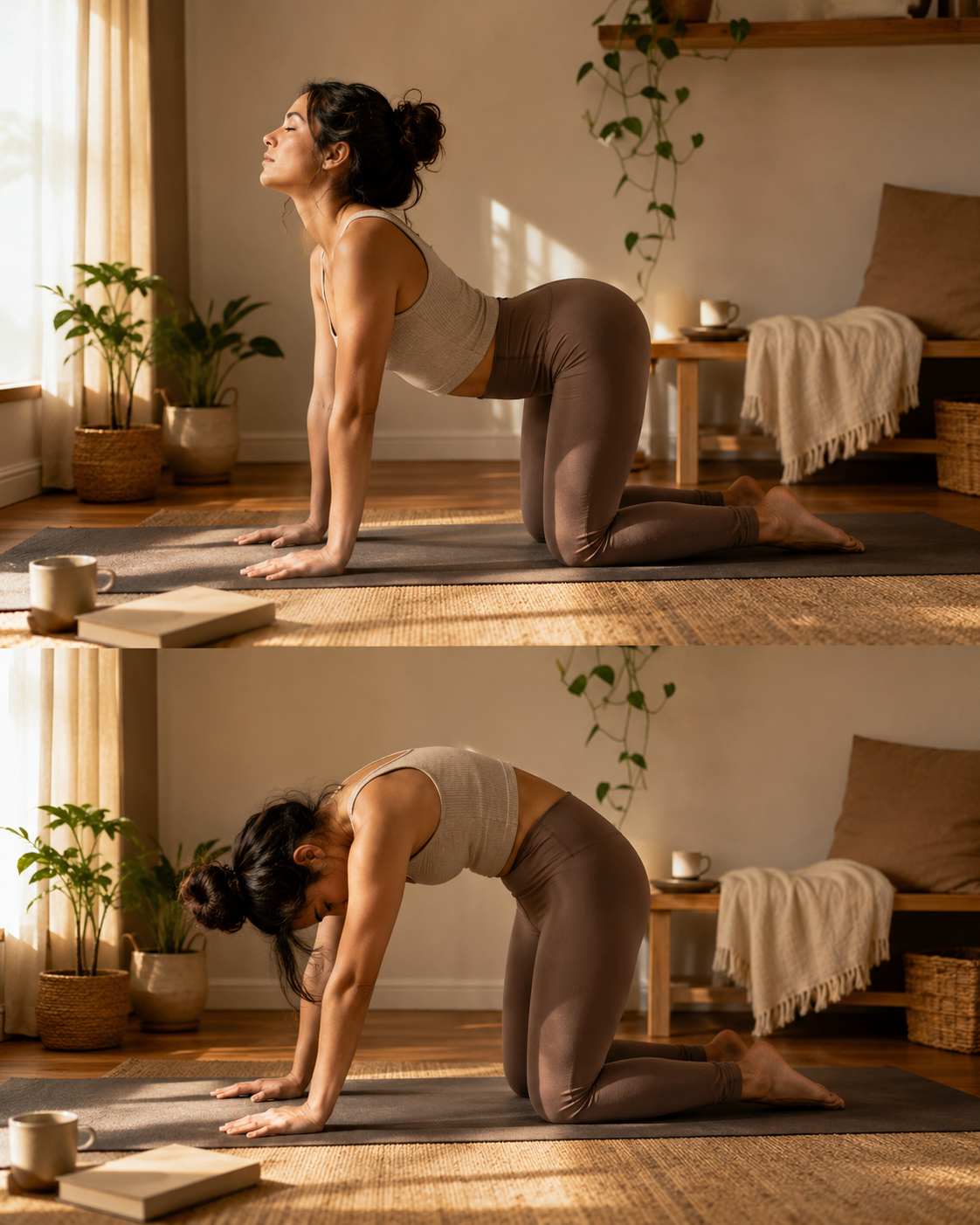
Cat-cow is one of the best morning stretches because it wakes up the spine without demanding too much from the body.
The movement is rhythmic. Round the back. Open the chest. Round again. Open again.
That rhythm can feel grounding when your mind is already busy.
Why It Helps
It gently mobilizes the spine.
It encourages fuller breathing.
It can reduce the “locked up” feeling after sleep.
It gives the nervous system a predictable rhythm.
It helps you feel your body without overwhelming it.
How to Do It
Come onto hands and knees on a mat.
Inhale and gently lift your chest.
Exhale and round your spine.
Move slowly for six to eight rounds.
Keep your jaw soft. The jaw always tries to join meetings it was not invited to.
4. Child’s Pose or Supported Forward Fold
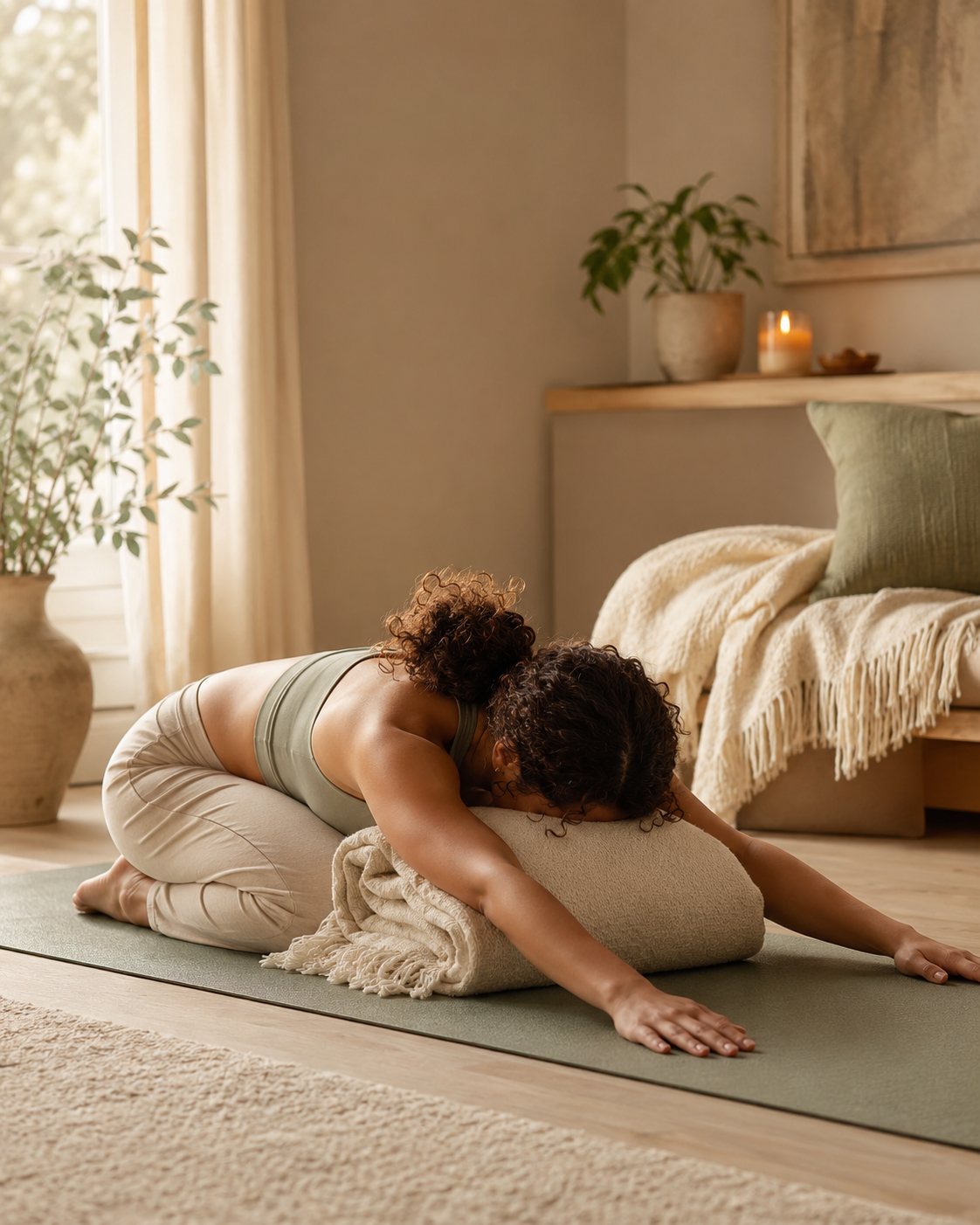
This is the “please lower the volume” stretch.
Supported child’s pose or a supported forward fold gives the body a place to settle. Using a pillow, blanket, or bolster makes it less about flexibility and more about support.
That distinction matters. You are not trying to win a stretching contest in your bedroom. You are trying to create a little safety before the day gets busy.
How to Do It
Place a folded blanket or pillow on your mat.
Rest your torso forward with support.
Let your forehead, chest, or arms soften.
Breathe into your back and ribs.
Stay for five slow breaths, or longer if your body says thank you.
Supported positions can reduce effort. When your body does not have to hold itself up as much, it may be easier to notice the breath, soften muscle tension, and feel grounded. Support is not cheating. Support is the point.

5. Seated Side Body Stretch
The side body can feel tight after sleep, stress, sitting, carrying kids, standing all day, or breathing shallowly through a packed schedule.
A seated side stretch opens the ribs and gives the breath more room.
That is why this one feels so good in the morning. It is less “fitness move” and more “oh, I forgot I had ribs.”
How to Do It
Sit cross-legged, on a cushion, or in a chair.
Place one hand on the floor or beside you.
Reach the opposite arm overhead.
Lean gently to the side.
Take three slow breaths into the open side.
Switch sides.
Keep it soft. If your body starts bargaining, listen. Stretching should feel like an invitation, not a threat.
6. Low Lunge or Hip Flexor Stretch
The hips can hold a lot of morning stiffness.
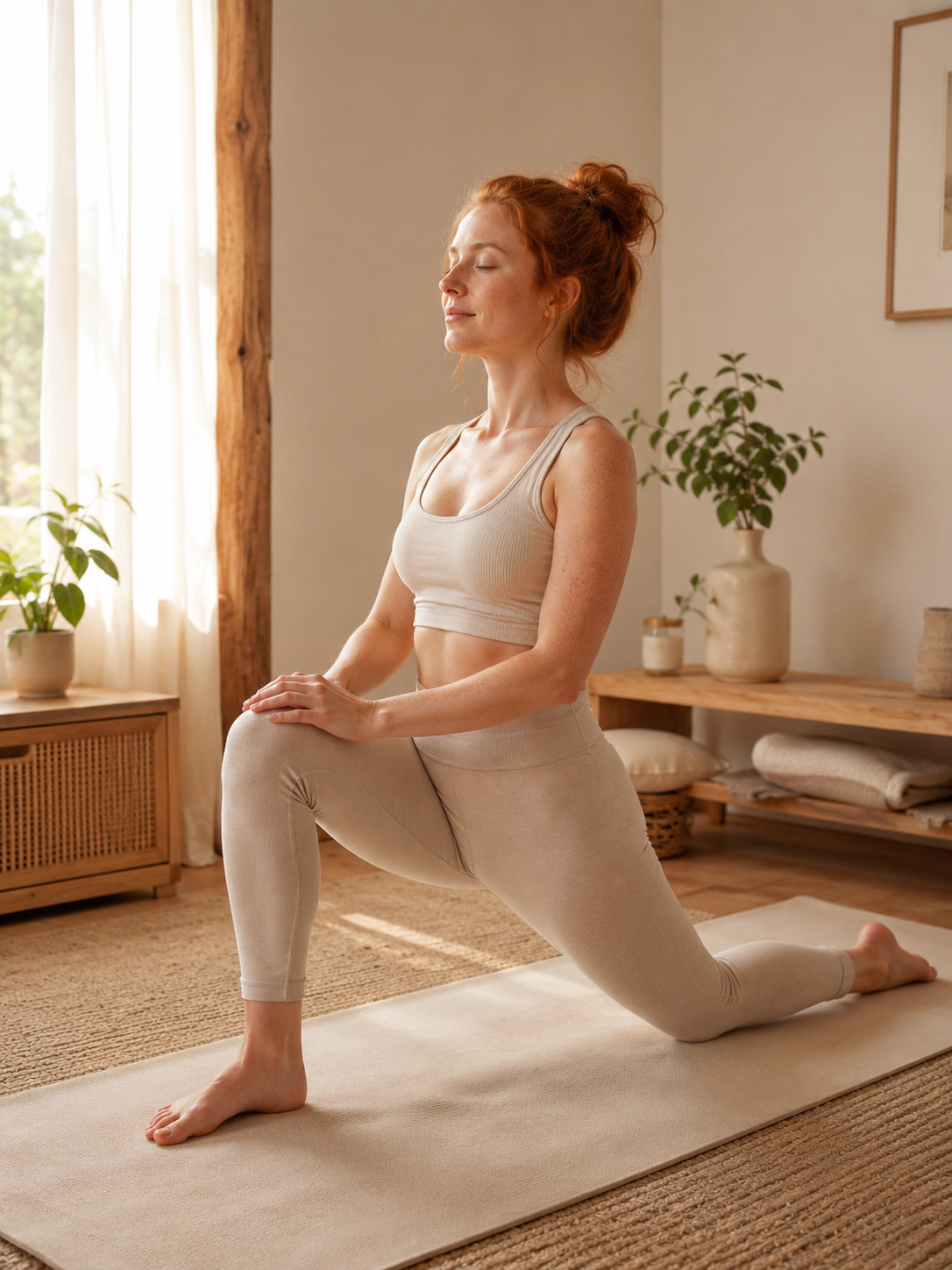
Sitting, driving, standing, sleeping curled up, and stress tension can all make the front of the hips feel tight. A gentle low lunge helps open that area without needing an intense workout mood.
For nervous system regulation, the key is slow and supported.
How to Do It
Step one foot forward into a low lunge.
Lower the back knee to a mat or folded blanket.
Keep your hands on your front thigh, blocks, or the floor.
Let the hips ease forward only slightly.
Take three to five slow breaths.
Switch sides.
You should feel a gentle stretch, not a dramatic announcement from your hip flexor.
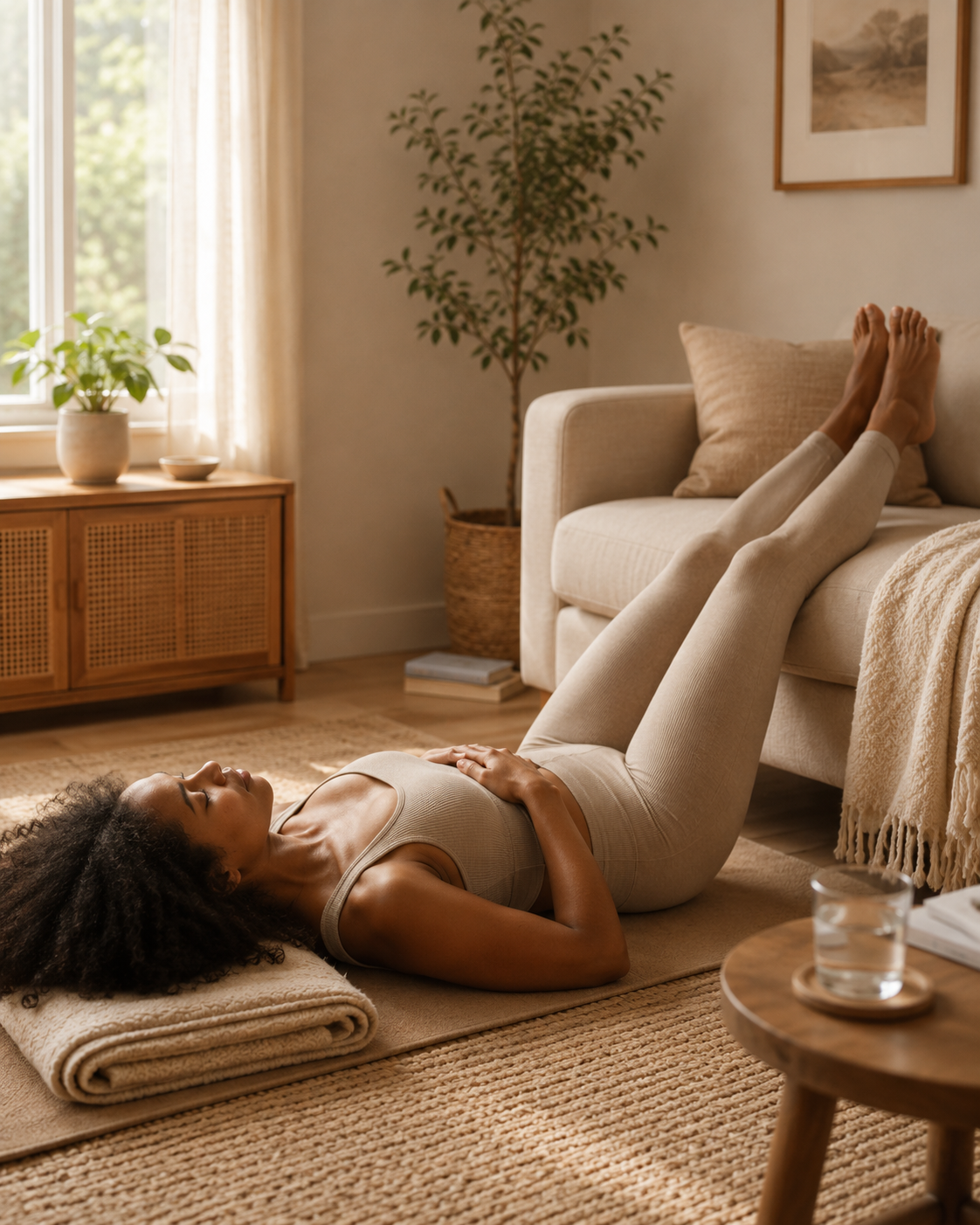
7. Legs-on-the-Couch or Wall Reset
This is the calm finish.
Legs-on-the-couch or legs-up-the-wall gives your body a supported position after gentle movement. It can feel especially good if your legs are tired, your back feels tight, or your nervous system needs a quiet landing.
It is also a nice reminder that regulation does not always look active. Sometimes the reset is doing less on purpose.
How to Do It
Lie on your back near a couch or wall.
Place your calves on the couch or your legs against the wall.
Rest your hands on your belly, chest, or beside you.
Let the floor hold your weight.
Take five slow breaths.
Stay longer if it feels calming and comfortable.
If lying flat is uncomfortable, place a pillow under your head or knees. If this position does not feel good in your body, skip it. Lifvyt does not believe in arguing with your spine before breakfast.
The 3-Minute Version for Busy Mornings
Some mornings are not giving 10 minutes.
Some mornings are giving “find the shoes, pack the bag, answer the message, reheat the coffee, and please nobody spill anything.”
Use this version.
The Fast Lifvyt Morning Reset
Minute 1: Bedside Neck Release.
Minute 2: Shoulder Rolls With Long Exhale.
Minute 3: Seated Side Body Stretch.
That is enough to send a signal.
Not every reset needs to be a full production with a soundtrack and a matching water bottle.
What to Remember Before You Stretch
Morning stretching should feel gentle, not forced.
Move slowly at first. Your body has been still for hours. It does not need to be surprised.
Gentle Safety Notes
Avoid sharp pain.
Use pillows, blankets, or the wall for support.
Move slower if you feel dizzy.
Skip poses that do not feel right for your body.
Talk with a healthcare provider if you have injuries, severe pain, balance concerns, pregnancy-related concerns, or a medical condition that affects movement.
Do not use stretching as a punishment for being stiff. Stiff bodies deserve care too.
The Lifvyt Morning Stretch Checklist
Did I soften my jaw?
Did I drop my shoulders?
Did I move my spine slowly?
Did I give my hips one gentle opening?
Did I breathe into my ribs?
Did I use support instead of forcing the pose?
Did I choose calm over rushing, even for one minute?
“The goal is not to become flexible before breakfast. The goal is to help your body feel safe enough to begin.”
Continue Your Journey
Explore More from Lifvyt
Browse gentle wellness resources, digital tools, and intentional living guides created to support calmer routines and everyday well-being.
Browse Our ProductsThe Lifvyt Closing Ritual
Tomorrow morning, do not ask your body to perform immediately.
Ask it how it arrived.
Neck tight?
Shoulders high?
Back stiff?
Breath shallow?
Start there.
One neck release.
One shoulder roll.
One slow movement through the spine.
One supported rest.
“I can begin the day softly. My body does not need to be rushed into readiness.”
Morning stretches for nervous system regulation are not about becoming a new person by 7 a.m.
They are about building a kinder entrance into the day.
Less alarm.
More breath.
A body that feels included.
A morning that begins with care instead of command.
References
Centers for Disease Control and Prevention. “Benefits of Physical Activity.” Read source
Cleveland Clinic. “Stretching: 9 Exercises and 8 Benefits.” Read source
Cleveland Clinic. “Why You Should Add Stretching to Your Exercise Routine.” Read source
Harvard Health Publishing. “The Ideal Stretching Routine.” Read source
National Center for Complementary and Integrative Health. “Yoga: Effectiveness and Safety.” Read source
Disclaimer: This content is for educational and informational purposes only and is not a substitute for professional medical advice, diagnosis, or treatment. Stretching and gentle movement may not be appropriate for everyone. Stop if you feel sharp pain, dizziness, numbness, shortness of breath, or symptoms that concern you. Always seek the advice of your physician, physical therapist, or other qualified healthcare provider with questions about movement, pain, injury, pregnancy, balance, or a medical condition.
The Sunday Soft Reset
A calmer start to your week.
Get Lifvyt’s weekly collection of gentle wellness reads, nervous-system resets and practical tools — plus the free 5-Minute Nervous System Reset Guide.
By signing up, you’ll receive the free guide and one gentle Lifvyt email each week. Unsubscribe anytime.