

The Nourishing Table · Food & Nutrition
Fibermaxxing Without the Stomach Drama
A gentle, real-life guide to eating more fiber—without turning every meal into a math problem or making your stomach miserable.

If you are curious about fibermaxxing without bloating, the best place to begin is not with a giant bowl of bran, three fiber bars, and a promise to hit an extreme number by dinner. It is with one realistic upgrade, enough fluids for you, and time for your digestive system to adjust.
Fiber supports regular bowel movements and is found naturally in foods such as beans, lentils, fruit, vegetables, whole grains, nuts, and seeds. It can also help meals feel more satisfying. The goal here is not perfection—it is building a pattern you can comfortably keep.
What is fibermaxxing?
Fibermaxxing is the social-media name for intentionally adding more fiber-rich foods throughout the day. The useful part of the trend is that it puts beans, grains, produce, nuts, and seeds back in the conversation. The less useful part is the pressure to chase a huge number immediately.
Your body does not award bonus points for digestive distress. A calmer approach can still move your meals in a nourishing direction.
How much fiber are we talking about?
The FDA uses 28 grams per day as the Daily Value shown on Nutrition Facts labels. Meanwhile, the National Institute of Diabetes and Digestive and Kidney Diseases notes that adults generally need about 22 to 34 grams per day, depending on age and sex.
Those figures are useful references—not a personalized prescription. Your needs, medical history, current intake, and tolerance matter. If you currently eat very little fiber, jumping straight to the top of a range may feel rough.
Why can a sudden increase feel so uncomfortable?
Some types of fiber are fermented by gut bacteria. When you add a lot very quickly, gas and bloating may increase before your system has had time to adapt. Large portions of beans, bran cereals, fiber powders, and foods with added isolated fibers can be especially noticeable for some people.
That does not automatically mean fiber is “bad” for you. It may simply mean the change was too large, too fast—or that a particular food does not agree with you.
The gentle fiber method
Look at an ordinary day before changing it. You do not need perfect tracking; just notice where fruit, vegetables, beans, and whole grains already appear.
Choose one meal or snack for several days. If you feel comfortable, add another small change later.
Add berries to the yogurt you already like, beans to familiar rice, or a vegetable beside your usual dinner.
Fiber works best with adequate liquids. Sip regularly unless a clinician has told you to restrict fluids.
If bloating or cramping ramps up, reduce the change and move more slowly. A trend should never outrank your body.

Seven realistic upgrades that do not require a new personality

Three flexible meal formulas
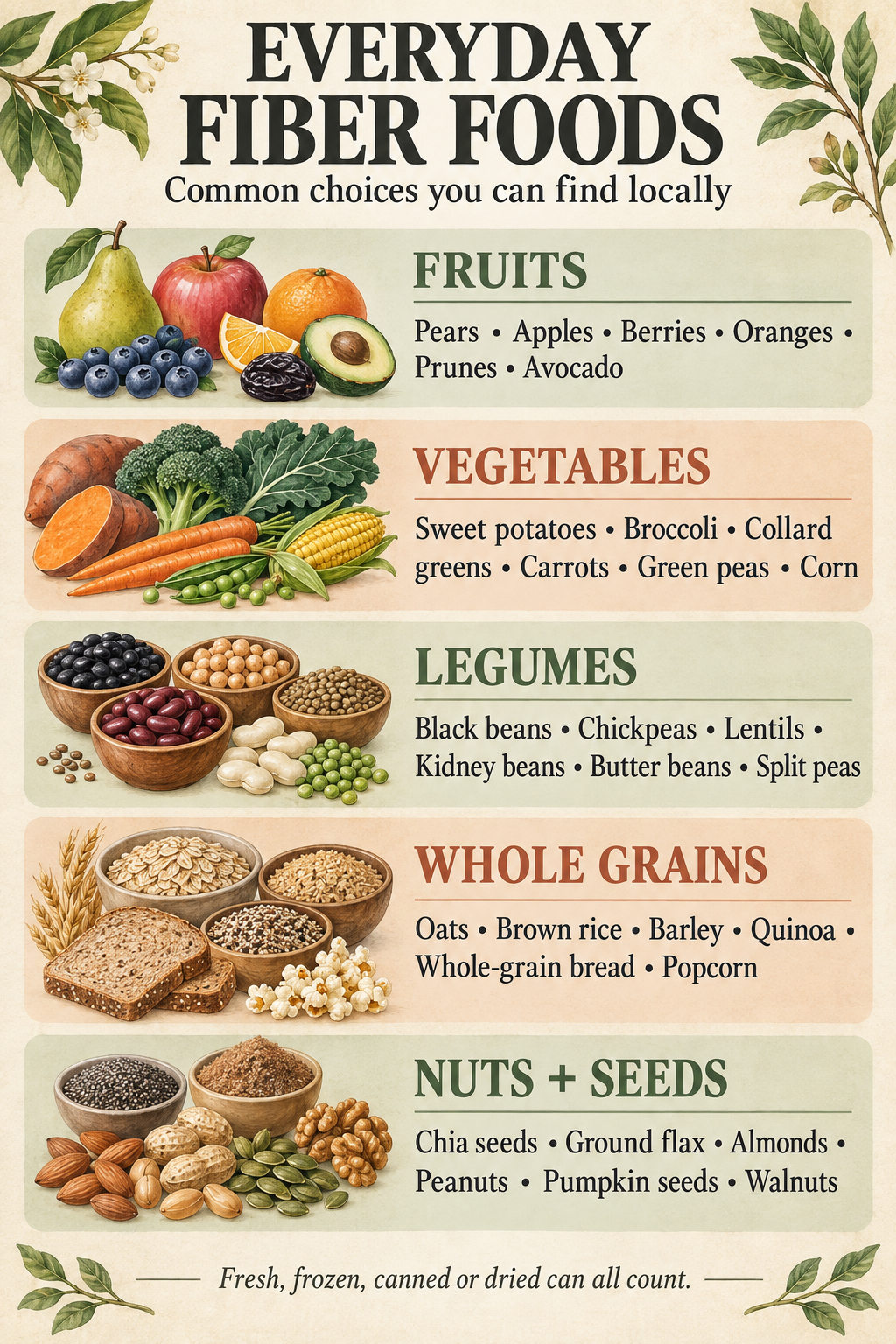
A practical grocery list by category
Choose foods that are affordable, familiar, and available where you shop. Fresh, frozen, dried, and canned options can all belong.
- Fruits: apples, pears, berries, oranges, bananas, mango, guava, kiwi, peaches, plums, prunes, and avocado.
- Vegetables: broccoli, cabbage, carrots, collards, spinach, sweet potatoes, green peas, corn, okra, squash, and Brussels sprouts.
- Legumes: black beans, chickpeas, kidney beans, butter beans, pigeon peas, split peas, lentils, and edamame.
- Whole grains: oats, brown rice, quinoa, barley, bulgur, whole-wheat pasta, whole-grain bread, and popcorn.
- Nuts and seeds: almonds, peanuts, pistachios, walnuts, chia, flax, pumpkin seeds, and sunflower seeds.
What about fiber bars and supplements?
They can be convenient, but they are not magic. Some bars, powders, and packaged foods contain concentrated or added fibers that may cause more gas for certain people. Check the serving size, start small, and remember that a food can be useful without needing a health halo.
If you take medications, ask a pharmacist or clinician whether a fiber supplement should be spaced away from them. Supplements are not a substitute for individualized care.
Pause and get medical guidance when needed
Talk with a healthcare professional before significantly increasing fiber if you have inflammatory bowel disease, a history of bowel narrowing or obstruction, recent gastrointestinal surgery, or a prescribed restricted diet.
Seek prompt care for severe or persistent abdominal pain, vomiting, blood in the stool, fever, unexplained weight loss, inability to pass stool or gas, or a significant bowel change that does not resolve.
Save this guide for your next grocery trip
Screenshot the card, send it to a friend, or keep it nearby when you need a quick reminder that fiber can come from everyday foods.
Sources & further reading
- U.S. Food and Drug Administration: Daily Value on nutrition labels
- National Institute of Diabetes and Digestive and Kidney Diseases: Eating, diet, and nutrition
- EatingWell: Fiber’s big glow-up
- The Guardian: The growing interest in beans and lentils
This article is for general education and is not medical advice. Nutrition needs and digestive symptoms are personal; consult a qualified professional for guidance tailored to you.
The Sunday Soft Reset
A calmer start to your week.
Get Lifvyt’s weekly collection of gentle wellness reads, nervous-system resets and practical tools — plus the free 5-Minute Nervous System Reset Guide.
By signing up, you’ll receive the free guide and one gentle Lifvyt email each week. Unsubscribe anytime.