

Soft Spaces · Home & Everyday Life
How to Create an Analog Bedroom
Eleven small changes for a calmer, screen-lighter room—without buying new furniture or turning bedtime into another self-improvement project.

If you have been saving analog bedroom ideas but do not want another expensive makeover, start smaller. An analog bedroom is not a room with zero technology. It is a room where screens are less visually dominant and non-digital choices—books, music, journaling, stretching, or simply resting—are easier to reach.
The idea is showing up in 2026 design coverage as people look for bedrooms that feel more restorative and less connected to constant notifications. That makes it timely. Still, the heart of it is wonderfully ordinary: soften the room, reduce friction around bedtime, and keep the changes realistic enough to survive a busy Tuesday.
What an analog bedroom is—and what it is not
An analog bedroom is a design approach, not a purity test. You do not have to throw out your television, buy linen sheets, or pretend your phone does not contain your alarm, childcare messages, work schedule, and entire life.
Instead, you decide what deserves to be visible and reachable from bed. Technology can stay. It simply stops being the automatic focal point.
11 analog bedroom ideas you can actually use
Clear only the nightstand
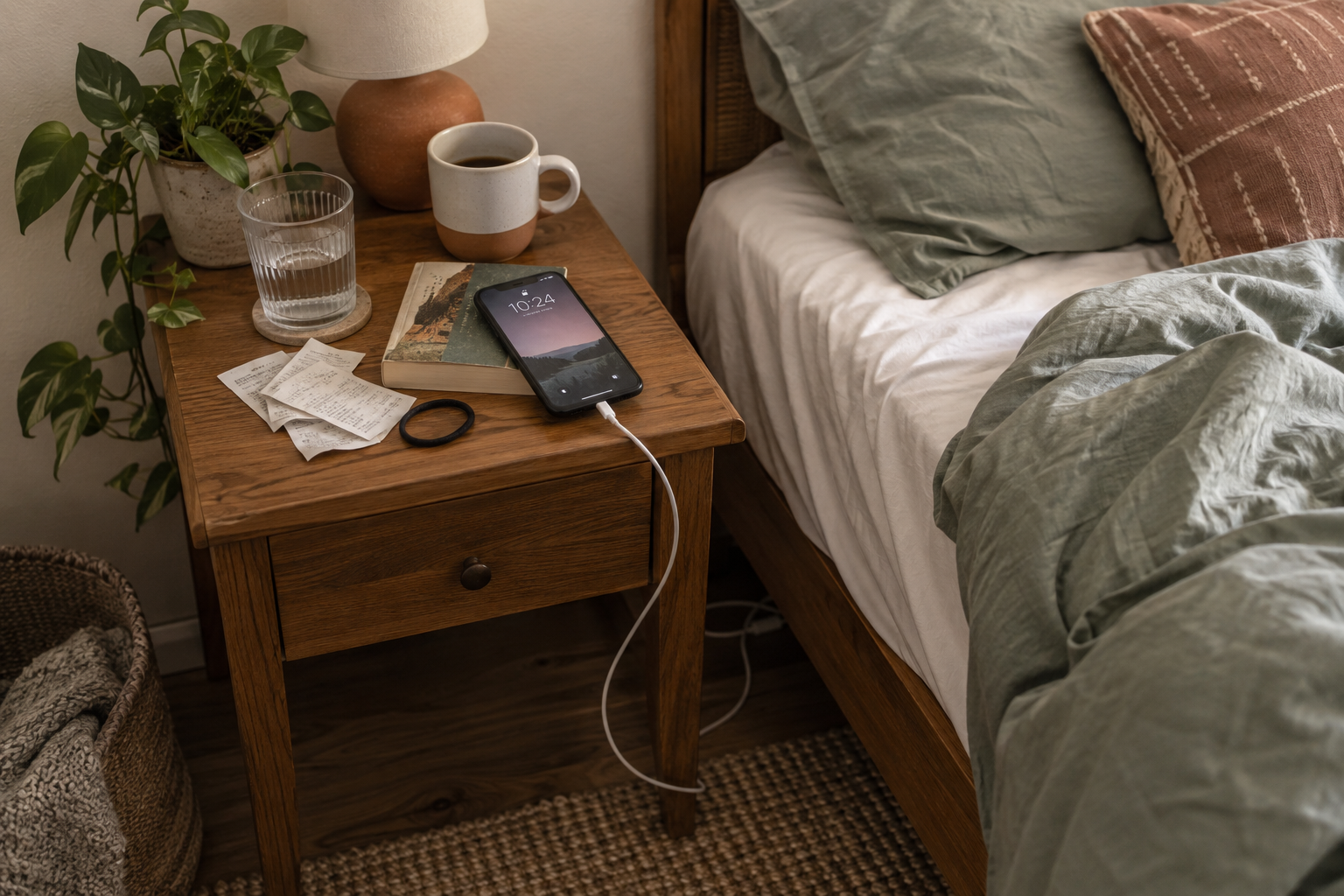
Do not begin with the whole room. Remove cups, receipts, cords, packaging, and anything that has turned the nightstand into a drop zone. Put back only what supports the beginning or end of your day.
Give your phone a parking spot
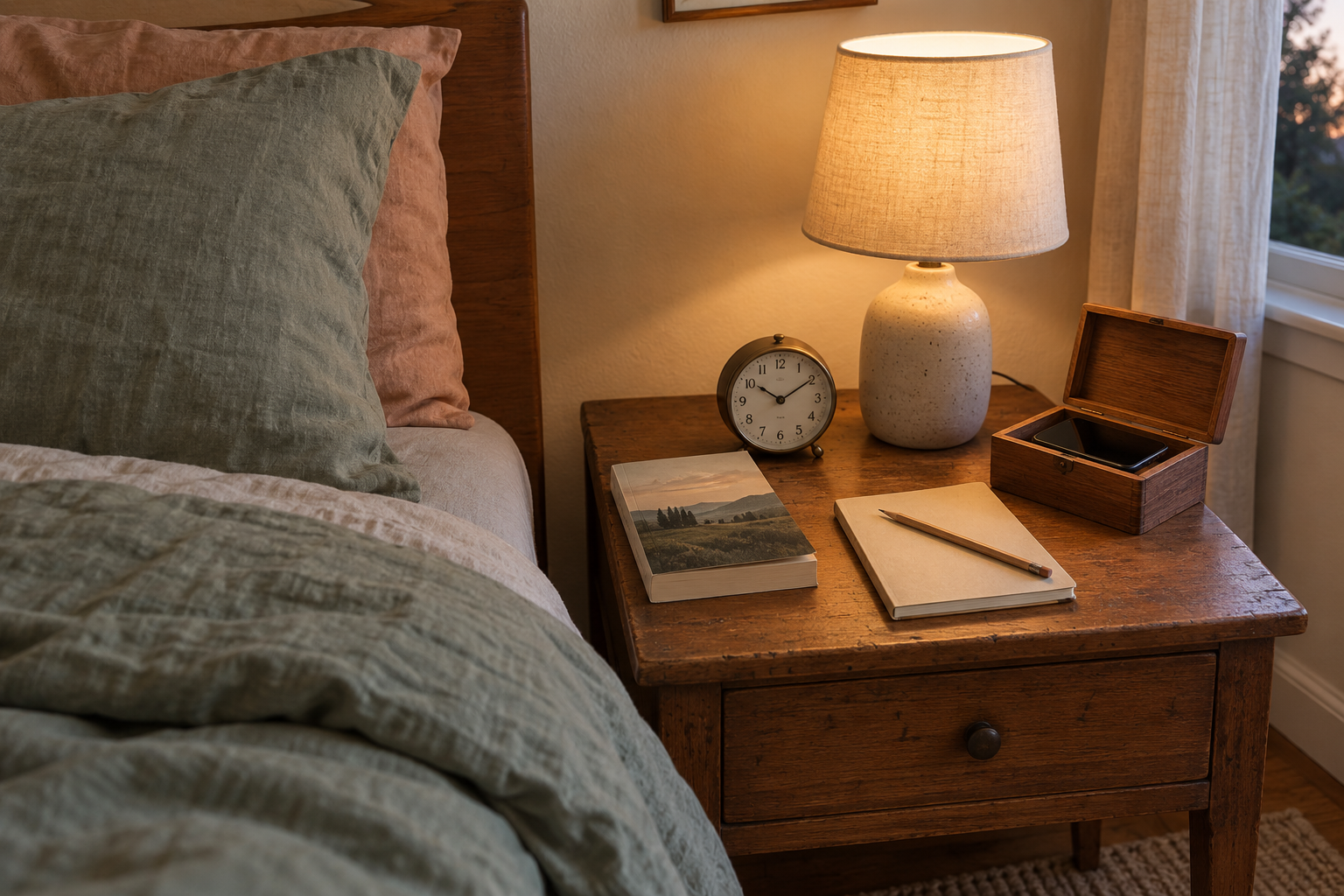
Use a drawer, small basket, lidded box, or shelf a few steps from the bed. The goal is not distance for its own sake. It is creating one tiny pause before an automatic reach.
Try a separate alarm clock
If your schedule allows it, a basic clock can remove one reason to keep the phone beside your pillow. Choose a display you can dim or turn away so the room does not glow all night.
Soften one light source
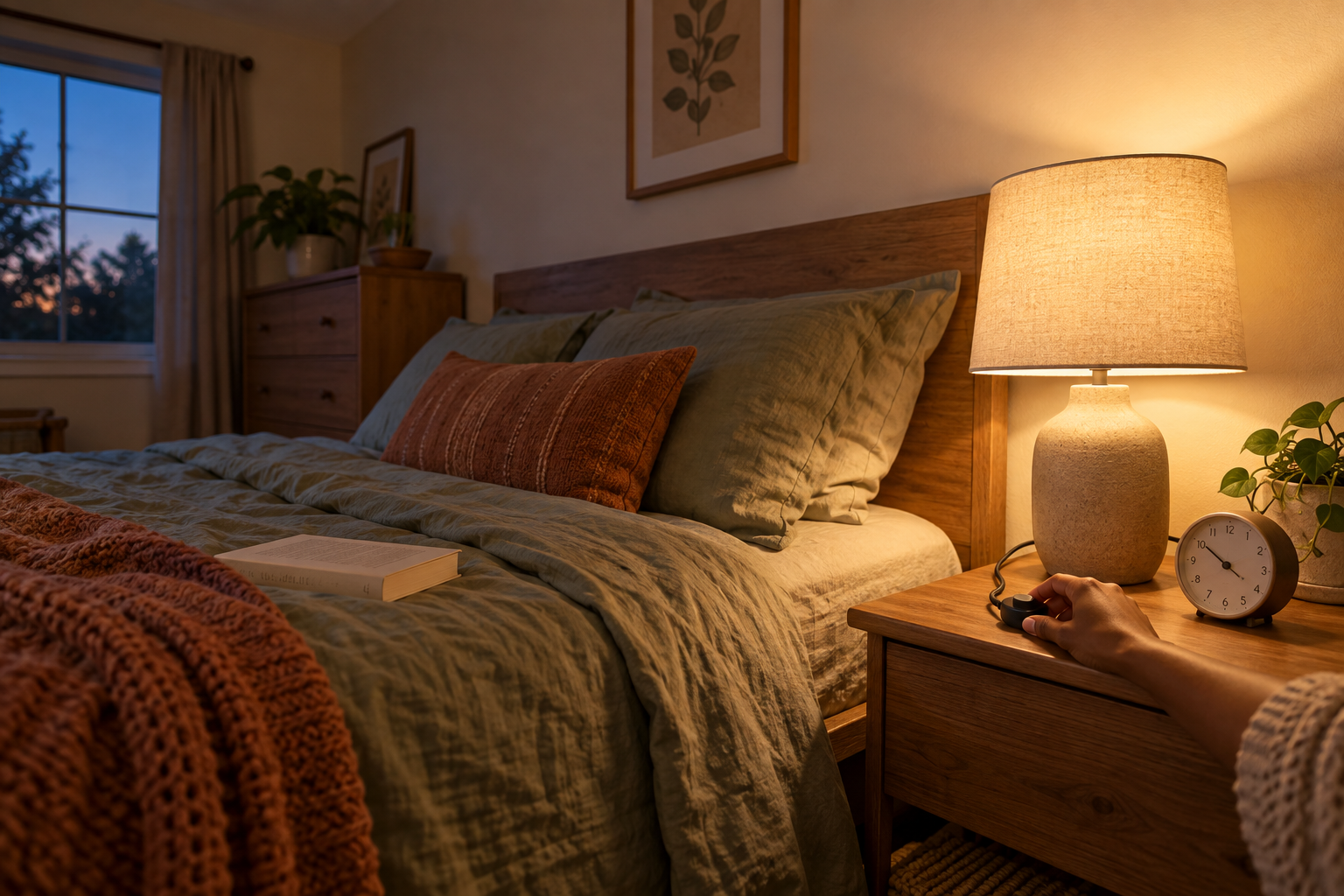
Start with a bedside lamp, a warm bulb, or a fabric shade rather than changing every fixture. Smaller, diffused lighting can make the evening feel different without a renovation.
Hide the cable tangle
Route cords behind furniture, gather them with a reusable tie, or place a charging strip inside a ventilated cable box designed for that purpose. Never cover hot adapters or use damaged cords.
Make the bed inviting—not fussy
You do not need a mountain of decorative pillows. Straighten the sheets, fold one blanket at the foot, and use the textures you already enjoy. An easy-to-reset bed is more helpful than a showroom bed.
Leave out one paper ritual
Place a book, puzzle book, sketchpad, or journal where your phone usually sits. Pick something with a very low starting point—one page, one prompt, or five minutes.
Quiet one visual surface
Choose the dresser, chair, or floor beside the bed. Clear that single area instead of demanding a perfectly tidy room. One patch of visual breathing space can change how the room reads.
Add something tactile
A woven basket, cotton throw, smooth stone, wooden tray, or handmade ceramic can give your hands and eyes somewhere gentle to land. Use what you own before shopping.
Create a five-minute closing shift
Plug in the phone, lower the light, place tomorrow’s essentials in one spot, and close the curtains. Repeating the same short sequence can become a practical cue that the day is ending.
Keep one imperfect corner
A bedroom still has to hold laundry, children, pets, partners, and real life. Do not turn calm into a new standard you can fail. Make one corner supportive and let the rest evolve.
Why the bedroom environment matters
The CDC recommends keeping the bedroom quiet, relaxing, and cool, and turning off electronic devices at least 30 minutes before bedtime. The National Heart, Lung, and Blood Institute also suggests using the hour before bed for quiet time, avoiding bright artificial light, and keeping the room quiet, cool, and dark.
Those are general sleep-habit recommendations—not a promise that redecorating will fix insomnia. The useful takeaway is simpler: your surroundings can either support the transition toward rest or keep asking for attention.
Make it work with the budget you have

If you share your bedroom
You do not need matching habits. Agree on one shared change: dimmer light after a certain time, headphones instead of speaker audio, a charging shelf away from the pillows, or one clear side of the room.
If a child sleeps nearby or regularly comes into the room, focus on safety and ease. Keep cords secured, candles unlit, small objects out of reach, and the walking path clear.

Start with one calm corner
If the whole room feels like too much, create one analog landing place. A chair, one light, a basket, and something to read or draw are enough. The rest of the room can remain real and unfinished.

Your 10-minute analog bedroom starter
A gentle reality check
A calmer room may support a wind-down routine, but it cannot diagnose or treat a sleep disorder, anxiety, depression, trauma, or another health condition. If sleep problems are frequent, persistent, or affecting daytime safety and functioning, speak with a qualified healthcare professional.
The useful takeaway
The most effective analog bedroom is not the prettiest one. It is the room that gives you a non-screen choice before bed and does not require extra energy to maintain.
Tonight, clear one surface, give your phone a home, and leave one paper activity within reach. That is enough to begin.
Save this analog bedroom reset
Screenshot this quick reset or send it to a friend: clear one surface, park the phone, soften one light, leave out one paper activity, and stop after ten minutes.
Sources & related LIFVYT reading
- Architectural Digest: The Analog Bedroom Is a Return to Stillness (March 12, 2026)
- Veranda: Bedroom Design Trends for 2026 (June 25, 2026)
- CDC: About Sleep
- National Heart, Lung, and Blood Institute: Healthy Sleep Habits
- LIFVYT: How to Build an Analog Bag
- LIFVYT: How to Reset Your Home When It Feels Messy and Overwhelming
- LIFVYT: Sensory Diet for Adults—Creating a Calming Environment
This article is for general educational and lifestyle purposes only. It is not medical, mental-health, sleep-disorder, or therapeutic advice.
The Sunday Soft Reset
A calmer start to your week.
Get Lifvyt’s weekly collection of gentle wellness reads, nervous-system resets and practical tools — plus the free 5-Minute Nervous System Reset Guide.
By signing up, you’ll receive the free guide and one gentle Lifvyt email each week. Unsubscribe anytime.