
Offline Hobbies · A practical Lifvyt guide
How to Build an Analog Bag You’ll Actually Use
A small, portable stash of books, puzzles, crafts, and comforting odds and ends—ready for the exact moment your hand reaches for your phone out of habit.
You do not need to throw your phone into a lake, disappear into the woods, or become the kind of person who carries a fountain pen for dramatic reasons. You just need a better option within reach.
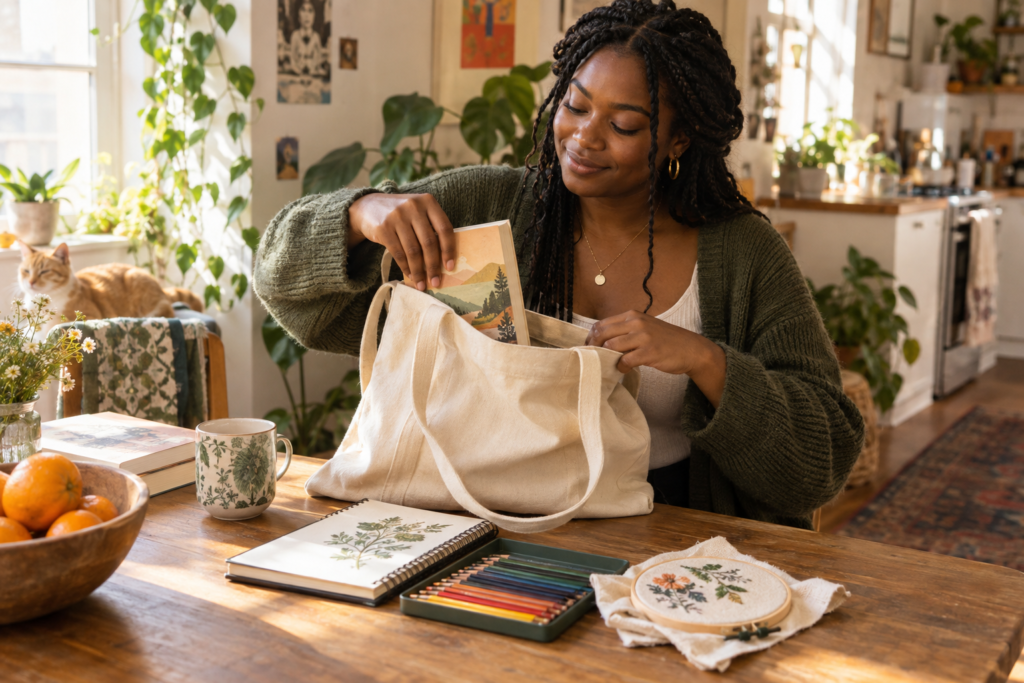
That is the whole idea behind an analog bag: a tote, pouch, or basket filled with appealing things to do that do not require a screen. Trend coverage has described people packing books, sketch pads, puzzles, craft supplies, and other tactile activities into a grab-and-go kit. The clever part is not the bag itself. It is removing the “What should I do instead?” decision when you are already tired.
First: notice your scroll moment
An analog bag works best when it is designed for a real part of your day. Before buying anything, notice when you tend to scroll without meaning to. Is it while waiting for an appointment? On the couch after work? In the school pickup line? During a quiet lunch break?
Your answer decides what belongs in the bag. A commuter needs compact, low-mess options. A living-room bag can hold a larger puzzle book or embroidery hoop. A car bag needs supplies that tolerate heat and movement. Make the kit fit your life—not an imaginary cottagecore version of it.

The four-part formula
You do not need one item from every category, but this mix keeps the bag useful across different moods and energy levels.
Something to read
A paperback, comic, short-story collection, magazine, or a few printed essays.
Something to make
A sketchbook, crochet square, visible-mending kit, collage pouch, or watercolor postcards.
Something to solve
Crosswords, Sudoku, word searches, playing cards, a pocket puzzle, or a travel game.
Something comforting
Tea bags, hand cream, mints, a small smooth stone, a favorite pen, or a handwritten playlist of ideas.
Build your bag in six easy steps
Choose the smallest useful container
Start with a tote, zip pouch, basket, lunch bag, or old backpack you already own. A giant bag invites clutter. The best container is easy to see, easy to carry, and not precious.
Pick three activities—not twelve
Choose one reliable favorite, one tiny five-minute option, and one activity you are curious about. Too many choices can turn the bag into another junk drawer.
Make every activity ready to begin
Sharpen the pencils. Add the crochet hook. Put the puzzle book and pen together. Mark your place in the novel. If setup requires another trip across the house, your phone will win.
Add a “low battery” option
On drained days, complicated hobbies can feel impossible. Include something almost effortless: a photo book, sticker-by-number page, magazine, deck of cards, or five-minute doodle prompt.
Park it where scrolling starts
Keep the bag beside the couch, near the front door, in your work tote, or in the car if the materials are temperature-safe. Visibility is part of the system.
Rotate one item each week
Refresh only what has gone stale. You do not need an entirely new hobby haul. Swap the finished book, add a new puzzle page, or change the yarn color.
A no-shopping starter bag
- A library book or unread paperback
- A notebook plus one pen you genuinely like
- A printed crossword, word search, recipe, or drawing prompt
- A deck of cards, small puzzle, or half-finished craft
- A tea bag, mint, or snack for your usual offline moment
If you want to spend a little, set a limit before you shop. The analog-bag trend can easily become an excuse to buy an aesthetic collection of supplies. A useful bag is better than a photogenic one. Libraries, thrift shops, dollar stores, swaps with friends, and supplies already hiding in a closet are excellent places to start.
Pack for the life you actually have
| Situation | Try packing | Skip |
|---|---|---|
| Waiting rooms | Paperback, pocket puzzle, pen, mints | Messy paint or lots of loose pieces |
| Work breaks | Sketchbook, short stories, cards, tea | Anything hard to stop after ten minutes |
| Car or pickup line | Puzzle book, magazine, knitting with larger pieces | Meltable, sharp, or heat-sensitive supplies |
| Couch after work | Embroidery, coloring, novel, hand puzzle | Projects that feel like another deadline |
| Meeting a friend | Two-player cards, collage scraps, travel watercolor | Activities that prevent conversation |
The seven-day analog-bag experiment
For one week, place the bag beside your most common scrolling spot. When you catch yourself opening an app automatically, do not make a rule that you can never scroll. Just try one item from the bag for five minutes first.
At the end of the week, ask three practical questions:
- Which item did I reach for without forcing it?
- Which item created too much setup or mess?
- Where did the bag need to be so I could actually see it?
Keep the winner, remove the dud, and adjust the location. That is a successful experiment—even if you still used your phone.

Make it social without making it complicated
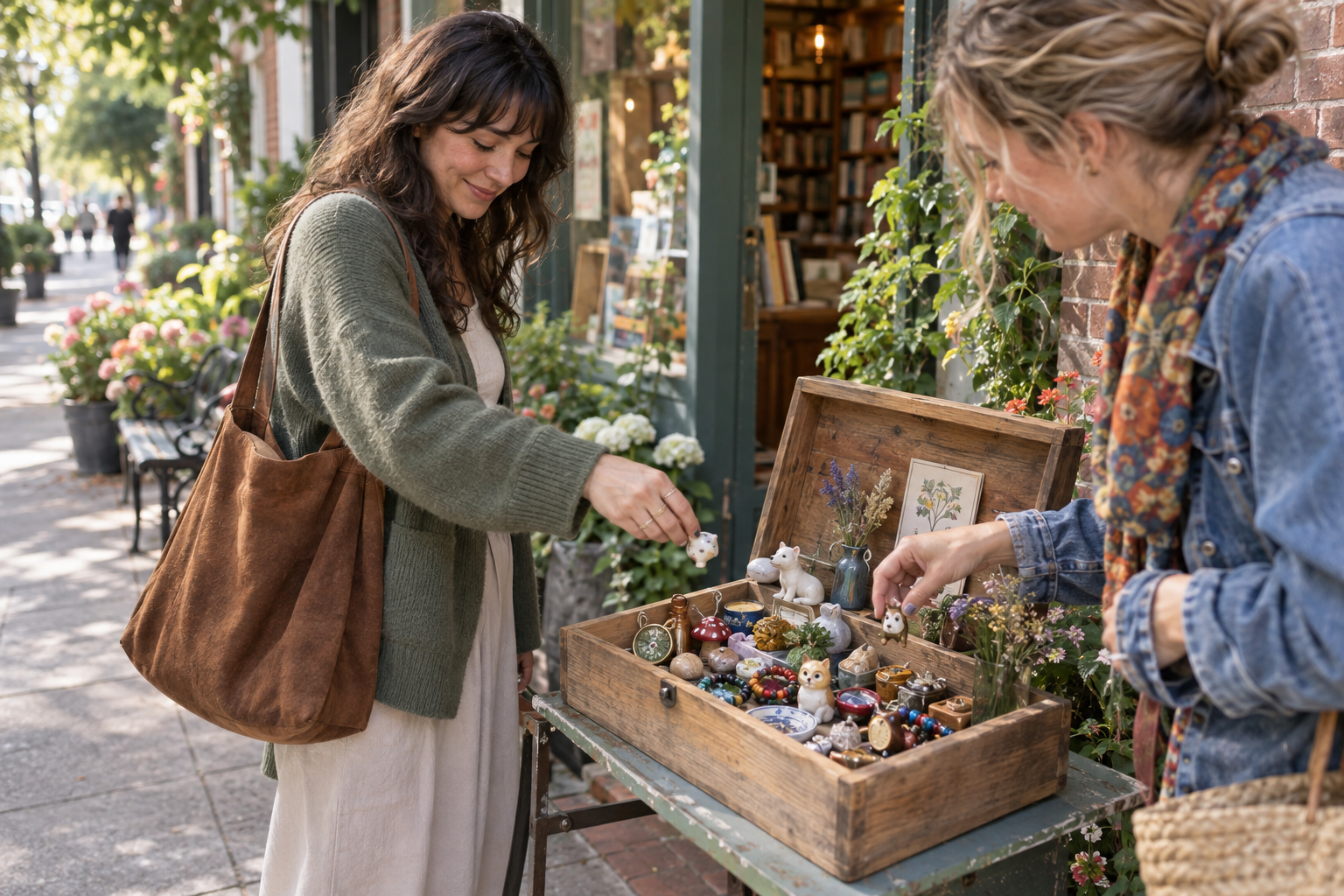
Bring your bag to a park, café, library, or a friend’s porch. Everyone can work on a different quiet activity while still sharing the same space. It is connection without the pressure of planning a major outing or filling every silence.
If a hands-on fiber project sounds good, try Lifvyt’s guide to slow stitching for beginners. It is forgiving, portable, and ideal for using fabric scraps you already have.
Your bag only needs one good alternative
Start tonight: choose a container, add three things, and leave it where your hand usually reaches for your phone. You are not trying to become perfectly screen-free. You are giving real life a fair chance to be the easier choice.
Frequently asked questions
What is the difference between an analog bag and an activity bag?
Mostly the intention. An analog bag is specifically designed to offer appealing, screen-free choices during moments when you tend to scroll automatically.
Do I need to carry it everywhere?
No. A basket beside the couch counts. Build one for the place where it will solve a real problem.
What if I get bored with it?
Rotate one or two items instead of buying a new collection. The bag should change with your interests.
Can I make one for children?
Yes, with age-appropriate supplies and adult supervision. Avoid choking hazards, sharp tools, toxic materials, and anything likely to overheat in a car.
The Sunday Soft Reset
A calmer start to your week.
Get Lifvyt’s weekly collection of gentle wellness reads, nervous-system resets and practical tools — plus the free 5-Minute Nervous System Reset Guide.
By signing up, you’ll receive the free guide and one gentle Lifvyt email each week. Unsubscribe anytime.