
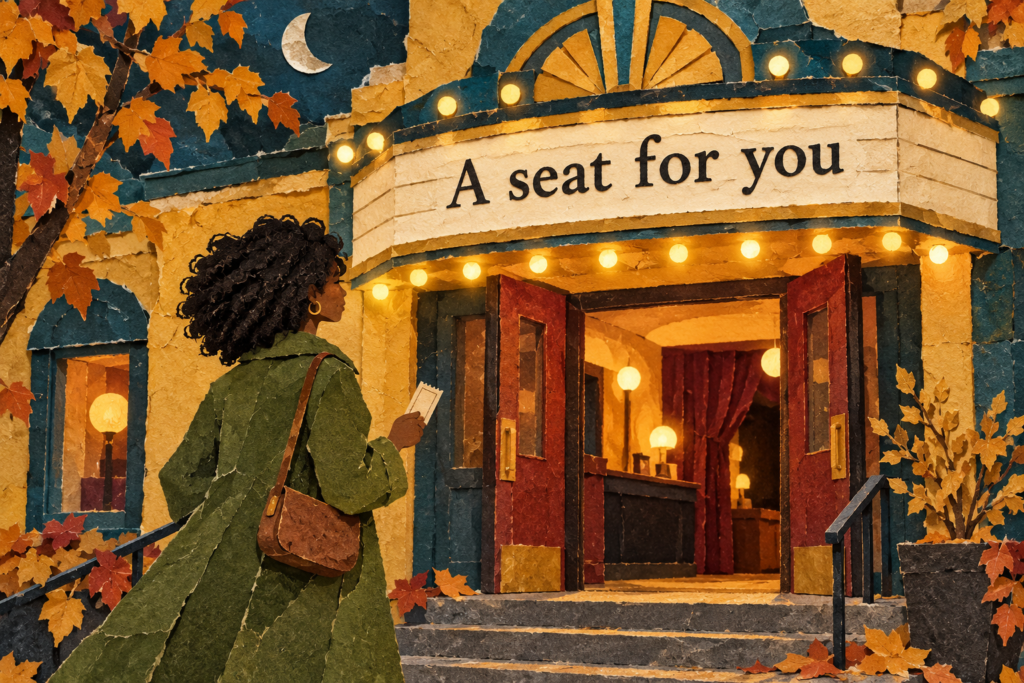
EVERYDAY LIFE · TAKE YOURSELF SOMEWHERE
You want to see the movie. The group chat wants to discuss six dates, three restaurants and whether anyone has watched the trailer. You can buy one ticket.
A solo movie date can be a small, enjoyable outing with a clear beginning and end. You choose the film, the seat and whether popcorn is part of the plot. This guide helps you plan the practical bits, especially if going alone still feels unfamiliar.
Choose the film before you choose the aesthetic
Start with a film you would watch even if nobody asked about it afterward. A comedy, a documentary or a familiar favorite returning to theaters all count. Your first solo outing does not need to prove that you have excellent taste in obscure cinema.
Read the short synopsis, rating and runtime. If certain themes would spoil the evening for you, check the content information before booking. A cozy outing does not require a cozy film—but you get to decide how much intensity sounds enjoyable today.
- Want a simple first attempt? Choose a familiar venue and a shorter film that interests you.
- Love the collective reaction? A busier screening may be part of the fun. Going alone does not mean sitting in an empty theater.
- Prefer fewer people? Compare seat maps and off-peak showtimes. An early showing is not a guarantee of a quiet audience.
During fall, look through local theaters’ seasonal and repertory listings as well as new releases. Check the actual date, location and format: a special event may include an introduction or discussion that changes the length of your visit.
Plan the whole outing, not just the runtime
A 100-minute film does not automatically fit inside a two-hour break. Add travel, parking or walking, arriving early, any pre-show material and the trip home. If you have a firm pickup or childcare deadline, leave a real buffer rather than hoping the credits cooperate.
Do not assume every showing has trailers. For example, AMC says its sensory-friendly screenings start at the scheduled time without trailers. Other special screenings may also run differently.
If you share caregiving, arrange the handoff before buying a nonrefundable ticket. A specific request is easier to plan around: “Could you cover Saturday from one until four? I’d like to see a movie.” You can offer a separate block of personal time in return without turning the outing into a household negotiation marathon.
Set a total you like before checkout
Check the final price, including booking fees and format upgrades. Then add transport or parking, any childcare cost and the snack you actually want. A lower ticket price across town may not be cheaper once you get there.
Example only: a $12 ticket, $2 booking fee, $4 transport and $6 snack total $24. Those are illustrative planning figures, not quoted local prices. Replace each number with the cost shown for your outing.
Compare standard and premium formats before selecting an upgrade. Look for the theater’s own discount or matinee information, and check membership requirements. You do not need a subscription to test whether you enjoy going once.
Pick a seat and screening that suit you
First, check whether seating is reserved or first-come, first-served. On a booking map, locate the screen and entrances before choosing a dot. The map can be easy to misread when you are rushing.
- Near the middle: a reasonable starting preference if you want a more centered view. Room layouts and personal preferences vary.
- Near an aisle: useful if you expect to step out, though people may pass nearby. Keep the aisle clear.
- Accessible seating: check the venue’s designated spaces, routes and booking guidance rather than assuming any aisle seat meets your needs.
For dialogue support, look at the exact screening label. Open captions appear on the cinema screen. Closed-caption devices provide captions separately. Audio description adds spoken descriptions of visual action. Availability depends on the film and showing; confirm with staff and allow time to collect and test any device.
A sensory-friendly screening is a different option. AMC describes raised lights, lower sound and freedom for audience members to move or vocalize. It is not a promise of silence, and it does not mean the film’s content has been changed. Check the local program and film details before choosing it.
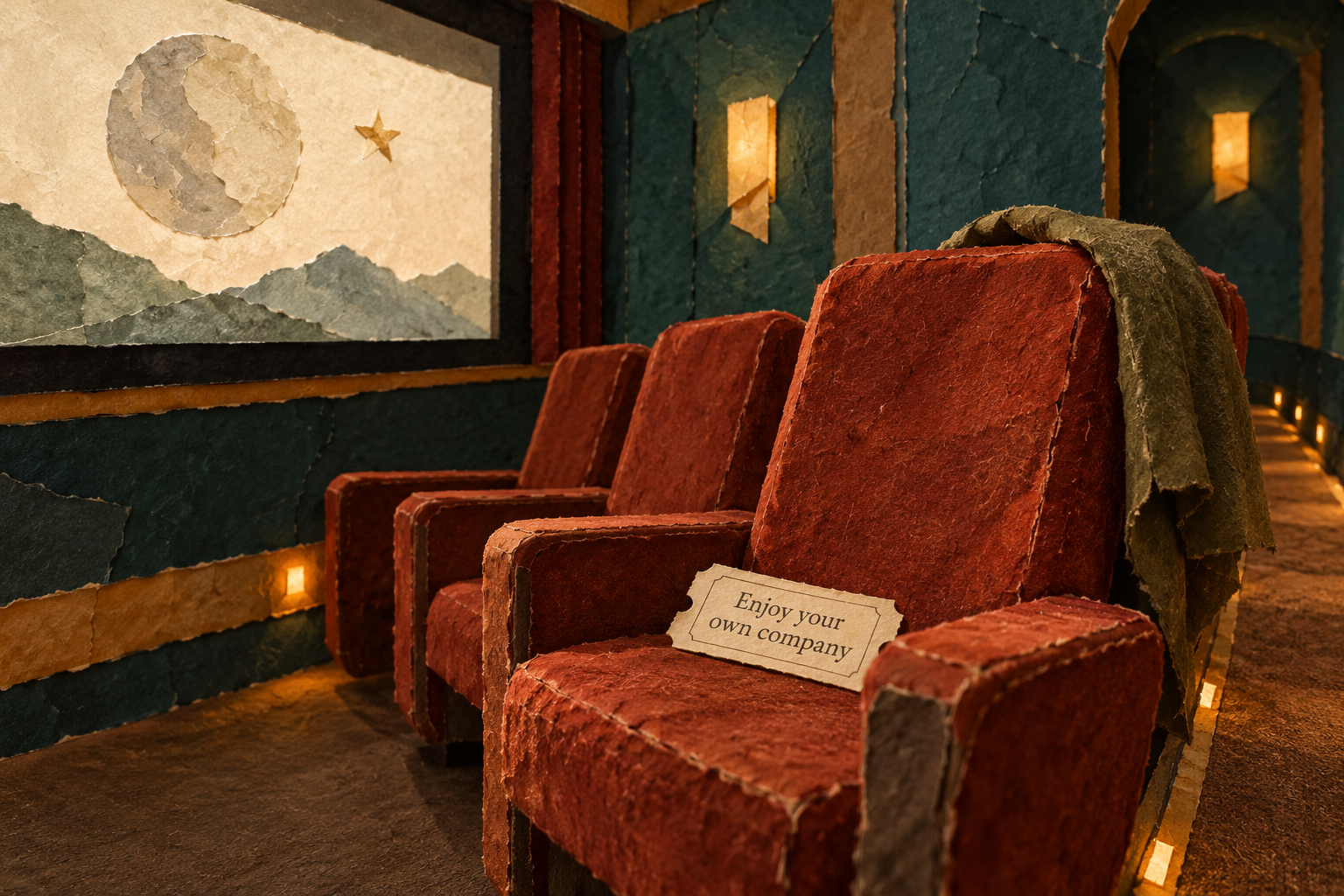
Bring what you need, then stop packing
Have your ticket or booking reference ready, plus payment, keys, any glasses or other essentials you normally need and a light layer if you tend to feel cold. Check the venue’s bag and food policies rather than assuming you can bring everything from home.
Save the ticket where you can retrieve it easily. If you need to stay reachable for a child or another responsibility, agree beforehand on what counts as urgent. Silence your phone and step into the lobby to check or respond; a bright screen in the auditorium becomes everyone else’s unplanned subplot.

What to do if going alone feels conspicuous
You do not have to feel effortlessly confident before you go. Give yourself a small sequence to follow: scan the ticket, find the restroom, collect anything you need, locate your seat. A concrete next step is more useful than trying to look like someone who definitely does this all the time.
At the counter, “One ticket, please” is enough. If someone asks whether you are meeting anyone, “No, I wanted to see this one” is a complete answer. No invented friend in the parking lot required.
Once seated, settle your belongings, read the pre-show information or simply wait. You do not need to perform being busy. Other people may notice you; that does not make your ticket any less valid.
If the room or film isn’t working for you
You can leave. If the issue is a seat problem, disruptive behavior or equipment that is not working, ask staff for help. Check the venue’s policy rather than assuming a refund is guaranteed. If you simply dislike the film, leaving early is still your choice.
If the booking site won’t let you choose a single seat
Some booking systems restrict choices that leave isolated seats. Try another position or contact the box office. Do not buy an extra seat you do not need just because the online map is being difficult.
If you want company after all
Invite someone next time. Enjoying your own company is not a test you fail by liking other people. You can also keep the film solo and meet a friend afterward, provided that fits your time and budget.
Give the outing a small ending
Before opening reviews, decide what you thought. Pick one scene, one sound or one detail that stayed with you. You can jot down a sentence later, save the ticket or just go home. The movie does not need to become a content-creation assignment.
If you want to write more, try our simple journaling guide. For a genuinely screen-free next outing, our first solo museum visit guide offers another manageable place to start.
Note: Planning guidance. Confirm showtimes, ticket terms, accessibility and venue policies before booking; examples are illustrative.
The Sunday Soft Reset
A calmer start to your week.
Get Lifvyt’s weekly collection of gentle wellness reads, nervous-system resets and practical tools — plus the free 5-Minute Nervous System Reset Guide.
By signing up, you’ll receive the free guide and one gentle Lifvyt email each week. Unsubscribe anytime.