
Soft Spaces · A realistic bedroom fix
The Chairdrobe Is Full: 9 Better Places for Clothes That Aren’t Clean or Dirty
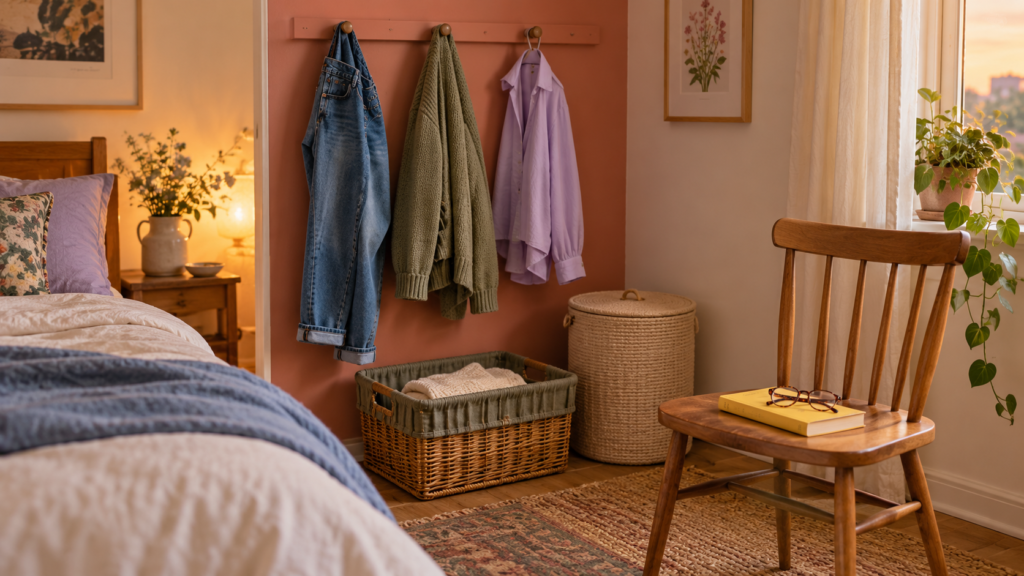
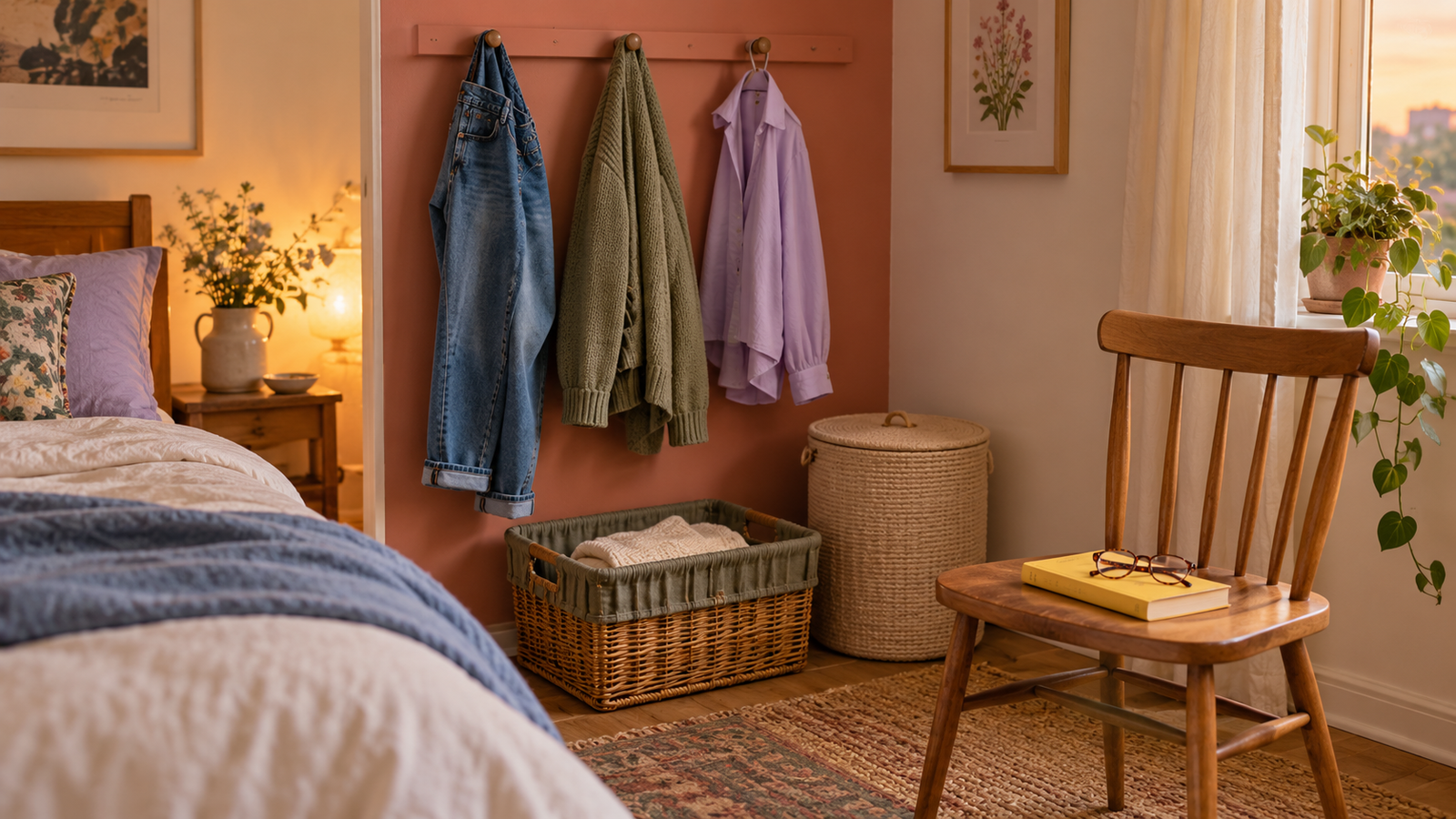
Your bedroom chair did not fail. It was simply given a job with no rules: hold the jeans you might wear again, the cardigan you wore for an hour and the shirt you are still emotionally negotiating with.
Chairdrobe organization does not require a color-coded closet, a thirty-bin haul or becoming a person who folds pajamas before bed. It needs one small system for the awkward middle category: worn, but not automatically ready for laundry.
If the chair fills again every week, that is useful information. The problem is probably not laziness. Your room has a destination for clean clothes and a destination for dirty clothes—but nowhere obvious for everything in between.
First, give clothes four possible destinations
Do not start by buying organizers. Stand beside the chair and sort its contents into four temporary groups. This shows you what the space actually needs.
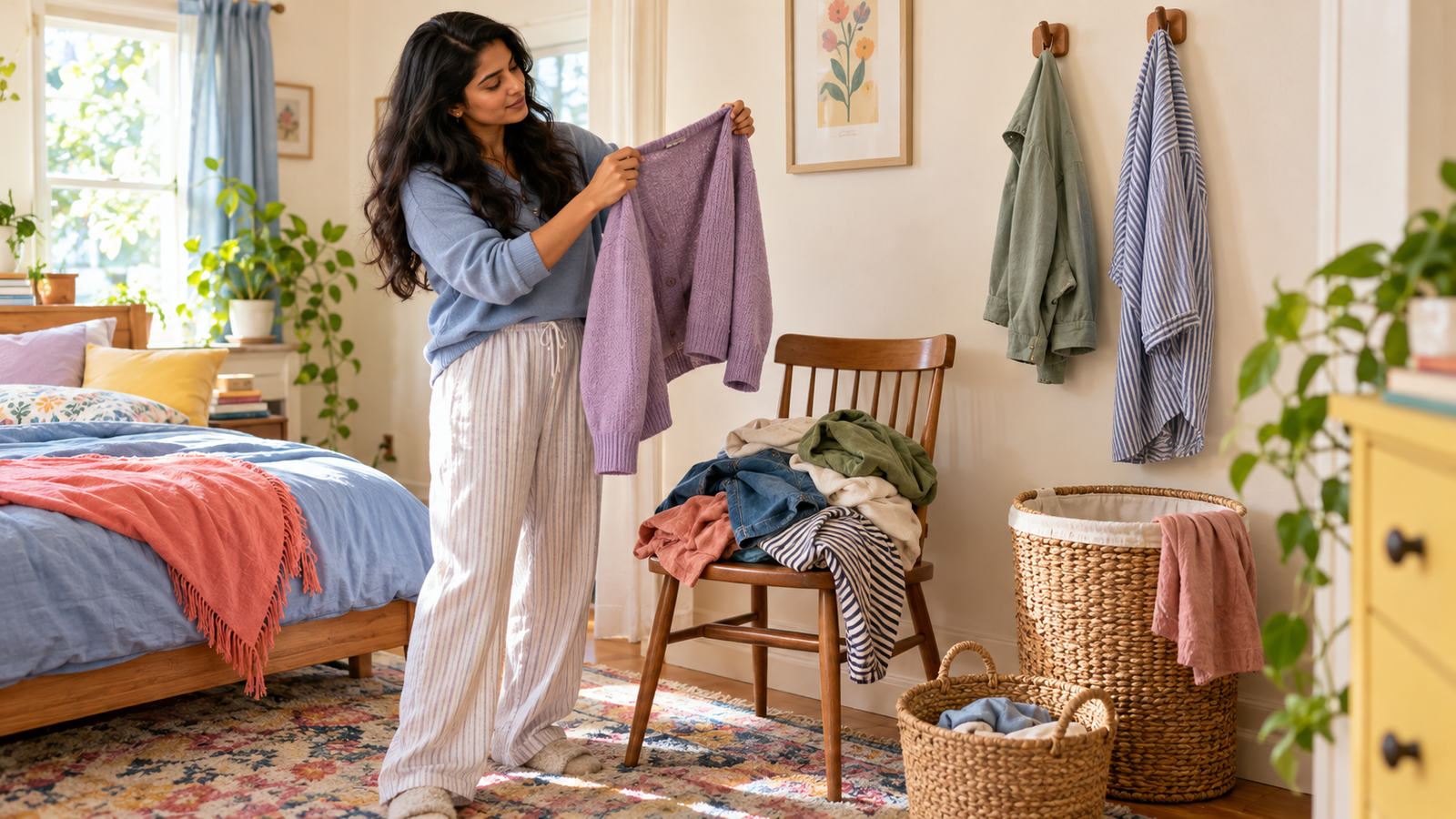
Nine realistic alternatives to the bedroom clothes chair
1. Two wall hooks—the smallest useful system
Use one hook for bottoms and one for tops or layers. The limit matters: when both hooks are occupied, something has to return to the closet or enter the hamper. That turns the system into a boundary instead of a vertical pile.
2. A slim rewear rail
If work clothes, cardigans or dresses wrinkle on hooks, use a narrow rail with three to five hangers. Leave space between garments so you can actually see what is there. This is a working zone, not a second closet.
3. One shallow “decide tomorrow” basket
Keep it deliberately small. Anything placed here gets reconsidered the next day. If the basket stays full for a week, the items are not awaiting a decision—they have become storage and need a real home.
4. An over-the-door landing zone
This works especially well in rentals and small bedrooms. Choose a rack that lets the door close properly, then assign each hook a job: work layer, jeans, robe or tomorrow’s outfit. Avoid filling every hook “just because it exists.”
5. A valet stand or ladder rack
Use this when you genuinely rewear coordinated outfits. A valet stand keeps trousers, belts and jackets visible without crushing them together. A leaning ladder can work for light garments, provided it is secure and not blocking a walkway.
6. A divided hamper
One section can hold ordinary laundry while another holds delicates, gym clothes or items needing stain attention. This removes the “I will deal with that later” category that often lands on the chair.
7. A next-day outfit hook
Give tomorrow’s clothes their own temporary place instead of mixing them with yesterday’s. This is particularly useful for early shifts, daycare mornings and days when choosing an outfit before coffee feels needlessly ambitious.
8. A family return basket outside the bedroom
If children’s sweaters, stray socks and someone else’s hoodie migrate into your room, give them a separate return basket. Family members retrieve their belongings from one predictable place instead of your chair becoming household lost-and-found.
9. The one-minute closing loop
Before getting into bed: empty pockets, hang or fold anything you will rewear, move dirty items to the hamper and clear the chair. It is short because the destinations already exist. You are closing a loop, not cleaning the entire bedroom.
What can actually be worn again?
There is no universal number of wears for every garment. Fabric, weather, activity, skin contact and the garment’s care label all matter. Underwear, socks and sweaty workout clothing generally belong in the laundry after use. For other pieces, check for odor, visible soil, dampness and how the item feels before placing it in the rewear zone.
When you do wash something, follow its care label. “Wear again” should never mean ignoring a stain, odor or hygiene need; it simply prevents automatic washing—or chair storage—when a garment is still comfortable and appropriate to use.

Match the fix to the reason your pile happens
If you are too tired at night: put the hooks between the bedroom door and the bed. The easiest destination should be closer than the chair.
If you cannot remember what is clean: keep rewear clothes visible and separate from freshly laundered clothing.
If the closet is overfilled: the chair may be overflow, not a habit problem. Remove clothes that no longer fit your actual week before adding more storage.
If everything belongs to someone else: create the family return basket and stop doing a nightly delivery route.
Keep the chair—but give it its original job back
You do not need to remove every chair from every bedroom. A chair can hold a book, help you put on shoes or give you somewhere to sit that is not the bed. If you are also trying to make the room less phone-centered, pair this system with LIFVYT’s analog bedroom ideas.
And if you enjoy a layered, colorful home, do not confuse “less visual friction” with “make everything beige.” Comfort stacking is proof that a room can hold color, texture and personality while still giving everyday objects a clear place.
The useful takeaway
Start with two hooks and one small basket. Live with them for a week before buying anything else. The right chairdrobe organization system is the one you can use while tired, distracted and holding tomorrow’s cardigan—not the one that looks best in an empty-room photo.
References and further reading
- Home clutter and mental well-being: Exploring moderators and the mediating role of home beauty. Journal of Environmental Psychology, 2025. Cross-sectional study; useful for association, not causation.
- Visual clutter: The role of item quantity, spatial organization, and surface complexity in model and human estimates, 2026.
- Textiles: Second National Attitudes and Behaviours Survey. Environmental Protection Agency, 2025.
- Explore more LIFVYT Soft Spaces articles.
The Sunday Soft Reset
A calmer start to your week.
Get Lifvyt’s weekly collection of gentle wellness reads, nervous-system resets and practical tools — plus the free 5-Minute Nervous System Reset Guide.
By signing up, you’ll receive the free guide and one gentle Lifvyt email each week. Unsubscribe anytime.