
Culture • flavor • everyday ritual
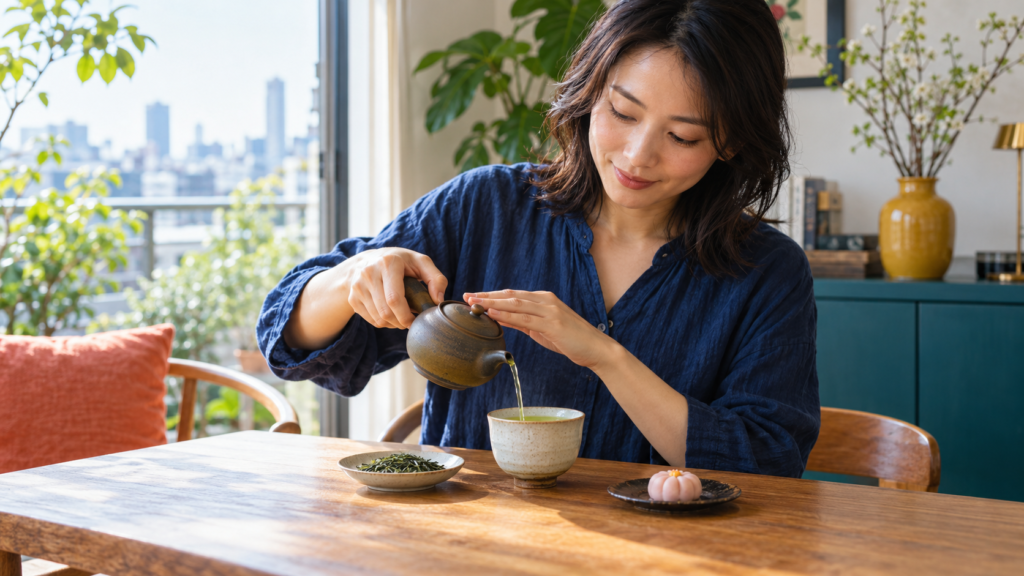
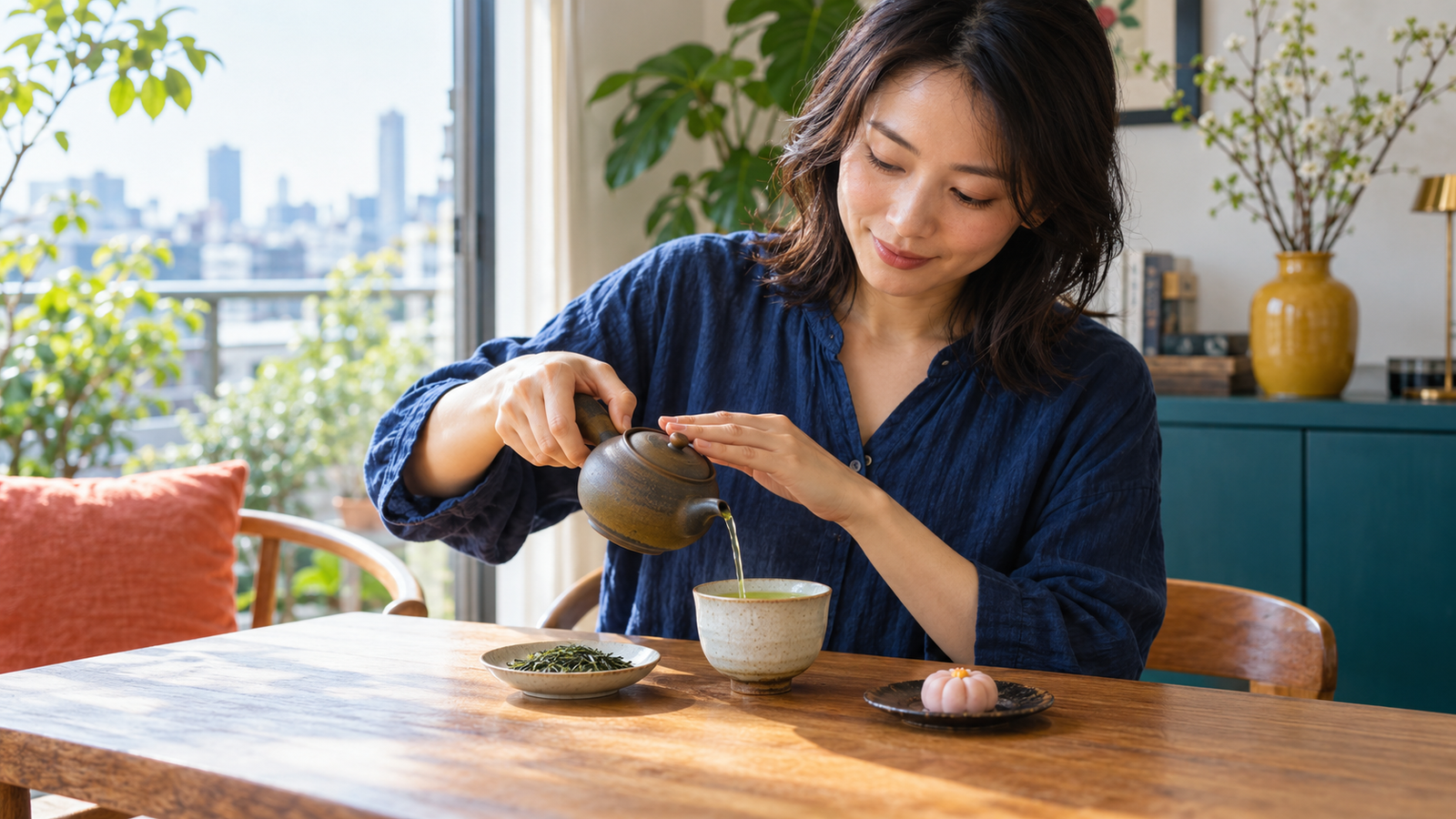
Matcha is having a very loud moment. But Japanese green tea culture has never been only one neon latte, one bamboo whisk or one wellness promise. It also lives in an ordinary cup of sencha, a roasted pot of hōjicha after dinner, regional harvests, handmade bowls and the quiet act of preparing something thoughtfully for another person.
That fuller story matters right now. Global demand for matcha has climbed sharply among Gen Z and millennial drinkers, while heat, limited harvests and labor-intensive production have put pressure on Japanese growers. Enjoying Japanese tea can still be playful and modern. It can also begin with curiosity about where the tea came from and how it has been enjoyed long before it reached a café menu.
Japanese tea culture is bigger than the tea ceremony
The Japanese tea ceremony is commonly called chanoyu or sadō. It turns preparing matcha for a guest into a practiced art shaped by attention, hospitality, seasonal details and respect for the utensils and setting.
That does not mean every cup of tea in Japan is ceremonial. Green tea also appears in homes, restaurants, vending machines, offices and bottled drinks. Japan’s Ministry of Agriculture describes sencha as a representative everyday tea and notes that different regions produce teas with their own aromas, colors and methods.
It is more accurate to think of formal tea practice and ordinary tea drinking as different parts of a much larger living culture—not to treat all Japanese people as though they perform a ceremony before breakfast.
One plant, many cups
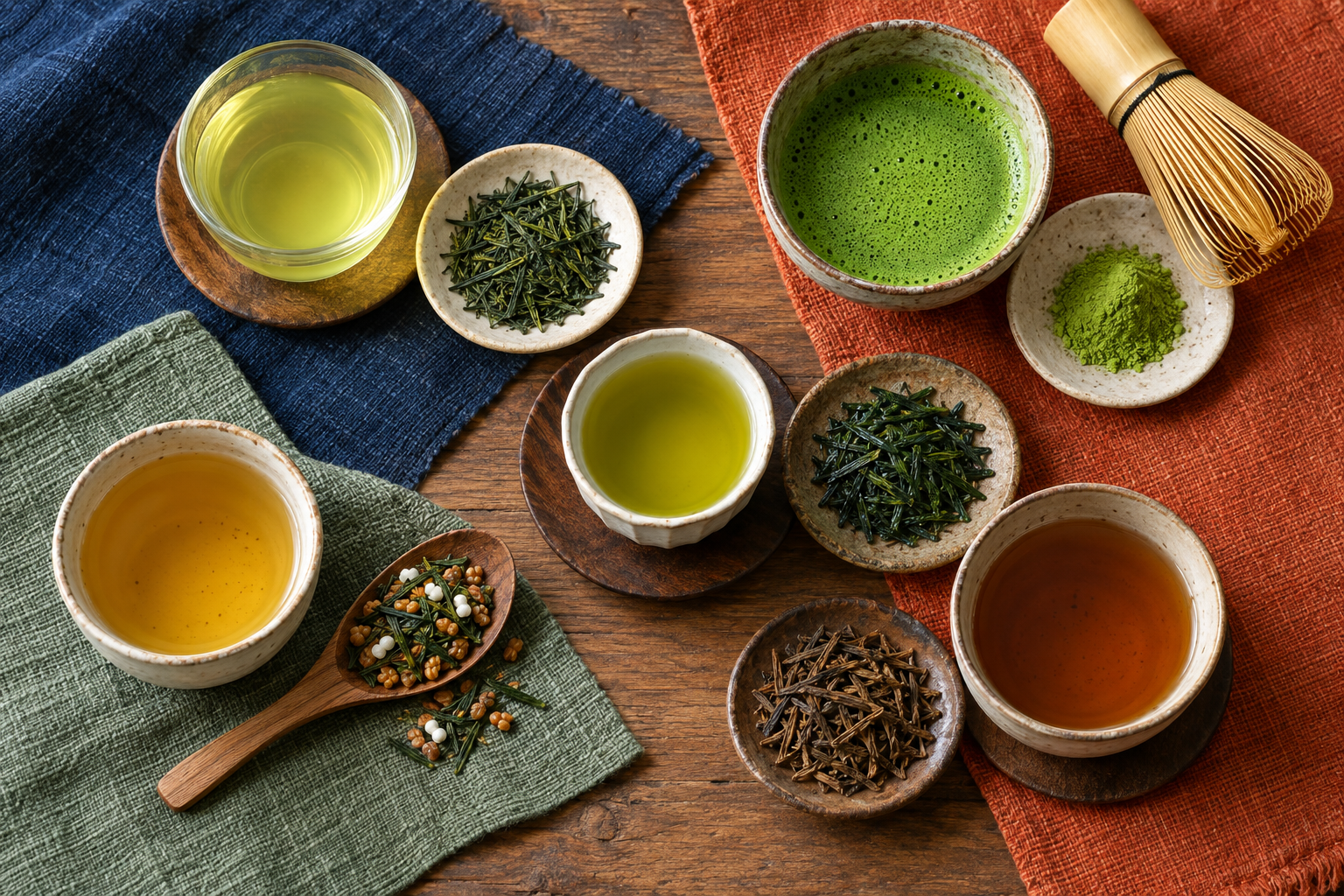
Sencha, matcha, gyokuro, genmaicha and hōjicha all begin with Camellia sinensis. Growing, shading, steaming, rolling, roasting and grinding change the final flavor, color and texture.
Sencha
Steamed and rolled green tea leaves. The flavor can move from bright and lightly astringent to sweet and savory, depending on the leaf and water temperature.
Matcha
Shade-grown tea processed into tencha and ground into powder. Because the powder is whisked into water, you consume the suspended leaf rather than only an infusion.
Gyokuro
A shaded leaf tea traditionally brewed with cooler water. Its concentrated sweetness and umami make it a sip-slowly tea rather than a giant travel-mug drink.
Genmaicha
Green tea blended with roasted rice. It has a warm, nutty aroma and is an approachable starting point for people who find some green teas too grassy.
Hōjicha
Roasted Japanese green tea with a reddish-brown cup and caramel-like aroma. Caffeine varies by leaf and brew, so “roasted” does not automatically mean caffeine-free.
What is actually in green tea?
Green tea contains caffeine, the amino acid L-theanine and plant compounds called catechins. EGCG is the catechin that receives the most attention, but it is not the only compound in the cup.
Caffeine
Caffeine temporarily blocks adenosine signaling, which can make you feel more awake. The amount in tea changes with the tea type, leaf quantity, water temperature and steeping time. Matcha may deliver more caffeine than a lightly brewed sencha because the powdered leaf is consumed.
L-theanine
L-theanine occurs naturally in tea leaves. A 2025 meta-analysis found some promising effects on specific cognitive tests, but the overall results were not consistent enough to call it a guaranteed focus aid. Research on L-theanine combined with caffeine is somewhat more encouraging for short-term attention and mood, although study doses do not always match an ordinary cup.
Catechins and antioxidant activity
Catechins can participate in antioxidant and cell-signaling activity. In plain language, they may help influence how the body handles oxidative stress. Laboratory findings help explain possible mechanisms, but a petri-dish result is not the same as a proven effect in daily life.
What human research can honestly tell us
A 2025 systematic review and meta-analysis reported possible benefits from tea, L-theanine and L-theanine-plus-caffeine for selected cognitive and mood outcomes. Another 2025 review called the L-theanine evidence promising but not completely conclusive.
A 12-month randomized study published in 2024 examined matcha in older adults with mild cognitive decline. It reported improvements in some measures, including social acuity and sleep quality, but it did not show a universal cognitive upgrade. The population was specific, and one study should not be stretched into a promise for everyone.
Translation: green tea can be a nourishing beverage you enjoy. It does not need to become a treatment plan or a productivity supplement to be worthwhile.
Brew for flavor, not for a personality test
Green tea can taste harsh when boiling water pulls out more bitterness than the leaf needs. Start with the producer’s directions, then adjust one thing at a time.
| Tea | Easy starting point | What to notice |
|---|---|---|
| Sencha | Warm—not boiling—water; steep about 1 minute | Freshness, sweetness and a clean savory finish |
| Gyokuro | Cooler water; use a small serving and allow a slower steep | Concentrated umami and soft sweetness |
| Genmaicha | Hotter water than delicate sencha; short steep | Roasted rice, nuts and gentle green-tea notes |
| Hōjicha | Hot water; short steep | Toast, cocoa-like warmth and caramel aroma |
| Matcha | Sift a small amount; add warm water and whisk until evenly suspended | Umami, mild bitterness and a smooth texture |
Tea as hospitality, not just a health hack
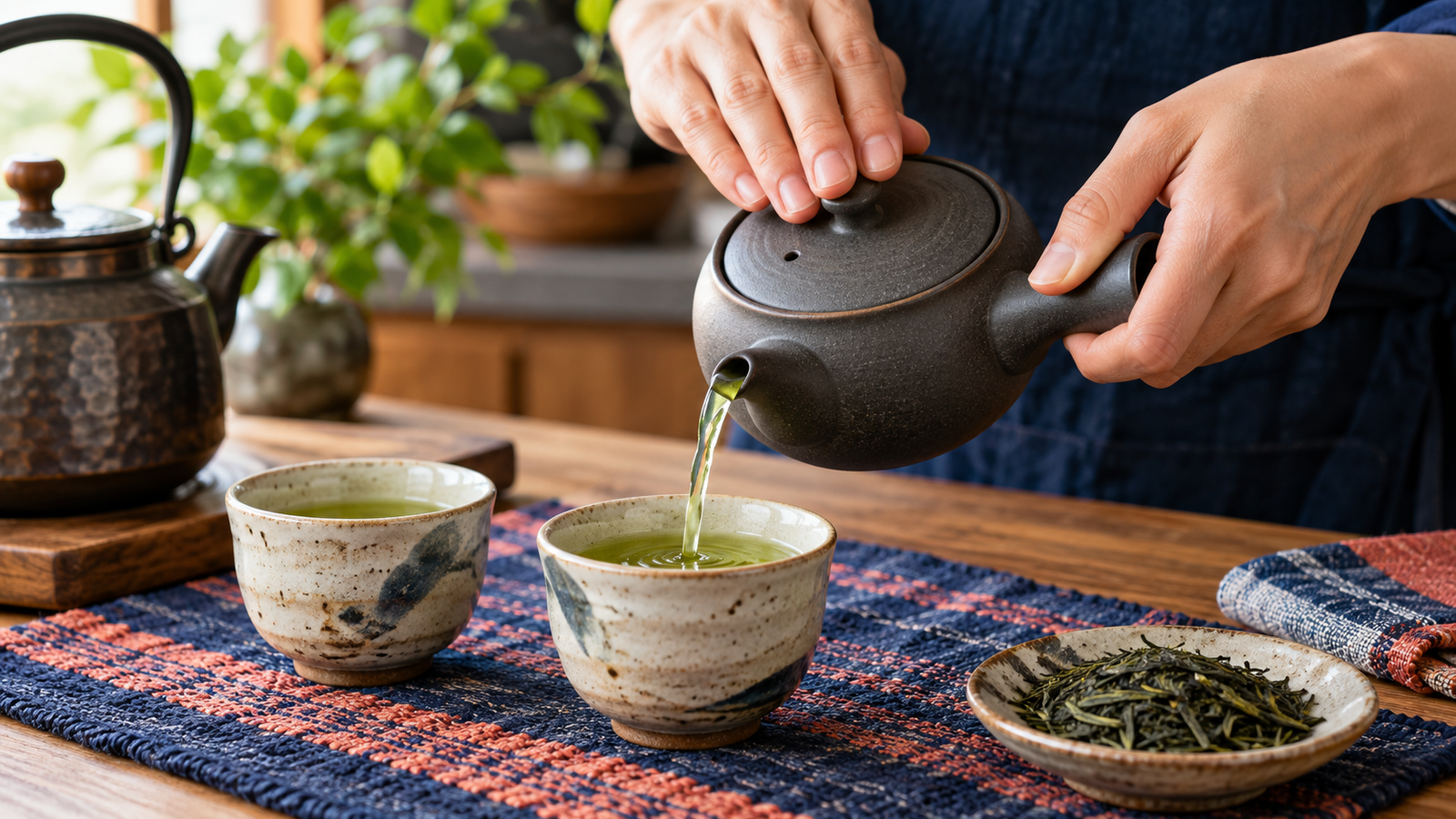
One of the most useful ideas within formal Japanese tea practice is that the guest matters. The host considers the bowl, the room, the season and the way the tea is presented. The point is not simply to consume caffeine efficiently.
You can appreciate that principle without pretending your kitchen is a tea house. Put your phone down. Choose a cup you like holding. Offer the first pour to someone else. Notice whether the tea tastes grassy, toasted, sweet or pleasantly bitter. Wash the pot when you are finished.
The pause is not magical. It simply gives an ordinary transition—a meeting ending, the school pickup beginning, dinner finally cleaned up—a visible beginning and end.
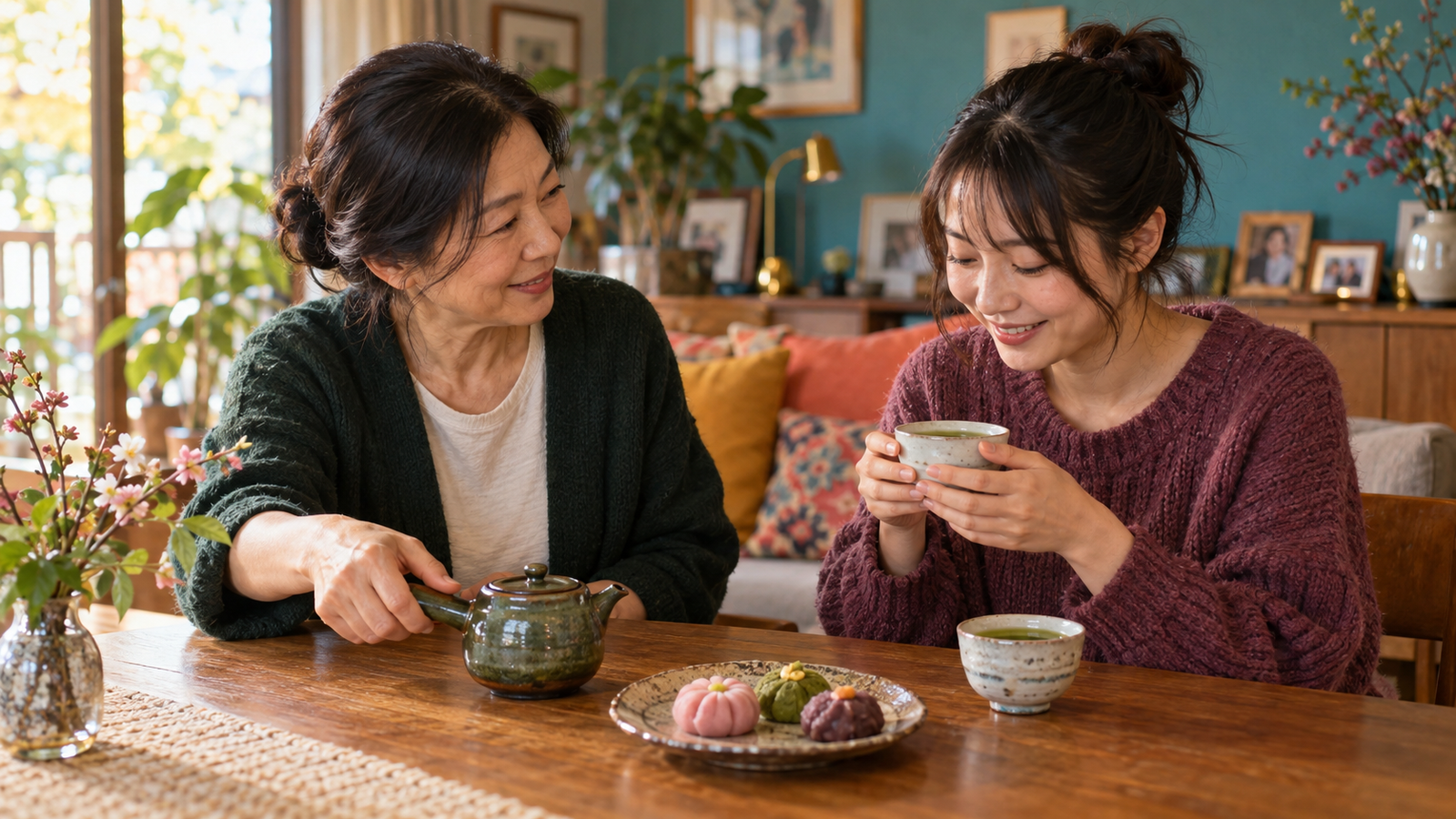
Try a five-minute everyday tea pause
- Choose one tea. Sencha for fresh flavor, genmaicha for toastiness or hōjicha for something roasted and mellow.
- Heat only the water you need. Let very hot water cool slightly for delicate green tea.
- Use the cup you already enjoy. A special bowl is lovely, not mandatory.
- Steep without scrolling. Watch the leaves open or the matcha become evenly suspended.
- Taste before adding anything. Then adjust the strength, water or milk to suit your actual palate.
Where this fits in real life
If you already enjoy matcha, try learning one leaf tea next. If afternoon coffee keeps hanging around at bedtime, experiment with a smaller serving of green tea earlier in the day. If caffeine does not feel good in your body, enjoy the cultural and sensory parts of tea without forcing the stimulant.
For a playful matcha recipe, try LIFVYT’s Strawberry Matcha Latte. If you want an evening drink with a different flavor profile, visit Quiet Mind Tea or explore the colorful Blue Moon Tea.
The takeaway
Japanese green tea culture offers more than a fashionable coffee substitute. It holds regional agriculture, craftsmanship, hospitality, flavor and generations of practice. Your everyday version can remain simple: one thoughtfully brewed cup, a few minutes of attention and perhaps someone to share it with.
References and further reading
- Japan Ministry of Agriculture, Forestry and Fisheries: Traditional beverages and Japanese green-tea types
- Japan National Tourism Organization: Japanese tea ceremony and hospitality
- Reuters, July 4, 2025: Global matcha demand, production pressure and Japanese tea exports
- Payne ER, et al. Effects of tea or its bioactive compounds on cognition, mood and sleep: systematic review and meta-analysis
- Mátyus RO, et al. L-theanine and cognitive performance: systematic review and meta-analysis, 2025
- Uchida K, et al. Matcha, cognitive function and sleep in older adults: randomized controlled trial, 2024
- U.S. Food and Drug Administration: Caffeine amounts and individual sensitivity
Educational note: This article is for general education, not individualized medical advice. Green tea contains caffeine, and brewed tea is different from concentrated green-tea extract supplements. If you are pregnant, caffeine-sensitive or take medicines that may interact with tea compounds, ask your clinician or pharmacist what fits you.
The Sunday Soft Reset
A calmer start to your week.
Get Lifvyt’s weekly collection of gentle wellness reads, nervous-system resets and practical tools — plus the free 5-Minute Nervous System Reset Guide.
By signing up, you’ll receive the free guide and one gentle Lifvyt email each week. Unsubscribe anytime.