

A simpler way to think about minerals: they are not tiny wellness accessories. They are essential elements your body uses for nerve signals, muscle contraction, fluid balance, oxygen transport, thyroid hormones, bone structure, enzymes and much more. Fortunately, you do not need to memorize the periodic table before grocery shopping.
Lifvyt Food & Nutrition Guide
Mineral-rich foods are ordinary foods. Beans, potatoes, fruit, greens, yogurt, fish, eggs, nuts, seeds and even a glass of orange juice can quietly do more nutritional work than their packaging suggests.
Here is what magnesium, potassium, calcium, sodium, iron, zinc, iodine and selenium actually do—and how to get more variety without turning meals into a spreadsheet.
Best approachVariety across the week.
Useful reminderFood colors are clues, not rules.
Skip the hypeMore supplement ≠ more health.
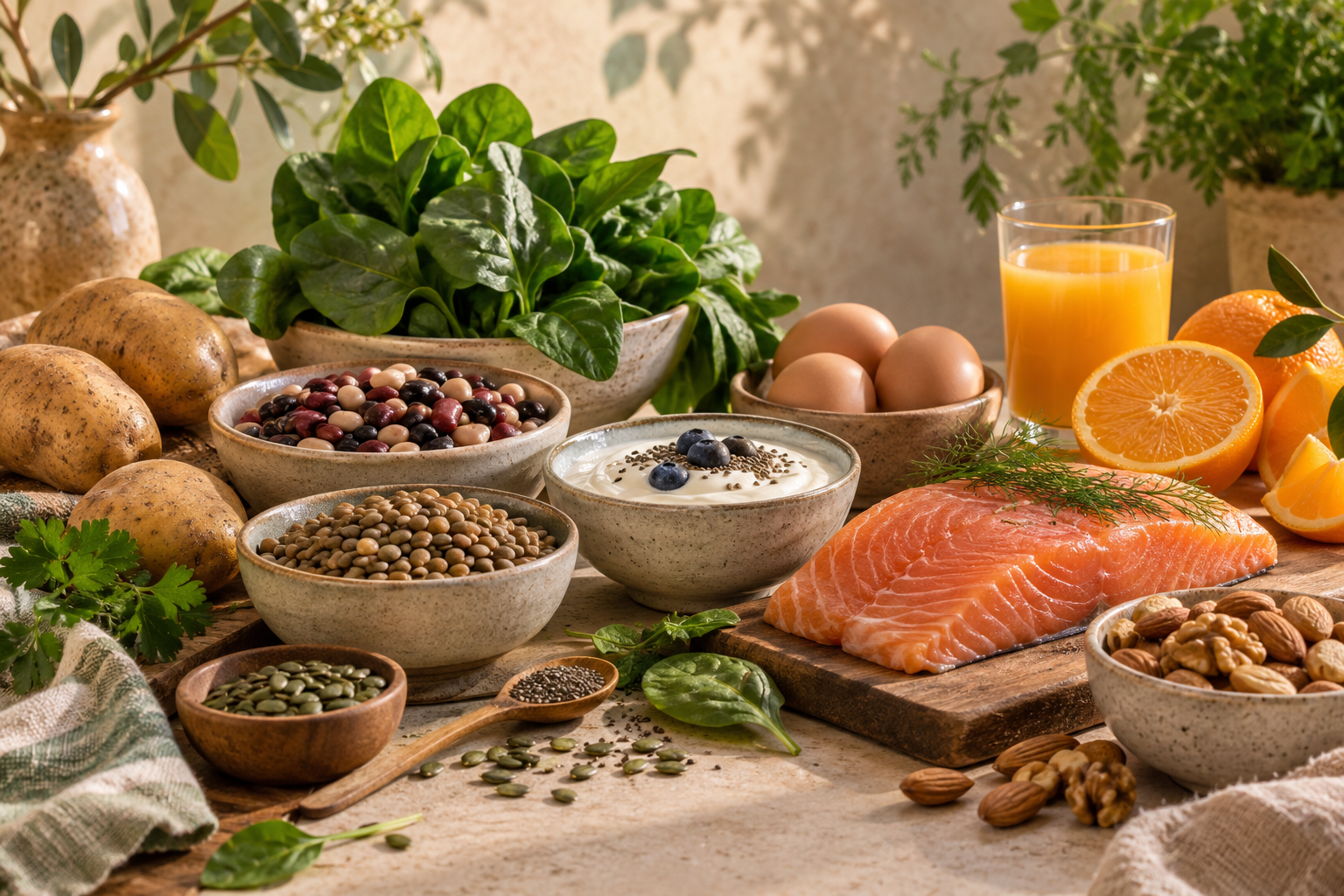
If vitamins tend to get the celebrity treatment, minerals are the people backstage making sure the lights come on.
They are less glamorous.
They are also absolutely necessary.
Minerals are inorganic elements your body cannot make. You have to obtain them from food, beverages, supplements when appropriate, or a combination of those sources.
Some are needed in larger amounts, such as calcium, magnesium, potassium and sodium. Others are trace minerals needed in much smaller quantities, such as iron, zinc, iodine and selenium.
Small amount does not mean small job.
A mineral does not need a wellness trend to be important. Potassium was doing cellular electrical work long before anyone put “electrolyte” in chrome lettering on a packet.
Eight Minerals Worth Knowing
The multitasker
Magnesium is involved in more than 300 enzyme systems and supports normal muscle and nerve function, energy production, protein synthesis, blood glucose regulation and normal heart rhythm.1
Food sources: pumpkin seeds, chia seeds, almonds, cashews, beans, edamame, whole grains, leafy greens, peanut butter and some fortified foods.
The inside-the-cell electrolyte
Potassium helps maintain fluid inside cells and supports nerve transmission, muscle contraction and normal kidney function.2
Food sources: lentils, beans, potatoes, squash, dried fruit, bananas, yogurt, milk, salmon, leafy greens and orange juice. Yes, potatoes deserve better PR.
More than bones
Most body calcium is stored in bones and teeth, but calcium also participates in muscle contraction, nerve signaling, blood-vessel function and hormone secretion.3
Food sources: dairy foods, fortified plant milks, calcium-set tofu, canned sardines or salmon with edible bones, and some leafy greens.
Necessary, but usually not scarce
Sodium supports fluid balance, nerve impulses and muscle function. Most U.S. adults do not need to seek extra sodium because packaged, restaurant and prepared foods already provide plenty.
Food sources: salt and foods made with it. Your body needs sodium. It does not need every snack to taste like the Atlantic Ocean.
The oxygen mover
Iron is essential for hemoglobin and myoglobin, proteins that carry and store oxygen. It is also involved in growth, neurological development and cellular function.4
Food sources: meat, seafood, poultry, beans, lentils, fortified cereals, spinach and other plant foods. Vitamin C can improve absorption of non-heme iron from plant sources.
The repair-and-immune mineral
Zinc participates in immune function, DNA and protein synthesis, wound healing, growth and taste and smell.5
Food sources: oysters, meat, poultry, beans, nuts, whole grains, eggs and dairy foods.
The thyroid ingredient
Iodine is required to make thyroid hormones, which regulate many aspects of metabolism and are particularly important during pregnancy and early development.6
Food sources: iodized salt, seafood, dairy and eggs. Specialty salts are often not iodized, because apparently salt also needed boutique editions.
The small-dose specialist
Selenium is part of proteins involved in thyroid-hormone metabolism, DNA synthesis and antioxidant defense.7
Food sources: seafood, meat, poultry, eggs, dairy foods and grains. Brazil nuts can contain very high amounts, so “more” is definitely not the goal here.
Food Color Helps—But Beige Foods Are Still Invited
“Eat the rainbow” is useful because different plant colors often represent different combinations of vitamins, minerals and phytochemicals.
It becomes less useful when somebody starts treating a beige dinner like a moral failure.
Leafy greens, broccoli, avocado and herbs can contribute magnesium, potassium, folate and other nutrients.
Sweet potatoes, squash, citrus and mango can contribute potassium, carotenoids and vitamin C.
Tomatoes, watermelon, berries and peppers bring different combinations of potassium, vitamin C and colorful plant compounds.
Berries, grapes, plums and purple vegetables add anthocyanins and other polyphenols alongside vitamins and minerals.
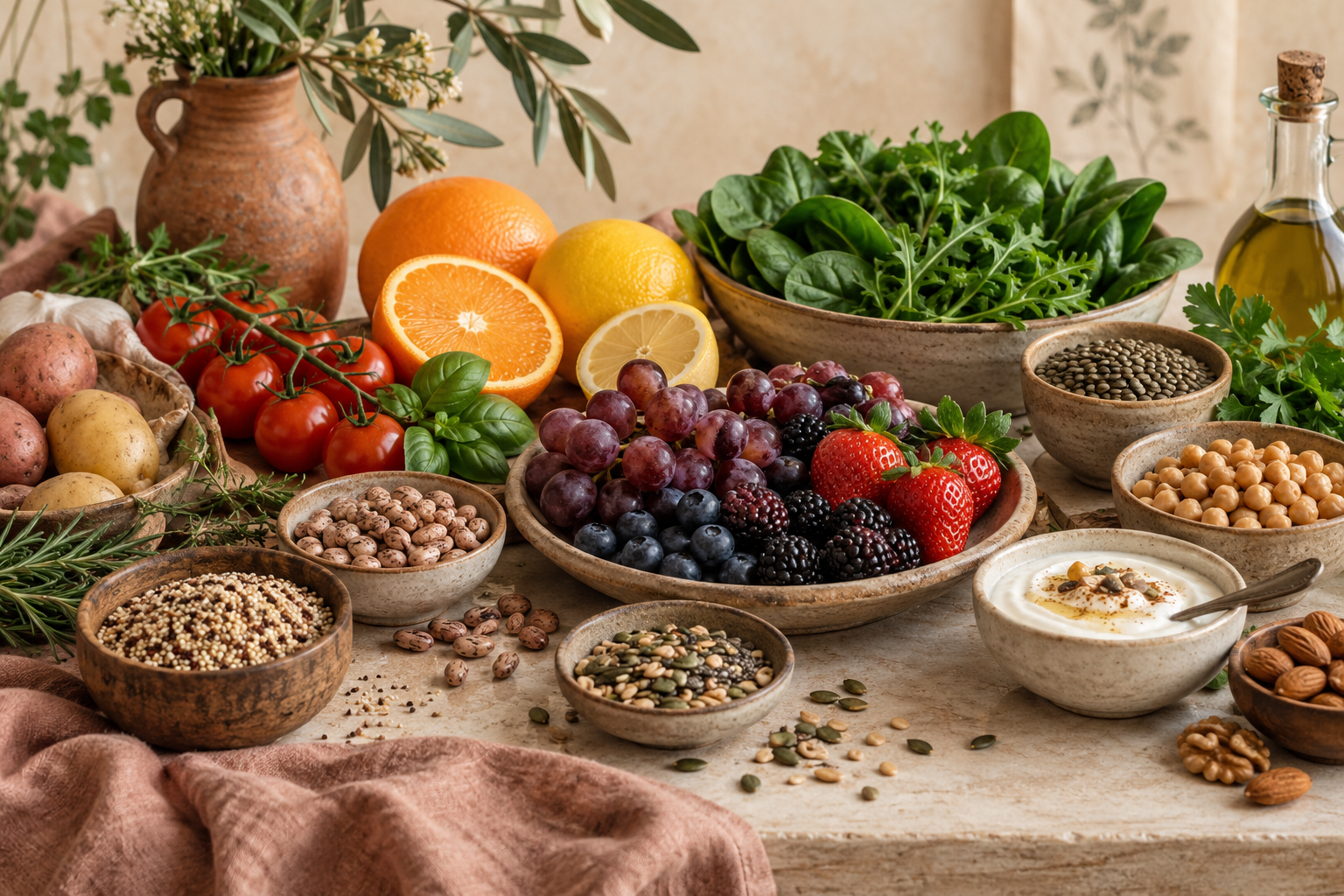
Potatoes, beans, oats, whole grains, yogurt, eggs, fish, nuts and seeds can be absolute mineral workhorses.
A colorful salsa on beans and rice counts. So does soup. Nutrition does not require each ingredient to sit in its own photogenic little section.
Think across the week instead of demanding every plate contain six colors.
You have other hobbies.
Fruit Juice Can Contribute Nutrients Too
Fruit juice gets strange treatment in wellness conversations. It is either promoted like medicine or banned like contraband.
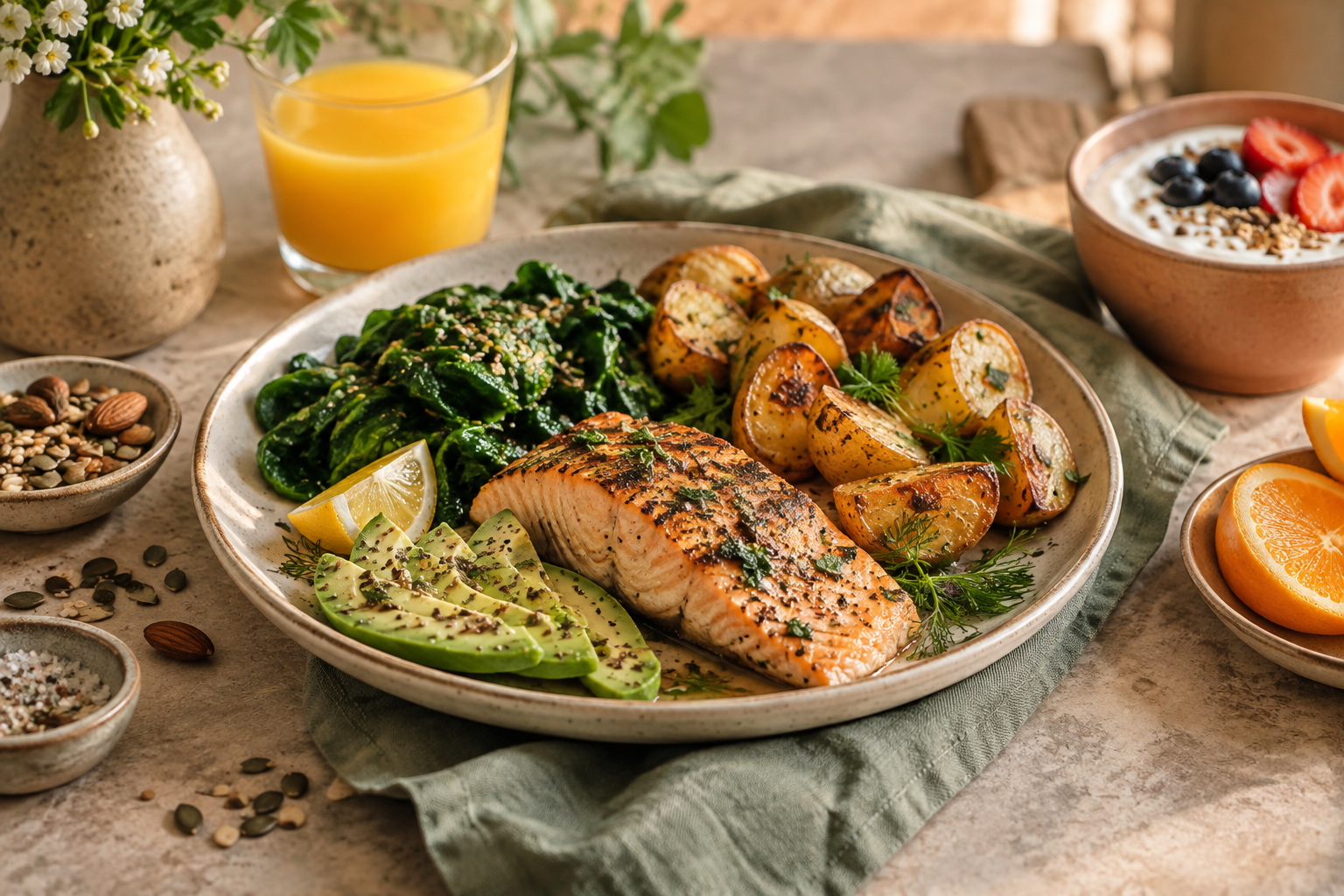
100% fruit juice can contribute vitamins, minerals and plant compounds. Orange juice, for example, is a meaningful source of potassium; one cup provides roughly 500 mg according to NIH’s potassium food table.2
Juice usually contains much less fiber than whole fruit, so it does not replace everything whole fruit offers.
But it can still fit.
Whole fruit
Usually provides more intact fiber, takes longer to eat and can be more filling.
100% fruit juice
Can provide potassium, vitamin C and plant compounds in an easy-to-drink form. Think complement, not nutritional understudy.
Smoothies usually retain more of the original fruit’s fiber because the edible parts are blended instead of strained.
Choose whichever form works for your meal, appetite, budget and digestive comfort.
Balanced Meals Usually Beat Single-Nutrient Chasing
The interesting thing about food is that it rarely delivers one nutrient at a time.
Black beans give you magnesium and potassium alongside protein and fiber.
Yogurt can provide calcium and potassium along with protein.
Salmon brings selenium and potassium plus protein and fats.
A baked potato is potassium, vitamin C, carbohydrate and fiber—not a beige nutritional emergency.
That is why eating a varied pattern tends to make more sense than chasing one “super mineral” at a time.
Build a mineral kitchen
Keep a few reliable foods around
- Beans or lentils: fiber, potassium, magnesium, iron and more.
- Potatoes or sweet potatoes: especially useful for potassium.
- Nuts and seeds: magnesium, zinc and other minerals in a small package.
- Leafy greens: magnesium and other micronutrients.
- Yogurt, milk or fortified alternatives: calcium and often potassium.
- Eggs: useful for iodine, selenium, protein and other nutrients.
- Fish or seafood: can contribute iodine, selenium, potassium and other nutrients depending on the type.
- Fruit: potassium plus vitamins, water and plant compounds.
- 100% fruit juice: an optional way to add potassium and vitamins when it fits.
- Iodized salt: a very ordinary tool for meeting iodine needs—used in sensible amounts.
Electrolytes Are Minerals—Not a Separate Wellness Species
Electrolytes are minerals that carry an electric charge when dissolved in body fluids.
Important electrolytes include sodium, potassium, calcium, magnesium, chloride and phosphate.
They help maintain fluid balance, nerve impulses, muscle contractions and acid-base balance.
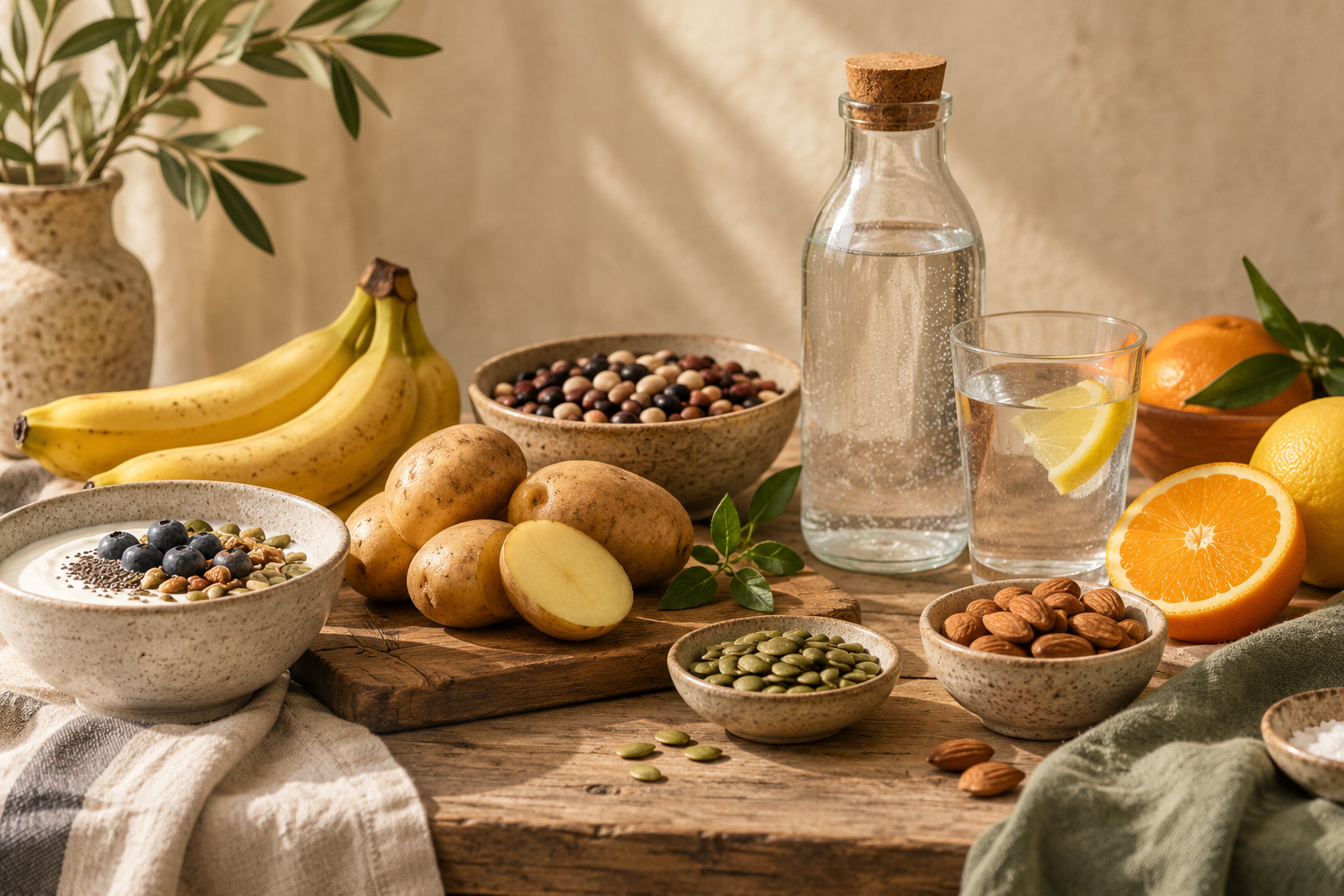
You already eat electrolytes.
A potato has electrolytes.
Yogurt has electrolytes.
A banana has electrolytes.
Beans have electrolytes.
Somebody just forgot to put lightning bolts on them.
Do you need an electrolyte drink every day?
Usually not. Most people eating a varied diet and drinking enough fluid can replace everyday electrolyte losses through normal food and beverages.
Electrolyte drinks can be useful during prolonged vigorous exercise, heavy sweating, significant vomiting or diarrhea, or when a clinician recommends them. The best choice depends on what is being lost and why.
For ordinary desk work, errands and a 25-minute walk, your kidneys are probably not waiting anxiously for a neon hydration packet.
Minerals and the Nervous System
Your nervous system depends on carefully controlled electrical gradients across cell membranes.
Sodium and potassium are central to action potentials—the electrical signals nerve and muscle cells use to communicate. Magnesium influences ion transport and enzyme systems. Calcium helps trigger neurotransmitter release and muscle contraction.
This is why minerals matter to nervous-system function.
It is also why the phrase “minerals calm the nervous system” needs some restraint.
A mineral deficiency can disrupt normal physiology. Correcting a true deficiency matters.
That is not the same as saying extra magnesium, potassium or salt will make a well-nourished person instantly calmer.
Support is different from treatment.
Nutrients allow normal physiology to happen. They are not interchangeable with treatment for anxiety, depression, arrhythmias, thyroid disease, anemia or other medical conditions.
What About Mineral Water?
Mineral water can contain meaningful amounts of minerals, especially calcium and magnesium, but the amount varies enormously by source and brand.
That makes the label useful.
Some waters contribute very little. Others contribute enough calcium or magnesium to meaningfully add to daily intake.
If you enjoy mineral water, wonderful.
If you prefer tap water, wonderful.
Hydration does not require imported bubbles in a glass bottle wearing a tiny mountain on the label.
More Is Not Better With Minerals
This deserves its own section because minerals can be genuinely harmful in excessive supplemental doses.
Food is self-limiting
It is difficult to accidentally eat a clinically dangerous amount of magnesium from black beans and almonds in one sitting.
Supplements concentrate
Capsules, powders, drops and salt substitutes can deliver much larger amounts quickly. That changes the safety conversation.
High-dose magnesium supplements can cause diarrhea and other adverse effects. Potassium supplements or potassium-based salt substitutes can be dangerous for people with kidney disease or certain medications. Too much iodine can disrupt thyroid function. Excess iron can be toxic. High-dose zinc taken over time can interfere with copper status.
More is not more wellness.
Sometimes it is just more.
Who Might Need More Individualized Mineral Guidance?
Talk with an appropriately qualified healthcare professional or registered dietitian if mineral needs may be affected by:
- pregnancy or breastfeeding;
- kidney disease;
- thyroid disease;
- heart disease or blood-pressure treatment;
- heavy or prolonged menstrual bleeding;
- celiac disease, inflammatory bowel disease or other malabsorption conditions;
- bariatric or intestinal surgery;
- persistent vomiting or diarrhea;
- a restrictive diet;
- medications that alter mineral absorption, excretion or electrolyte balance; or
- a diagnosed nutrient deficiency.
A Week of Mineral-Rich Eating Without Making It Weird
You do not need a meal plan.
Try this instead:
Chili, lentil soup, rice and beans, hummus or whatever belongs in your actual kitchen.
Pumpkin seeds on oatmeal, peanut butter on toast, almonds with fruit.
Banana today. Berries tomorrow. Orange or juice another day. Variety can be boringly easy.
I am serious. Potatoes are excellent potassium foods and did not deserve diet culture’s slander campaign.
Use a reasonable amount in cooking if it fits your dietary needs. Not every gourmet salt supplies iodine.
Spinach, broccoli, herbs, cabbage, peas—whatever you actually eat. No ceremonial kale required.
That is enough.
The goal is not to hit every mineral target with military precision each day.
Your nutrient intake is allowed to average out over time.
The Lifvyt Takeaway
Minerals are essential.
They are also ordinary.
They live in potatoes, beans, milk, yogurt, fruit, fish, eggs, greens, nuts, seeds, whole grains and the salt shaker.
Eat a varied pattern.
Let food color remind you to rotate plants, not shame you into building rainbow architecture at dinner.
Drink juice if you enjoy it and it fits your needs.
Use supplements when they have a purpose.
And remember that a balanced diet is not one perfect plate.
It is a collection of mostly useful choices made over many meals.
That is much easier to live with.
Keep reading
Want the digestion side of the story?
Read From Plate to Cell: How Your Body Absorbs Minerals From Food for bioavailability, stomach acid and what happens after a mineral enters the digestive tract.
You can also continue The Anatomy of a Calm Gut with Your Gut Is an Ecosystem.
Sources & Further Reading
- NIH Office of Dietary Supplements. Magnesium: Fact Sheet for Health Professionals.
- NIH Office of Dietary Supplements. Potassium: Fact Sheet for Health Professionals.
- NIH Office of Dietary Supplements. Calcium: Fact Sheet for Health Professionals.
- NIH Office of Dietary Supplements. Iron: Fact Sheet for Health Professionals.
- NIH Office of Dietary Supplements. Zinc: Fact Sheet for Health Professionals.
- NIH Office of Dietary Supplements. Iodine: Fact Sheet for Health Professionals.
- NIH Office of Dietary Supplements. Selenium: Fact Sheet for Health Professionals.
- Papagiannidou A, et al. Hypomagnesemia: A Clinical and Nutritional Update. Current Nutrition Reports. 2026.
This Lifvyt article is provided for general educational and informational purposes only. It is not medical advice, diagnosis, treatment, nutrition therapy or prescribing and does not establish a clinician–patient relationship. Food-source information and discussion of mineral functions should not be used to self-diagnose a mineral deficiency or medical condition.
Mineral needs and safe supplemental doses vary with age, pregnancy, kidney function, thyroid function, gastrointestinal disease, menstrual blood loss, medications, surgery, fluid losses and other factors. Potassium, magnesium, iron, iodine, zinc, sodium and other supplements can cause side effects or clinically important interactions. Before therapeutic supplementation—especially during pregnancy, with kidney or thyroid disease, alongside prescription medication, or for a child—consult an appropriately qualified physician, pharmacist or registered dietitian.
Do not stop, replace or change prescribed medication because of this article. Seek appropriate medical care for severe, persistent, worsening or unusual symptoms rather than relying on food, supplements or this website.
The Sunday Soft Reset
A calmer start to your week.
Get Lifvyt’s weekly collection of gentle wellness reads, nervous-system resets and practical tools — plus the free 5-Minute Nervous System Reset Guide.
By signing up, you’ll receive the free guide and one gentle Lifvyt email each week. Unsubscribe anytime.