

The Science of Calm: What Your Nervous System Needs to Thrive
A warm, science-informed look at the conditions that help your body feel safer, steadier, and better able to recover from everyday stress.
Nervous System • The Wildflower Sky Edition

The science of calm is not really about becoming peaceful all the time. It is about helping your body move through stress and find its way back. That return may begin with sleep, sunlight, movement, a reliable meal, a garden path, or someone who lets you be quiet without making it awkward.
For example, calm rarely arrives looking like a wellness advertisement. Sometimes it is standing in the kitchen at 5:42 p.m. with one grocery bag still on the floor. Meanwhile, your phone is buzzing. A cupboard door is open. Somehow, the spoon you need has vanished.
Then you notice the late sun making a gold square on the wall. You put both feet down. The kettle begins to hum. Still, nothing in your life is magically fixed, but the room feels one inch wider.
Yet that inch matters. It is often where choice returns.
The science of calm in real life
Your stress response is not a design flaw. Instead, it helps you react to challenge. For example, your heart may beat faster. Meanwhile, your muscles may tense. Your attention may narrow toward what seems urgent.
However, staying in high alert for too long can feel exhausting. The goal is not to shame the response. Instead, the goal is to give your body enough signs of recovery after the hard moment passes.
The National Center for Complementary and Integrative Health explains that relaxation practices may support a relaxation response. Still, those practices work within a bigger picture that includes movement, nourishment, sleep, and social support.
7 things your nervous system needs to thrive
These are not seven more jobs to perform. Think of them as seven kinds of support. Some days you will need rhythm. Other days you will need movement, company, beauty, or a very ordinary sandwich.
A little predictability
Your body likes to know when rest, food, light, and activity are likely to happen. Predictability does not require a strict schedule. It can be as simple as opening the curtains after waking or making lunch before you become shaky and irritable.
Therefore, regular sleep and wake times can support sleep quality. Likewise, familiar daily anchors reduce the number of choices you must make when your energy is low.
Recovery after effort
Still, most people do not need a life with no stress. They need places where effort can end. Yet we often finish one demand and immediately scroll into another.
Therefore, create tiny endings. For example, sit in the parked car for one quiet minute. Next, wash your hands after work and imagine the day moving down the drain. Then change clothes before you start dinner.
Movement that feels like yours
Likewise, movement can help shift energy that has nowhere to go. However, it does not need to look like punishment. For example, gardening, dancing in the hallway, stretching beside the bed, and walking to the mailbox are still movement.
The CDC notes that any amount of physical activity can help. Regular activity can also support sleep, emotional balance, and brain health.

A softer sensory environment
A bright overhead light, constant television, scratchy clothing, or a crowded counter can quietly add to your load. You do not have to redesign the house. Instead, change one signal.
First, turn on a lamp. Next, clear one chair. Then put the loud appliance away. Finally, add a soft blanket, a bowl of lemons, or flowers from the grocery store. Your calm corner can be one square foot.
Nature, distance, and a little awe
For example, nature gives the eyes depth, pattern, movement, and changing light. A systematic review found that nature exposure was linked with lower self-reported and physiological measures of stress across the included studies. However, the research was small and varied, so nature should be viewed as supportive rather than a cure.
Still, you do not need a mountain cabin. Instead, watch clouds from the parking lot. Grow basil near a window. Walk through a community garden. If going outside is difficult, even nature photographs or videos may offer a gentle visual pause.
Safe-enough connection
Likewise, human beings do not thrive through perfect self-sufficiency. For example, a familiar voice, shared meal, kind neighbor, faith community, group chat, or quiet companion can help a difficult day feel more carryable.
The U.S. Surgeon General’s guidance describes social connection as an important part of health and well-being. Still, more company is not always better. Quality, safety, and choice matter.
Beauty, meaning, and play
Your nervous system needs more than the absence of danger. It also needs reasons to stay curious. Music, prayer, color, cooking, laughter, folk art, stargazing, and tending flowers can remind you that life contains more than the problem in front of you.
However, these moments do not cancel grief or stress. Instead, they sit beside them. Still, joy can be brief and real.
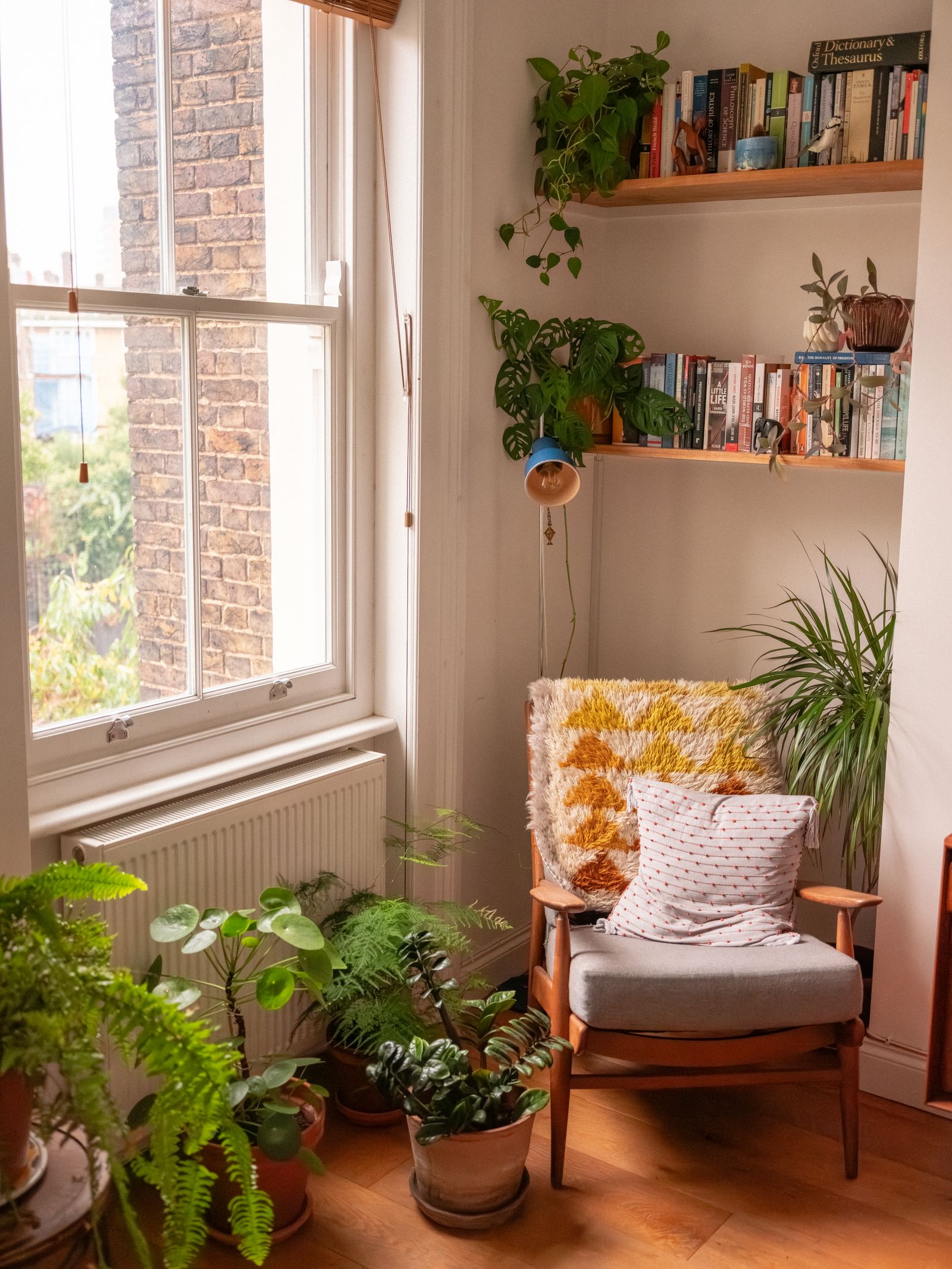
Build a calm reset corner that feels like you
First, forget the pressure to create a beige room with one expensive candle. For example, your reset corner can be bright yellow, full of plants, or tucked beside the laundry basket. It can also be portable.
Give it comfort
Add a chair, cushion, soft sweater, or place to lean. Comfort should be easy to reach.
Give it color
Choose a flower, print, postcard, stone, or cloth that makes your eyes feel happy.
Give it purpose
Keep one simple activity there: reading, tea, prayer, music, stretching, or silence.
- Start with fuel: drink water or eat something if you need it.
- Next, soften: change one harsh sound or light.
- Then, move: roll your shoulders, hands, or feet.
- Look outward: notice a plant, sky, flower, or favorite image.
- Finish by choosing: decide whether you need rest, action, or connection next.

Create a calmer rhythm without demanding a calmer life
You do not need to fix every part of your routine at once. A guided page can help you notice patterns, clear mental clutter, and choose one kind next step.
Explore the Mental Clarity Reset Explore the Life Reset Workbook
Visit Lifvyt for more tools that make gentle change feel possible in real life.
Questions about the science of calm
Does a calm nervous system mean I should never feel stressed?
No. Stress is a normal response to challenge. Healthy support is not about removing every strong feeling. It is about responding, recovering, and getting help when the load is too heavy.
What if calming exercises make me more anxious?
Stop the exercise and return to ordinary activity. Keep your eyes open, look around, or move gently. Some inward-focused practices can feel uncomfortable, especially during panic or after trauma. A qualified professional can help you find safer options.
Can nature really reduce stress?
Research is promising, and a systematic review found lower stress measures across its included nature-exposure studies. However, studies vary in quality and design. Nature can be a useful support, but it is not a replacement for medical or mental health care.
How do I know which support I need first?
Start with the most basic unmet need. Ask whether you need food, water, medication, sleep, movement, less stimulation, practical action, or another person. Then choose the smallest useful response.
Find one color in the room that you want to remember.
Feel your feet. Let your jaw soften if it wants to.
Then say: “I do not have to create perfect calm. I can create one moment of support.”
That is the science of calm made human: rhythm, recovery, beauty, connection, and enough care to help you return.
Trusted resources
- NCCIH: Stress and Relaxation Approaches
- CDC: Physical Activity and Brain Health
- U.S. Surgeon General: Social Connection
- PubMed: Nature Exposure and Stress Systematic Review
Health note: This article provides general wellness education and is not medical advice, diagnosis, psychotherapy, or treatment. Persistent or worsening physical or mental health symptoms deserve evaluation by a qualified professional. Seek urgent help for chest pain, fainting, severe breathing difficulty, new weakness, or thoughts of self-harm.
The Sunday Soft Reset
A calmer start to your week.
Get Lifvyt’s weekly collection of gentle wellness reads, nervous-system resets and practical tools — plus the free 5-Minute Nervous System Reset Guide.
By signing up, you’ll receive the free guide and one gentle Lifvyt email each week. Unsubscribe anytime.