

Lifvyt Journal
Nervous System Dysregulation: Signs Your Body Needs a Reset
When everything feels like too much, your body may be asking for less input, more recovery, and a gentler rhythm.
What Does Nervous System Dysregulation Mean?
Your autonomic nervous system helps coordinate automatic functions such as heart rate, digestion, breathing, and responses to stress. Activation itself is not bad. It helps you respond when life requires energy and attention.
After long periods of stress, poor sleep, sensory overload, caregiving, emotional strain, or nonstop demands, it can become harder to shift back toward rest. At Lifvyt, we use dysregulation as an everyday description of that experience rather than as a diagnosis.
The Gentle Reframe
You do not need to be calm all the time. A flexible nervous system can activate when needed and find its way back toward rest.
9 Signs Your Body May Need a Nervous System Reset
1. Small sounds suddenly feel enormous
Television, overlapping conversations, notifications, or repetitive noises may feel disproportionately irritating when your sensory bandwidth is depleted. Read why tiny noises feel so loud when you are overstimulated.
2. You are exhausted but cannot fully relax
You finally sit down, yet your shoulders stay tense and your mind continues scanning unfinished tasks. Sometimes your body needs a transition before it can settle.
3. Your patience disappears faster than usual
Irritability can be a clue that your available capacity is shrinking. Check sleep, hunger, hydration, pain, sensory load, and whether you have had uninterrupted recovery time.
4. Your body stays tense when nothing urgent is happening
You may notice a clenched jaw, raised shoulders, shallow breathing, tight hands, or a knotted stomach.
5. Simple decisions feel strangely difficult
After making decisions all day, choosing dinner or answering another message can feel like one demand too many.
6. You seek stimulation even though you feel overwhelmed
Doom scrolling is a familiar example. Your brain can seek easy novelty while your body simultaneously needs rest. See how to stop doom scrolling at night.
7. You feel mentally foggy
Stress and inadequate recovery can affect concentration. Brain fog has many possible causes, so persistent or concerning changes deserve appropriate medical evaluation.
8. You want everyone to stop needing something from you
Sometimes the clearest signal is the desire for silence and zero demands. Your current load may simply exceed your available capacity.
9. Work mode follows you home
A deliberate transition can help. Start with how to calm your body after a stressful work shift.

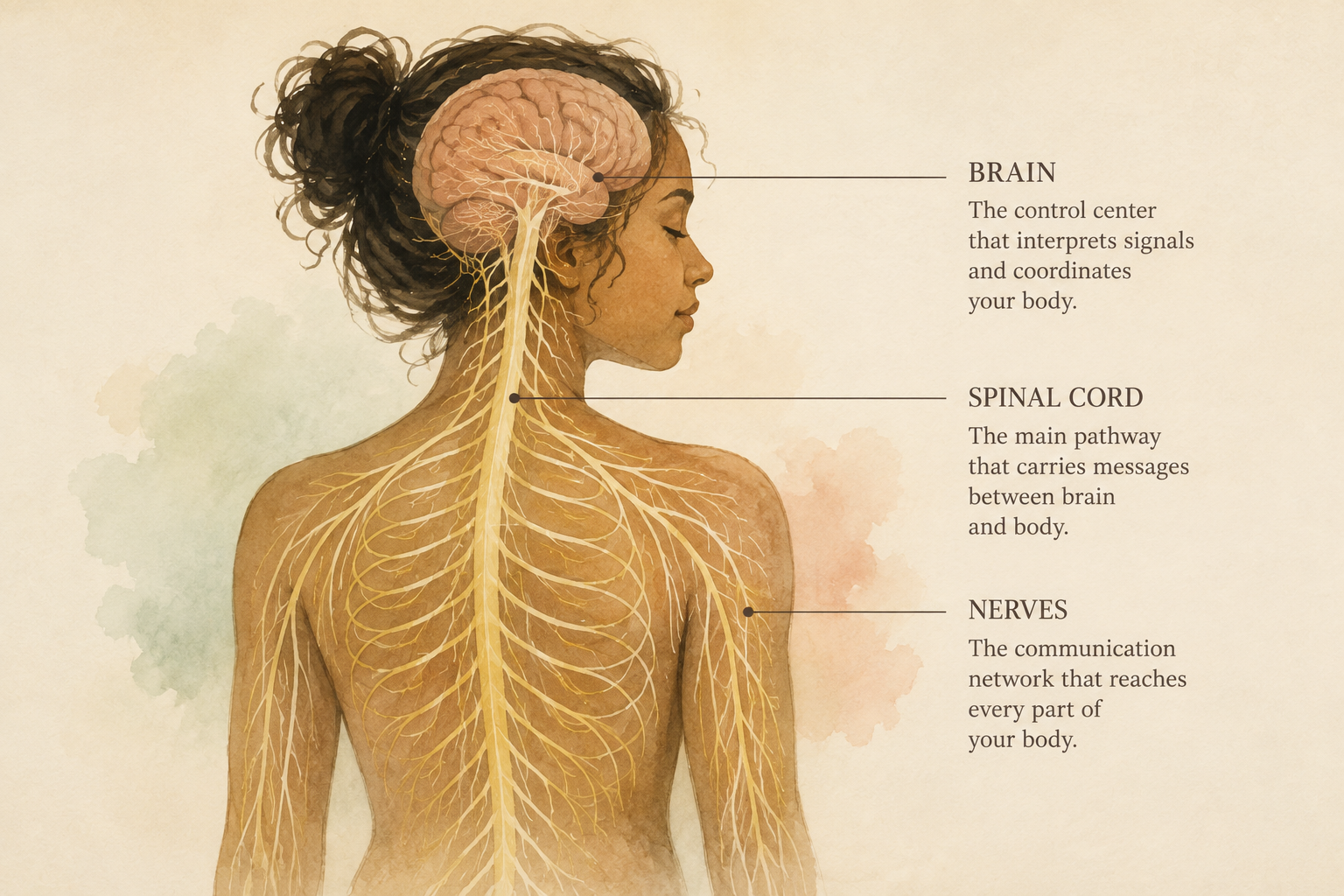
Your Nervous System Is a Communication Network
The brain, spinal cord, and peripheral nerves constantly exchange information. Your autonomic nervous system is part of this larger network and helps regulate functions you do not have to consciously control.
This is one reason stress can feel physical. A demanding day may show up as muscle tension, a racing heart, stomach discomfort, restlessness, or difficulty settling for sleep. Those sensations are real, but they are not specific to one condition.
Before You Label It Dysregulation
Ask: Have I slept? Have I eaten? Am I dehydrated? Am I in pain? Have I been surrounded by noise or demands for hours? Do I need movement, quiet, connection, or medical support?
Sometimes the most effective regulation strategy is meeting a basic need.
A Gentle 5-Minute Nervous System Reset
Minute 4 — Let breathing be comfortable. You do not need dramatic deep breaths. Allow the breath to be easy and unforced.
Minute 5 — Meet one physical need. Water, food, warmth, movement, fresh air, the bathroom, or a few minutes alone may help more than another productivity technique.
What Helps Regulation Over Time?
A nervous system reset is not a magic switch. Small, repeatable recovery opportunities usually make more sense than chasing a perfect state of calm.
Build More Recovery Into Ordinary Days
Protect sleep where you can. Sleep supports attention, mood, and physical recovery.
Lower unnecessary sensory input. Fewer notifications, softer lighting, or short quiet periods can reduce cumulative load.
Move in ways that feel supportive. Walking or gentle stretching can create a transition after long periods of sitting or stress.
Eat and hydrate consistently. Hunger and dehydration can make an already difficult day feel harder.
Create transitions. A shower after work, changing clothes, a short walk, music, or several quiet minutes can signal that one part of the day is ending.
Stop treating rest as something you earn. Recovery is part of functioning, not a reward for finishing everything.
Explore our grounding exercises for instant calm, gentle nervous system reset guide, and physical symptoms of chronic stress.
When a Reset Is Not Enough
Self-regulation practices are supportive tools, not substitutes for healthcare. New, severe, persistent, or worsening symptoms should be discussed with an appropriate healthcare professional. Seek urgent care for chest pain, fainting, severe breathing difficulty, or other potentially serious changes.
Continue Your Journey
Create a Softer Reset With Lifvyt
Explore gentle wellness tools and intentional-living resources designed to support calmer routines without turning self-care into another demanding project.
The Lifvyt Closing Ritual
If your body feels overloaded today, choose one thing to make softer. One sound. One light. One expectation. One unnecessary decision.
Then notice what changes when your body receives a little more room instead of another instruction to push through.
Regulation is not about becoming calm enough to tolerate everything. Sometimes it begins by recognizing that something needs to change.
Related Reading
Overcoming Overstimulation: A Practical Guide for Sensitive Souls
Burnout Recovery: Rebuilding Your Nervous System from the Ground Up
The Science of Calm: What Your Nervous System Needs to Thrive
Disclaimer: This article is for educational and informational purposes only and is not a substitute for professional medical advice, diagnosis, or treatment.
The Sunday Soft Reset
A calmer start to your week.
Get Lifvyt’s weekly collection of gentle wellness reads, nervous-system resets and practical tools — plus the free 5-Minute Nervous System Reset Guide.
By signing up, you’ll receive the free guide and one gentle Lifvyt email each week. Unsubscribe anytime.