

Lifvyt Journal
Why Tiny Noises Feel So Loud When You’re an Overstimulated Mom
A gentle, honest guide for the overstimulated mom whose nervous system is not “too sensitive” — just too full.

When the Spoon on the Counter Sounds Like a Personal Attack
If you are an overstimulated mom, you already know the feeling.
The baby whines. The tablet talks. Someone asks for a snack in a voice that somehow enters your bloodstream. A toy starts singing for absolutely no reason. A cup drops in the sink and suddenly your whole body reacts like the house has declared war.
It is not just that you “do not like noise.” It is that tiny noises can feel huge when your nervous system has been handling too much for too long.
And when that happens, even normal family sounds can feel sharp, intrusive, and almost impossible to tolerate.
Many moms quietly carry guilt about this.
You may love your children deeply and still feel like one more cartoon jingle, chewing sound, repeated “Mom?” or crashing toy could send you into another dimension.
That does not make you a bad mother.
It makes you a person with a body, a brain, and a limit.
Motherhood is beautiful, but it is also sensory. It is loud, touch-heavy, interruption-heavy, decision-heavy, and emotionally dense. When there has been too little recovery and too much input, the nervous system starts losing its patience with sound.
The Quiet Truth
Tiny noises do not feel loud because you are failing. They feel loud because your nervous system is already full.
Why Tiny Noises Feel So Loud to an Overstimulated Mom
Sound does not land on a blank slate.
It lands on whatever your body has already been carrying.
If you slept poorly, woke up touched out, cleaned up breakfast, broke up sibling drama, answered ten questions before 9 a.m., and never had five minutes where nobody needed your brain, then a “small” noise is not arriving alone.
It is arriving on top of exhaustion, mental load, physical tension, emotional labor, decision fatigue, and sensory buildup.
That is why the noise can feel bigger than it looks from the outside.
Cleveland Clinic explains that sensory overload happens when input from your senses starts to feel overwhelming and triggers a stress response. In other words, your body is not being dramatic. It is reacting to input like it has hit capacity.
When a mom tells me noises feel unbearable, I do not hear “she is impatient.” I hear “her nervous system needs less input, more regulation, and more recovery.” The body does not always ask for help politely. Sometimes it asks by making normal things feel too loud.
Signs You May Be an Overstimulated Mom
You flinch at normal household sounds.
You feel angry before you understand why.
You crave silence but cannot find it.
You feel touched out, mentally full, and physically tense.
You notice your shoulders tighten when the house gets louder.
You feel guilty for needing space from normal family noise.
You love your kids, but your body feels like it wants to hide in a laundry closet.
You are not only tired. You are overloaded.
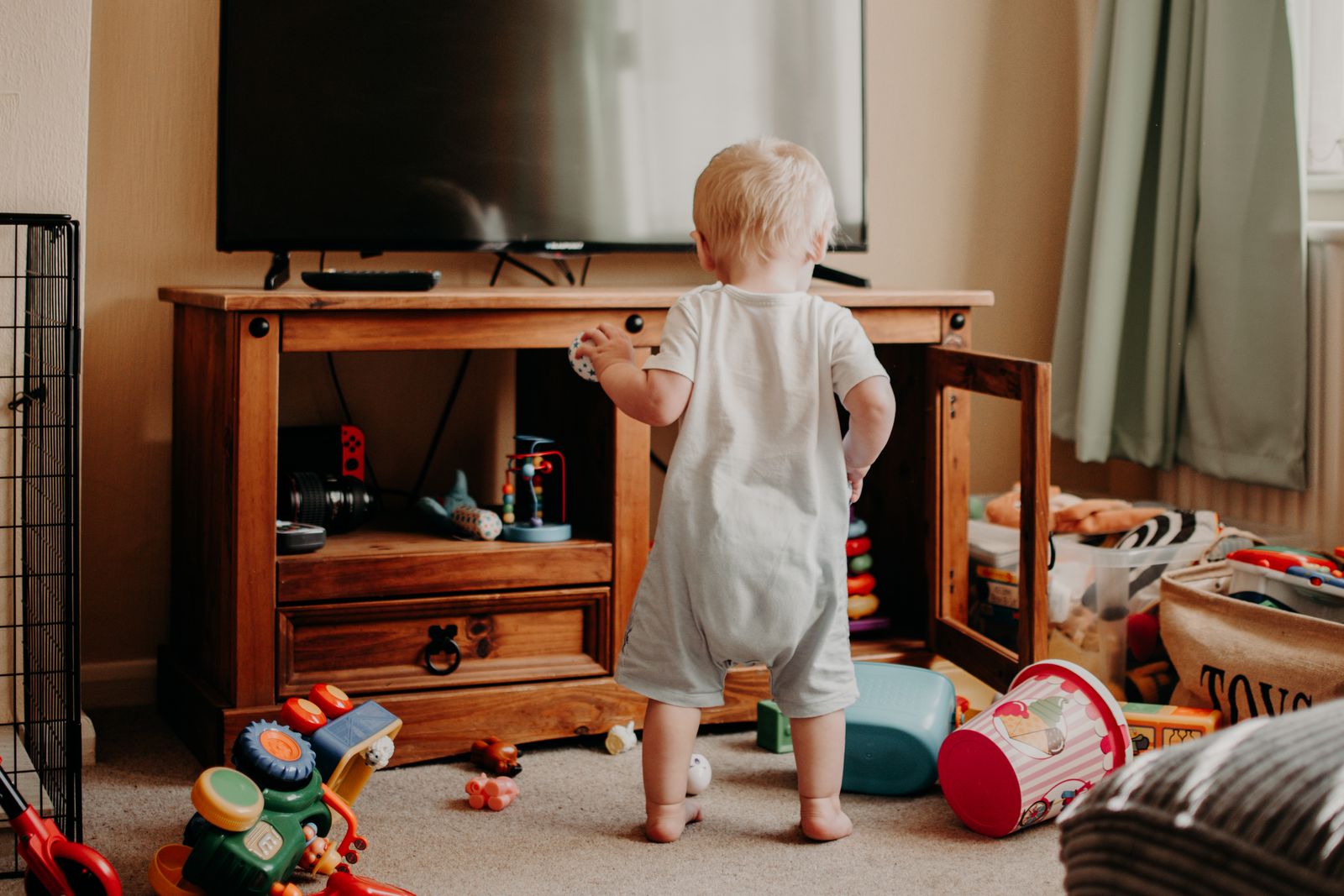
The Sounds Are Not Always the Problem — It Is the Load Behind Them
An overstimulated mom is rarely reacting to one sound in isolation.
More often, she is reacting to a stack of sensory and emotional demands that have been building all day.
The sound is simply the final straw with a theme song.
Think about what your body may be carrying before the noise even happens:
Common Layers Behind Sound Overwhelm
Sleep debt: Everything feels louder when you are already tired.
Mental load: Planning meals, appointments, laundry, schedules, and everyone’s needs all at once.
Touch overload: Holding, hugging, nursing, carrying, and being climbed on all day.
Emotional labor: Managing not only your feelings, but your children’s feelings too.
Decision fatigue: A thousand little choices can make your threshold much lower.
No recovery window: If you never get quiet, your system never fully resets.
Background noise: TV, toys, conversations, dishes, alarms, and notifications all add up.
This is why a toy singing from under the couch can feel less like a toy and more like a personal betrayal.
It is not about the toy.
It is about the fact that your nervous system no longer has room.
Why Moms Reach a Noise Limit Faster
Mothers often spend long hours in a state of constant responsiveness.
You are listening for crying, movement, requests, conflict, spills, coughing, questions, and whatever suspicious silence usually means.
Your body learns to stay alert.
Over time, that constant monitoring can make the nervous system more reactive.
And if you are already in a season of stress, anxiety, burnout, hormonal change, postpartum recovery, grief, ADHD, trauma, or poor sleep, the volume of the world may feel even higher.
“Sometimes the house is not actually louder. Your nervous system is just more exhausted.”
What an Overstimulated Mom Can Do in the Moment
When sound is already getting under your skin, do not start by telling yourself to calm down.
Start by lowering input.
That matters because you cannot lecture your nervous system out of overload while it is still absorbing too much stimulation.
The 5-Minute Reset for an Overstimulated Mom
Minute 1: Lower one source of input. Turn off the TV, pause the toy, or step out of the room.
Minute 2: Drop your shoulders and unclench your jaw. Your body often tightens before your mind notices.
Minute 3: Take one longer exhale. Not a fancy breathing exercise. Just a slower exhale than inhale.
Minute 4: Place your feet on the floor or lean against a wall. Give your body something steady.
Minute 5: Choose one next step: water, quiet, a short bathroom reset, earbuds, stepping outside, or asking for help.
The goal is not to become a perfectly serene woodland mother in sixty seconds.
The goal is to help your body come down from the edge.

How to Make Noise Feel Less Intense Without Needing a Silent House
Most moms cannot magically create silence.
Real homes are lived in. Children make noise. Life has sound. Therefore, the goal is not perfection. It is creating a little more regulation and a little less sensory pressure.
Gentle Supports That Actually Help
Use soft background music instead of layered TV noise when possible.
Put noisy toys away in a basket that does not live in the main room all day.
Create one “low-noise” corner for yourself, even if it is small.
Use earplugs or noise-lowering earbuds during especially loud moments if it feels safe.
Take tiny outside breaks. Even two minutes on the porch counts.
Keep lights softer in the evening, because less visual stimulation can help sound feel less intense too.
Reduce notifications on your phone. They are tiny noises with excellent timing and terrible boundaries.
Build a short daily quiet ritual, even if it is just tea, water, a shower, or sitting in your parked car before going inside.
Tiny supports matter because overstimulation usually comes from accumulation, not one dramatic event.
That also means relief can come from small changes, not only big ones.
What to Say When You Need a Minute
Many moms stay overstimulated longer than necessary because they feel guilty asking for space.
But needing a moment does not mean you do not love your family. It means you are human.
Soft Scripts for an Overstimulated Mom
“I need two minutes of quiet so I can come back calmer.”
“I’m feeling overstimulated, not upset with you.”
“Can we turn that sound down for a little bit?”
“I want to help. I just need to reset my body first.”
“Mom needs a quiet minute.”
Those are not dramatic statements.
They are regulation tools.
When Sound Sensitivity Needs More Support
Gentle home adjustments can help an overstimulated mom tremendously. However, they are not a replacement for professional care.
If sound sensitivity is severe, constant, linked to panic, trauma symptoms, migraines, postpartum anxiety, depression, ADHD, or interfering with parenting and daily life, it may be time to speak with a healthcare provider or mental health professional.
Cleveland Clinic also notes that certain sound-triggered reactions can overlap with issues like sensory overload or conditions such as misophonia, where specific sounds can trigger intense emotional or physical responses.
You do not need to wait until you are completely burnt out to ask for help.
Continue Your Journey
Explore More from Lifvyt
Browse gentle wellness resources, digital tools, and intentional living guides created to support calmer routines, softer resets, and everyday nervous system care.
Browse Our ProductsThe Lifvyt Closing Ritual
If tiny noises have been feeling too loud lately, do not start with shame.
Start with compassion.
Ask yourself:
Have I had enough sleep?
Enough quiet?
Enough support?
Enough moments where nobody needed my body, my brain, or my answer?
Then choose one small softener.
One lower volume.
One slower breath.
One doorway outside.
One moment with water, tea, silence, or a wall to lean against.
“I am not too sensitive. I am overstimulated, and my body deserves support.”
That is where the shift begins.
Not in becoming less human.
But in giving your nervous system a little more room to breathe.
References
Cleveland Clinic. “How To Manage (and Even Overcome) Sensory Overload.” Read source
Cleveland Clinic. “Misophonia: What It Is, Triggers, Symptoms & Treatment.” Read source
Centers for Disease Control and Prevention. “About Mental Health.” Read source
Disclaimer: This content is for educational and informational purposes only and is not a substitute for professional medical advice, diagnosis, or treatment. If sensory overload, sound sensitivity, anxiety, depression, trauma symptoms, postpartum distress, or burnout are affecting your well-being or daily functioning, please seek support from a qualified healthcare professional.
The Sunday Soft Reset
A calmer start to your week.
Get Lifvyt’s weekly collection of gentle wellness reads, nervous-system resets and practical tools — plus the free 5-Minute Nervous System Reset Guide.
By signing up, you’ll receive the free guide and one gentle Lifvyt email each week. Unsubscribe anytime.