
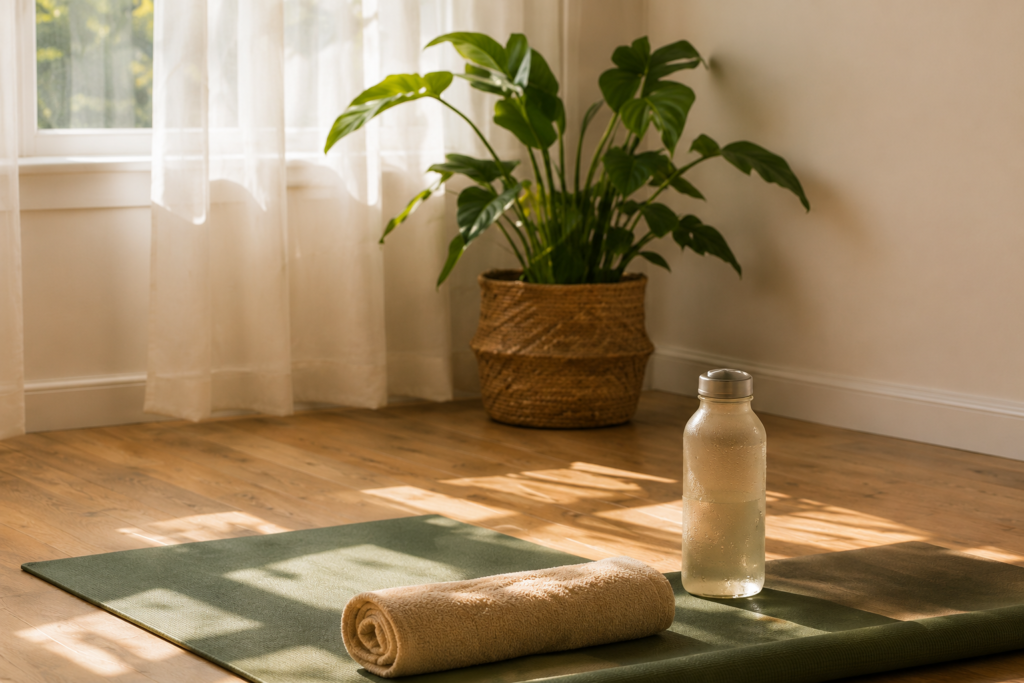
The 20-Minute After-Work Nervous System Reset
A simple four-step transition to help you leave work mode, reduce the noise of the day, and come home to yourself.
If your job leaves you feeling physically keyed up, our guide to calming your body after a stressful work shift is a helpful companion to this routine.
Why an After-Work Reset Can Feel So Good
Stress is not only a thought. During a demanding day, your attention, breathing, muscle tension, and alertness can all shift. When the demand ends, your body may not instantly switch into rest mode simply because you walked through the front door.
Relaxation practices often combine slower breathing and focused attention to encourage the body’s relaxation response. The National Center for Complementary and Integrative Health describes this response as involving changes such as slower breathing and heart rate. Importantly, relaxation practices are supportive tools, not treatments for every symptom or condition.
A short transition ritual can also be useful psychologically. Repeating the same small sequence after work creates a recognizable ending point: work is over; home has begun.
How to Do the 20-Minute After-Work Nervous System Reset
You can follow the four steps below in order. Each one lasts about five minutes, and each image is paired with the part of the routine it represents.
1. Arrive & Exhale
Before you start dinner, answer messages, or begin the second shift at home, give yourself a few minutes to arrive. Put down your bag. Change your shoes if that helps. Let your shoulders drop.
Try several comfortable, unforced breaths. If it feels good, allow the exhale to be a little slower than the inhale. The point is not to breathe perfectly; it is to interrupt the rush.
Try this: Look around the room and quietly notice three things that tell you, “I am home now.”

2. Offload & Release
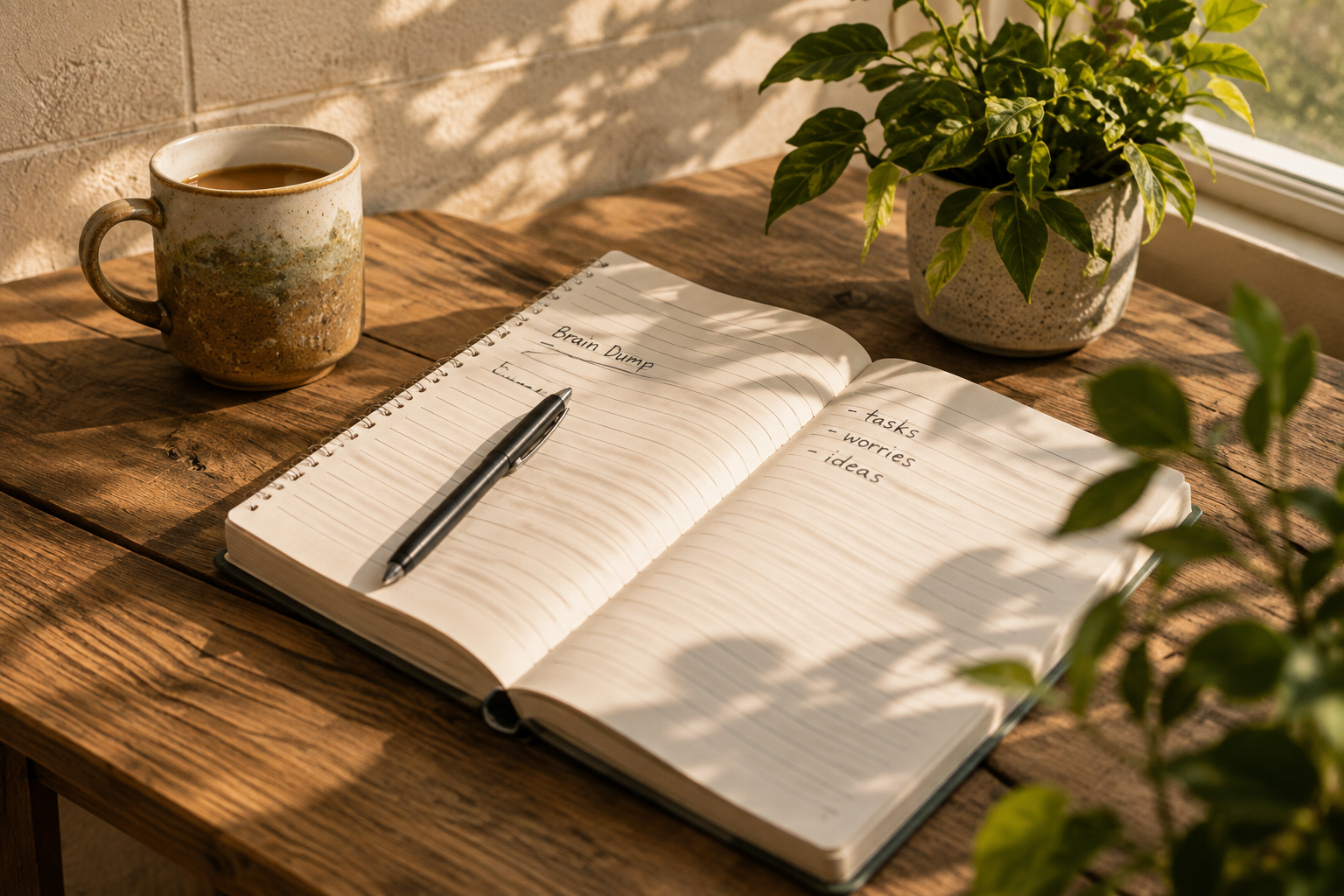
Open a notebook and empty out whatever your brain is trying to hold: unfinished tasks, worries, reminders, groceries, tomorrow’s priorities, or the conversation you keep replaying.
This does not need to become deep emotional journaling. A practical brain dump is enough. Research on expressive writing is mixed, so we do not treat journaling as a guaranteed stress treatment. Here, the goal is simpler: put information somewhere other than your working memory.
Try this: End with one line: “I can return to this tomorrow.”

3. Move Your Body Gently
Choose movement that feels easy enough to do after a long day: shoulder rolls, a slow stretch, walking around the block, a few yoga movements, or simply shaking out your hands and legs.
Movement does not have to be intense to count. The CDC notes that physical activity can support mood and that even a single session can have immediate benefits, including reduced short-term feelings of anxiety for adults.
Try this: Pick two areas that feel tight and move them slowly for a few minutes without trying to “fix” anything.

4. Soothe & Reset
For the final five minutes, reduce stimulation. Lower harsh lights. Put your phone somewhere less visible. Take a warm shower or bath, change into comfortable clothes, sit somewhere quiet, or make a non-caffeinated drink you enjoy.
This step is about sensory contrast. If work was bright, loud, rushed, social, or physically demanding, make the next few minutes softer and simpler.
Try this: Ask, “What would make the next hour feel 10% easier?” Choose one small answer.
The Reset Does Not Have to Look the Same Every Day
Some evenings you may want silence. Other evenings, music or conversation may feel regulating. Some days movement helps; on others, sitting down is exactly what you need. The routine works best as a flexible framework rather than another standard you can fail.
Make It Yours
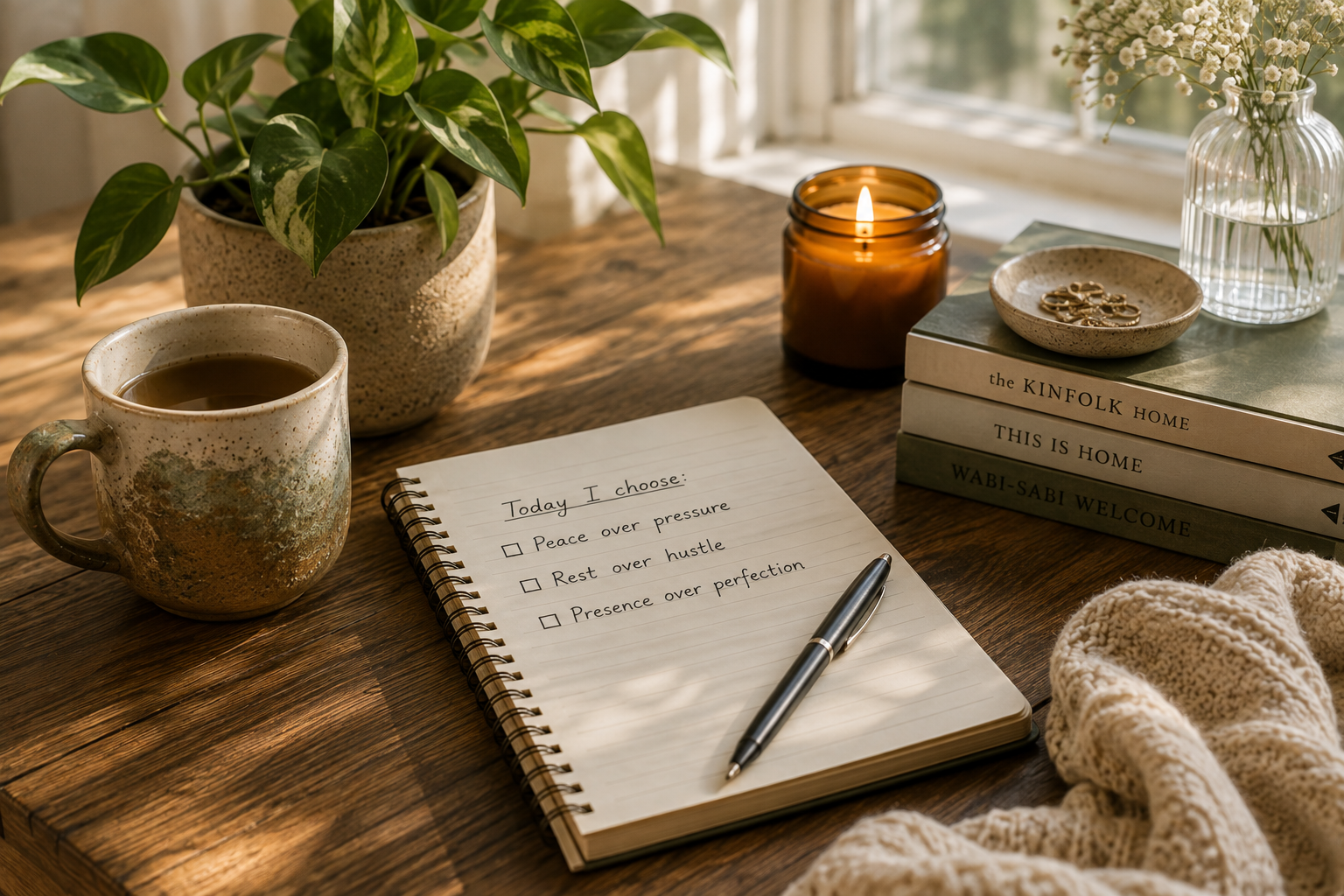
Try choosing one intention before you begin your evening: peace over pressure, rest over hustle, or presence over perfection. Then use that intention to decide which parts of the routine you actually need.
If you tend to feel overstimulated rather than simply tired, you may also like our practical guide to overcoming overstimulation.
What the Science Actually Supports
Slow breathing and relaxation: NCCIH notes that relaxation techniques can include slow, deep breathing and focused attention. Evidence suggests these practices may help with stress for some people, although they should not replace medical or mental-health care.
Movement: Physical activity has well-established health benefits. CDC guidance notes immediate brain-health benefits from activity and reductions in short-term anxiety feelings in adults.
Writing: Research on expressive writing is not uniformly positive. Some studies and reviews report small benefits for stress-related outcomes, while others find little or no overall effect. That is why this Lifvyt routine uses writing as an optional organizational tool rather than promising that journaling will regulate your nervous system.
Quick After-Work Reset Tools
- A notebook and pen for a five-minute brain dump
- Comfortable clothes ready before you leave for work
- A water bottle or favorite non-caffeinated drink
- A small area where you can stretch or walk
- Lower evening lighting or a lamp instead of overhead lights
- A phone setting that reduces notifications for the first few minutes at home
If You Only Have 5 Minutes
Skip the full routine and choose the step that matches your biggest need. If your mind is racing, write. If your body feels restless, move. If you feel sensory overload, reduce light and sound. If you feel as though you have not mentally arrived home, start with the first five minutes and simply orient to where you are.
For an even shorter option, keep our grounding exercises for instant calm nearby for high-demand days.
Let Work End Somewhere
Your workday does not need to disappear from your mind the second you leave. Give it somewhere to end instead.
Put down the bag. Exhale. Write down what can wait. Move a little. Make the room softer.
Twenty minutes is not a cure. It is a transition — and sometimes a transition is exactly what the evening was missing.
CDC: Benefits of Physical Activity
PubMed: Meta-analysis of expressive writing and depression, anxiety and stress
Disclaimer: This article is for educational and informational purposes only and is not a substitute for professional medical advice, diagnosis, or treatment. Seek appropriate medical care for new, severe, persistent, or concerning symptoms.
The Sunday Soft Reset
A calmer start to your week.
Get Lifvyt’s weekly collection of gentle wellness reads, nervous-system resets and practical tools — plus the free 5-Minute Nervous System Reset Guide.
By signing up, you’ll receive the free guide and one gentle Lifvyt email each week. Unsubscribe anytime.