
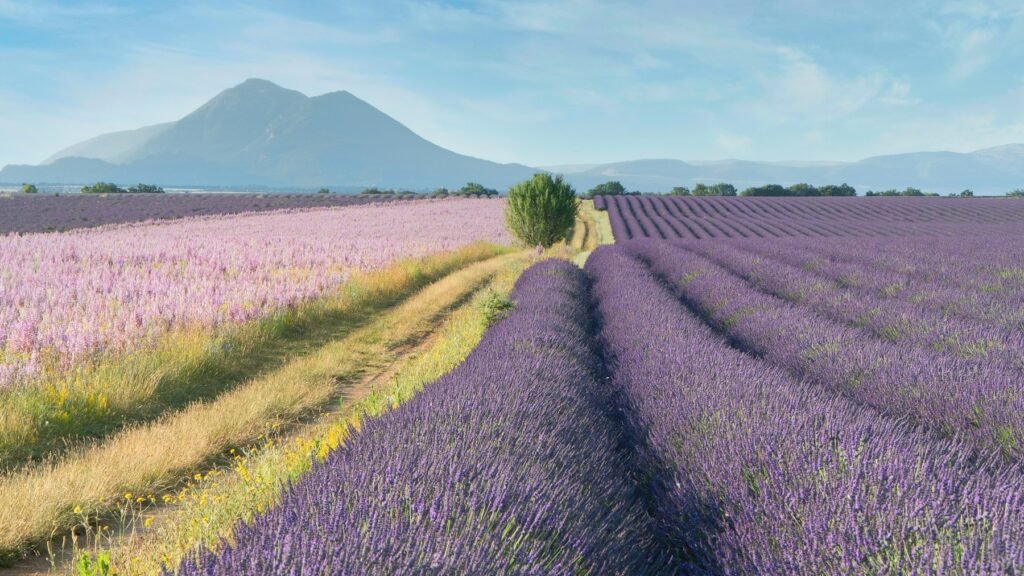
Some days I do not need another productivity hack. I do not need another person telling me to wake up earlier, organize something, or somehow squeeze one more healthy habit into a life that already feels full.
Sometimes I just want the house to get quiet. I want my shoulders to drop. I want something warm in a cup and a small signal that says, you can stop pushing for a minute.
That is part of why lavender makes sense to me. Not because I believe one beautiful purple plant fixes everything, but because people have reached for lavender for generations—for rest, tension, sleep, scent, baths, digestive discomfort and the simple ritual of slowing down. I think that history deserves to be talked about honestly instead of being dismissed simply because every traditional use has not been turned into a modern clinical trial.
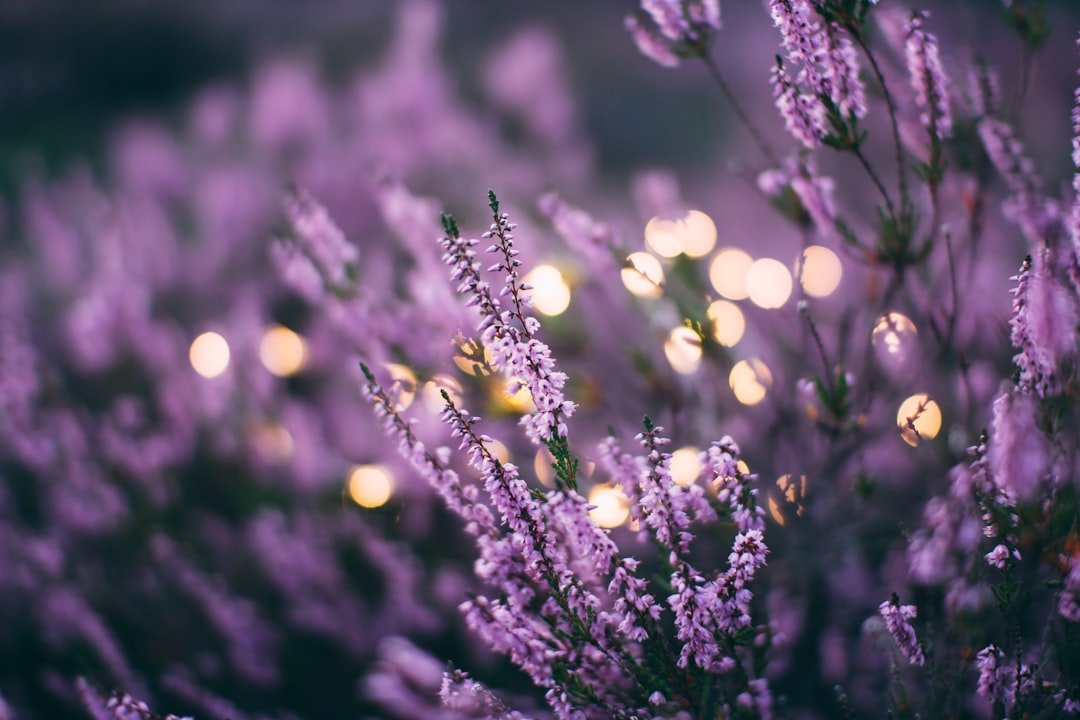
Lavender has a long history in household and herbal traditions. Photo: Daiga Ellaby / Unsplash.
What Herbalists Have Traditionally Said About Lavender
In Western herbalism, lavender is often described as a nervine—an herbalism term for herbs traditionally used to soothe or support the nervous system. Herbalists have historically reached for lavender when someone feels tense, restless, emotionally wound up or unable to settle.
- Nervous tension and restlessness: used as a gentle calming herb when the mind and body feel keyed up.
- Sleep and bedtime support: used in teas, baths, pillows and aromatic preparations to help create a more restful transition into sleep.
- Mental stress and exhaustion: long-standing European herbal use includes relief of mild mental stress and exhaustion.
- Digestive tension: herbal traditions have used lavender for gas, wind, cramping and stomach discomfort, particularly when tension seems to accompany the digestive symptoms.
- Head and muscular tension: lavender has been used aromatically and topically in traditional practice for tension-type discomfort and physical tightness.
- Menstrual comfort: some traditional herbal practices include lavender in soothing preparations for periodic discomfort.
- Bath and body rituals: lavender-infused baths and aromatic preparations have long been used when the body feels physically or emotionally tense.
- Skin and aromatic household use: flowers and diluted topical preparations have a long history in skin, bathing, fragrance and household traditions.
Interestingly, the European Medicines Agency’s herbal monographs formally recognize lavender flower and lavender oil within the traditional-use areas of mental stress, exhaustion and aid to sleep. That does not prove every claim ever made about lavender, but it does show that traditional use is not simply an internet invention—it has a documented history substantial enough to appear in European herbal medicine assessments.
Lavender Tea: The Softest Place to Start
When herbalists talk about lavender tea, they generally mean an infusion made from culinary or food-grade lavender flowers, not essential oil. Traditionally, lavender tea has been used when someone wants to settle after a stressful day, support a bedtime ritual, or soothe tension that seems to sit in both the mind and the stomach.
The EMA herbal monograph includes comminuted lavender flower as an herbal tea for oral use in adolescents and adults for traditional relief of mild mental stress and exhaustion and to aid sleep. That is much more useful context than simply saying “there is no research.” Traditional use and modern clinical proof are different categories, and both can be discussed honestly.
Flowers, Leaves and Stems: Are They All Used?
The flowers and flowering tops are the parts most strongly associated with traditional herbal preparations and lavender essential oil. Dried flowers are used in teas, sachets, baths, culinary recipes and aromatic blends. Leaves and stems are fragrant too and may appear in culinary, craft or aromatic uses, but they are not interchangeable with standardized lavender-flower preparations or essential oil.
If you are making something to consume, identify the species and use a product specifically sold as food-grade. A decorative bouquet from a florist or garden center may have been treated with products not intended for eating.
Lavender Essential Oil: Powerful, Concentrated and Different
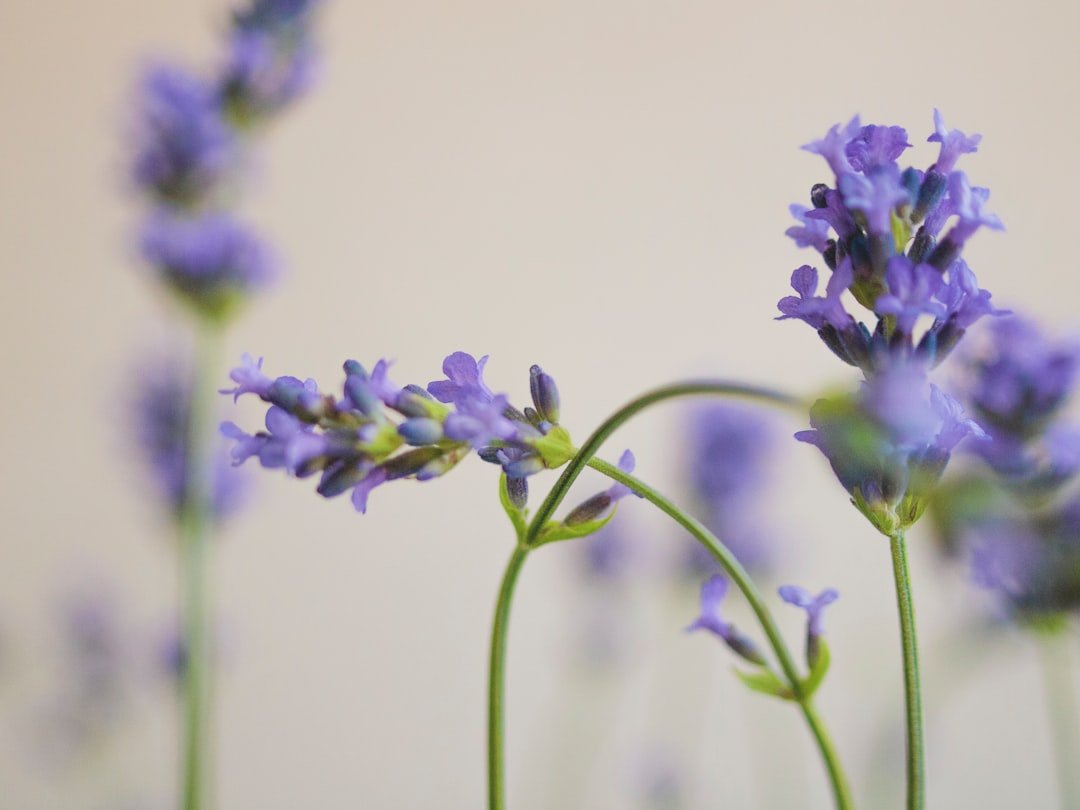
Essential oil deserves its own section because it is not lavender tea in a stronger form. It is a highly concentrated aromatic product obtained from the plant.
Herbal and aromatherapy traditions commonly use lavender oil for relaxation rituals, bedtime scent, baths and properly diluted topical applications. European regulators also recognize specific lavender-oil medicines on the basis of long-standing traditional use for mild mental stress, exhaustion and aid to sleep.
But formulation matters. A professionally manufactured oral lavender-oil medicine is not the same thing as taking an aromatherapy bottle from your shelf and swallowing drops. Do not casually ingest essential oil. Use essential oils according to their labeled route and dilution instructions and seek professional guidance for internal use.
For skin use, dilute appropriately and consider a small patch test first. Stop if you develop burning, itching, rash, swelling or another reaction.
Lavender Extracts, Tinctures and Capsules
Extracts and tinctures concentrate plant constituents differently from tea. Traditional and commercial products may use different extraction ratios, solvents and doses, which means “lavender extract” is not one universal substance.
This is also where modern research becomes especially interesting. Studies of certain standardized oral lavender-oil preparations have reported possible benefits for anxiety-related symptoms, while research on inhaled lavender, stress and sleep has produced more mixed results. The responsible takeaway is not that lavender “does nothing,” and it is not that lavender “cures anxiety.” It is that some traditional uses have scientific signals behind them, while the strength of evidence depends heavily on the preparation and outcome being studied.
What Modern Research Is Beginning to Tell Us
I want this section separate from the traditional-use section on purpose. Herbal tradition and clinical research answer different questions.
The European Medicines Agency concluded that lavender oil has sufficiently established long-standing use to support traditional herbal medicinal use for mild symptoms of mental stress and exhaustion and as an aid to sleep. Its assessment also considered studies suggesting possible effects on anxiety, stress and insomnia, although the evidence available at the time was not strong enough to establish those effects as proven clinical indications.
So I do not think the useful conversation is “lavender works” versus “lavender does not work.” A better question is: Which preparation? For what purpose? At what concentration? Based on traditional experience, modern trials, or both?
What I Would Not Tell You About Lavender
I would not tell you lavender cures anxiety. I would not tell you to stop medication and drink lavender tea instead. I would not tell you that essential oil is safe to swallow simply because it came from a plant. And I would never tell you that “natural” means every body will tolerate it.
But I also would not pretend generations of herbal use have nothing to teach us just because modern research has not answered every question yet. I want Lifvyt to leave room for both things to be true: traditional knowledge can be worth preserving, and medical claims still deserve evidence.
A Lavender Ritual That Does Not Need to Fix You
Maybe the most useful thing about lavender on an ordinary Tuesday is not a dramatic health promise. Maybe it is the ritual.
A cup of properly prepared culinary lavender tea. A small dried bundle near your bedside. A few minutes with a lavender-scented bath product you already tolerate. A diffuser used according to its instructions. Lower lights. Phone down. Nothing to accomplish for ten minutes.
Sometimes wellness does not have to be another project. Sometimes it can simply be a cue that the demanding part of the day is over.
Before You Use Lavender: Safety Matters
- Check for known allergies or sensitivity before topical use.
- Stop using a product if you develop a rash, swelling, breathing difficulty or other concerning reaction; seek urgent care for severe allergic symptoms.
- Ask a physician or pharmacist before medicinal internal use if you take prescription or OTC medicines, particularly products that affect alertness or sedation.
- Ask a qualified clinician before use during pregnancy or breastfeeding.
- Use extra caution with children and use only age-appropriate products and directions.
- Do not substitute lavender or another herb for prescribed treatment without discussing it with the clinician managing your care.
- Do not assume a product labeled “natural” is automatically appropriate for internal use.
Sources & Further Reading
For the research side of this article, Lifvyt consulted the European Medicines Agency herbal monographs for Lavandula angustifolia flower and lavender oil, along with the U.S. National Center for Complementary and Integrative Health’s lavender overview and Poison Control safety information. Traditional-use descriptions are presented as traditional herbal practice, not as proven treatment claims.
This content is provided by Lifvyt for general educational and informational purposes only. It is not medical advice and does not establish a clinician-patient relationship. Nothing in this article is intended to diagnose, treat, cure, prevent or manage a disease or medical condition, and no statement about traditional herbal use should be interpreted as a guarantee of safety or effectiveness.
Herbs, teas, essential oils, tinctures, extracts, supplements and topical preparations can cause side effects, allergic reactions and medication interactions. Product composition, concentration, contamination risk and individual response can vary. Before using lavender or another herb internally, medicinally, in concentrated form, during pregnancy or breastfeeding, for a child, alongside medication, before surgery, or in the presence of a medical condition, consult a physician, pharmacist or other appropriately qualified healthcare professional.
Essential oils require particular caution. Do not ingest an essential oil simply because it is labeled natural or because you read about an oral lavender preparation. Use products only according to their intended route, label and professional guidance.
You are responsible for your own purchasing, preparation and personal-use decisions. Lifvyt cannot evaluate your individual allergies, medications, diagnoses, product quality, dose or risk factors. If symptoms are severe, persistent, worsening, unusual or potentially emergent, seek appropriate medical care rather than relying on an herbal remedy or this website.
The Sunday Soft Reset
A calmer start to your week.
Get Lifvyt’s weekly collection of gentle wellness reads, nervous-system resets and practical tools — plus the free 5-Minute Nervous System Reset Guide.
By signing up, you’ll receive the free guide and one gentle Lifvyt email each week. Unsubscribe anytime.