
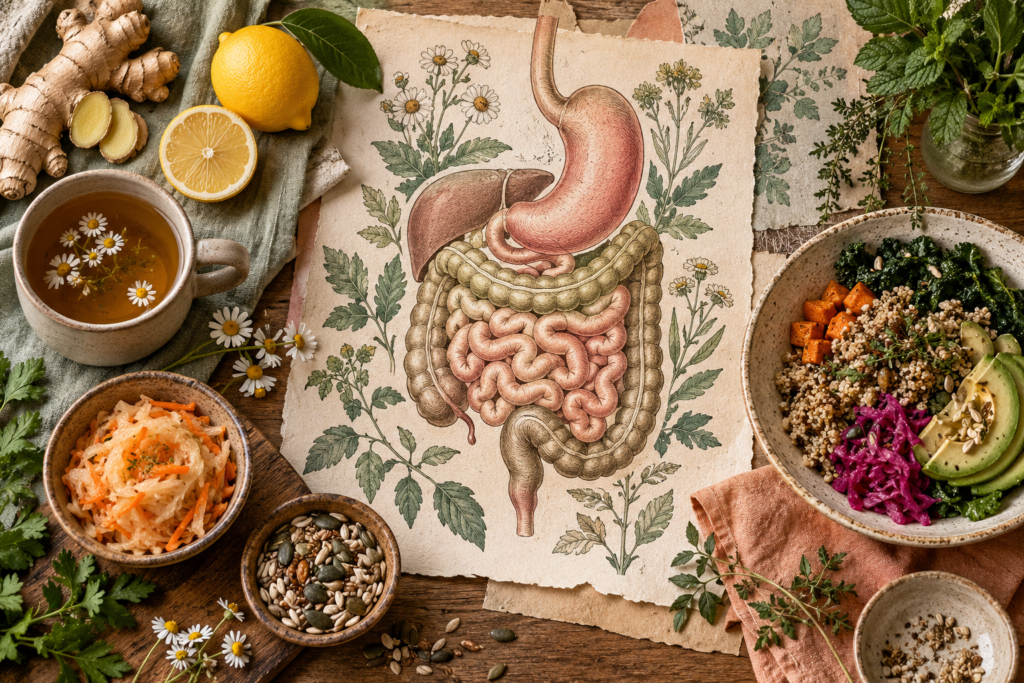
One useful correction before we begin: there is no single, universal “perfect” gut microbiome. Healthy people can have meaningfully different microbial communities, and researchers are still working out which patterns matter in which context. Your gut does not need to win a tiny internal popularity contest.
The Anatomy of a Calm Gut · Part 2
Your gut is an ecosystem. Microbes, intestinal cells, nerves, immune cells and food-derived compounds are sharing the same neighborhood.
The microbiome matters. So does the gut barrier. So does the enteric nervous system. None of them works alone—and none can be summed up as “good bacteria = good mood.”
Main ideaThink ecosystem, not scorecard.
Myth to retireOne probiotic fixes the microbiome.
Try firstAdd variety before adding panic.
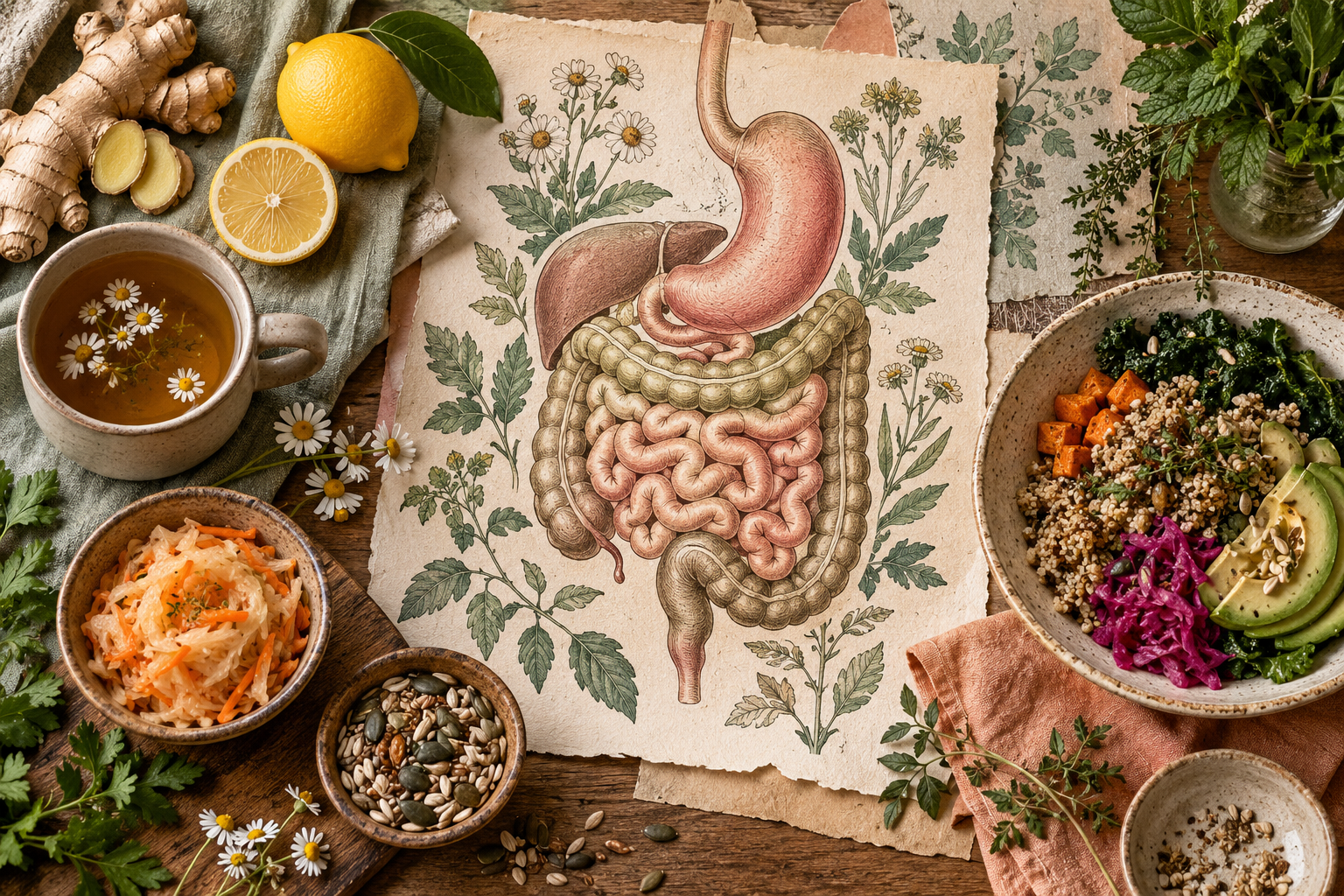
Some wellness content talks about your gut microbiome like it is a sourdough starter you have somehow neglected.
Feed the right bacteria. Eliminate the bad ones. Buy an expensive powder. Become spiritually aligned with fermented cabbage.
It is a compelling story.
It is also much too tidy.
The gut microbiome is the community of microorganisms and their collective genetic material living in and on the gastrointestinal tract. These organisms interact with food, mucus, intestinal cells, immune cells and one another. They also produce metabolites—small compounds that can affect the local gut environment and, in some cases, signaling elsewhere in the body.1
But the microbiome is not floating around in an empty tube. It lives inside a larger system.
And that is where this gets interesting.
The Gut Is More Neighborhood Than Machine
A machine invites one question: Which part is broken?
An ecosystem invites different questions: Who lives here? What are they eating? What is the environment like? Which relationships are helping? Which are becoming disruptive?
That is a better mental model for the digestive tract.
Microorganisms interact with food components, bile acids, mucus, immune cells and one another. Their effects depend on species, strain, location, abundance and context.
A single-cell-thick epithelial layer in many areas helps absorb nutrients while managing what stays inside the gut lumen and what crosses into the body.
Neurons and glial cells within the gut wall help coordinate movement, secretion and local reflexes while interacting with epithelial and immune systems.
The intestine contains extensive immune tissue because it has to tolerate food and useful microbes while still responding to genuine threats.
Your gut is not a jar of bacteria. It is a living border town with food arriving, signals leaving, immune patrols, nervous-system wiring and approximately zero interest in becoming a wellness slogan.
What Does a “Healthy Microbiome” Actually Look Like?
This question sounds simple until scientists try to answer it.
A 2025 Nature Reviews Microbiology perspective notes that defining a universally “healthy” microbiome is difficult because microbial communities vary between people and can also change within the same person over time.2
That means diversity can be useful information, but more of every organism is not automatically better. Two healthy people do not need identical stool-test results. And one commercial microbiome score cannot reduce an entire ecological system to a grade you should feel anxious about before breakfast.
The internet version
There are “good” bacteria and “bad” bacteria. Increase the good ones, eliminate the bad ones, and your gut becomes healthy.
The more useful version
Microbial effects depend on the organism, strain, location, diet, immune state, surrounding community and host. Context matters more than cartoon morality.
The word dysbiosis is also used constantly online. In research, it generally refers to a microbial community that differs from a comparison state in a potentially meaningful way. But “dysbiosis” is not one standardized diagnosis with one standardized treatment.
If someone tells you they can fix your dysbiosis after looking at one colorful chart and a shopping cart full of supplements, keep one eyebrow available.
Your Gut Barrier Is Not Plastic Wrap
“Leaky gut” may be one of the most overworked phrases in wellness.
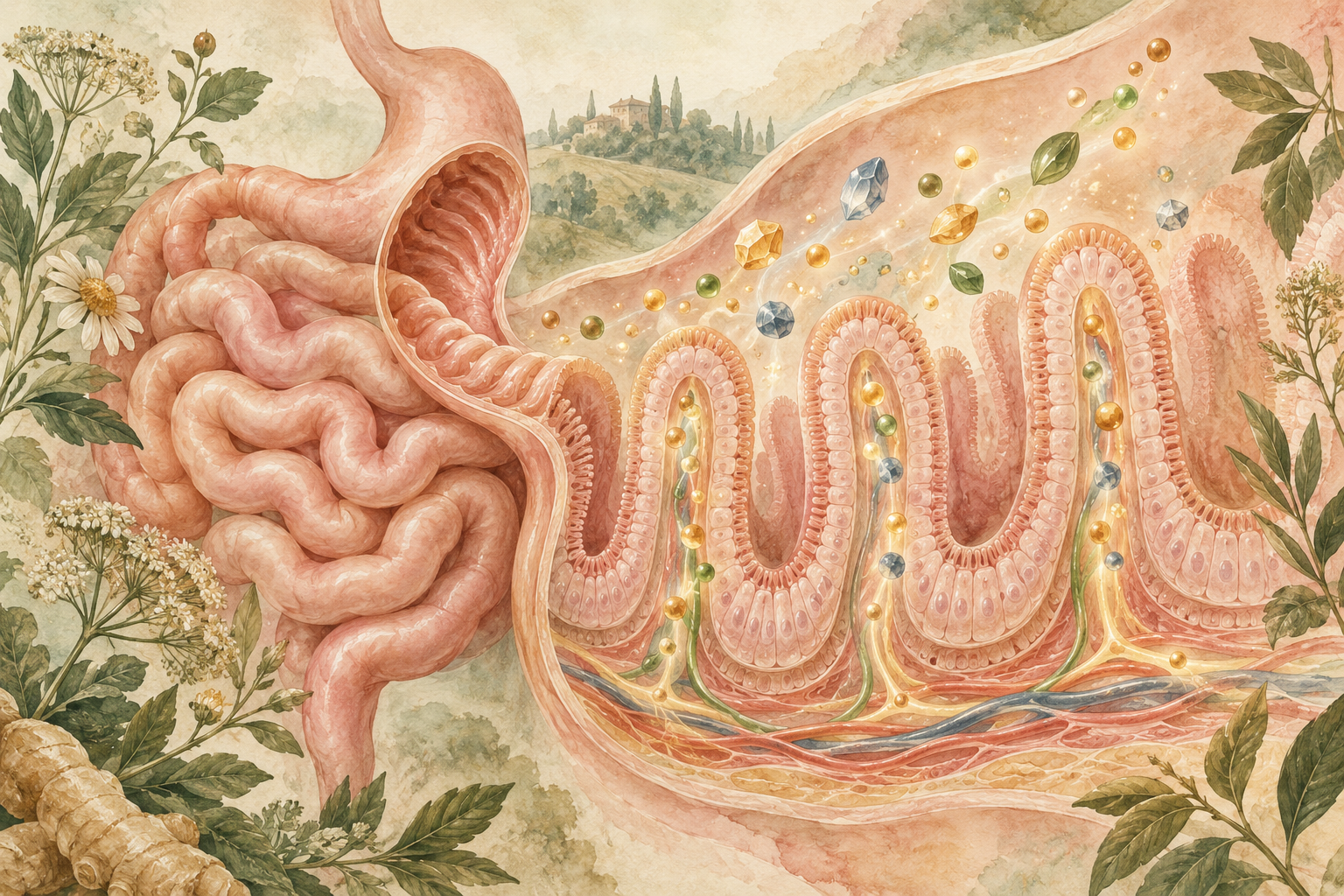
The intestine absolutely has a barrier function. That barrier is biologically sophisticated and actively regulated. It includes epithelial cells, tight-junction proteins, mucus, immune components, microbes and chemical signals. Researchers study changes in intestinal permeability in several gastrointestinal conditions.3
But describing the gut as simply “sealed” or “leaky” misses the point.
The intestinal surface must do two seemingly opposite jobs at once:
Nutrients, electrolytes and water have to cross from the digestive tract into the body through controlled pathways.
Microbes and potentially harmful substances generally need to remain on the luminal side unless specific signals or cells are meant to cross.
Epithelial, immune, microbial and neural systems exchange information about what is happening at that interface.
A 2024 review in Nature Reviews Gastroenterology & Hepatology specifically argues for moving beyond simplistic framing of the intestinal barrier as just “leaky gut.” The barrier is part of a larger communication system across the microbiota–gut–brain axis.4
Translation: your intestines are not a colander.
Barrier function can change in disease, stress and inflammation. But diagnosing yourself from bloating alone—or buying a supplement because a reel said your gut lining has “holes”—skips several important scientific steps.
Meet the Enteric Nervous System: Your Gut’s Local Wiring
The enteric nervous system, or ENS, is a large network of neurons and glial cells embedded within the wall of the digestive tract. It helps regulate movement, secretion, blood flow and local digestive reflexes.5
This is why calling it the “second brain” is catchy, but slightly misleading.
Your intestines are not composing poetry.
They are, however, making an impressive number of local decisions.
The ENS interacts with epithelial cells, immune cells and microbes. It can function independently for many local tasks while still communicating with the central nervous system through vagal and spinal pathways.
If you read Part 1 on the vagus nerve and digestion, this is the piece that rounds out the picture: the vagus is important, but the gut already has a substantial neural network of its own.
How Microbes Join the Conversation
Microbes do not need a tiny telephone to influence the rest of the system.
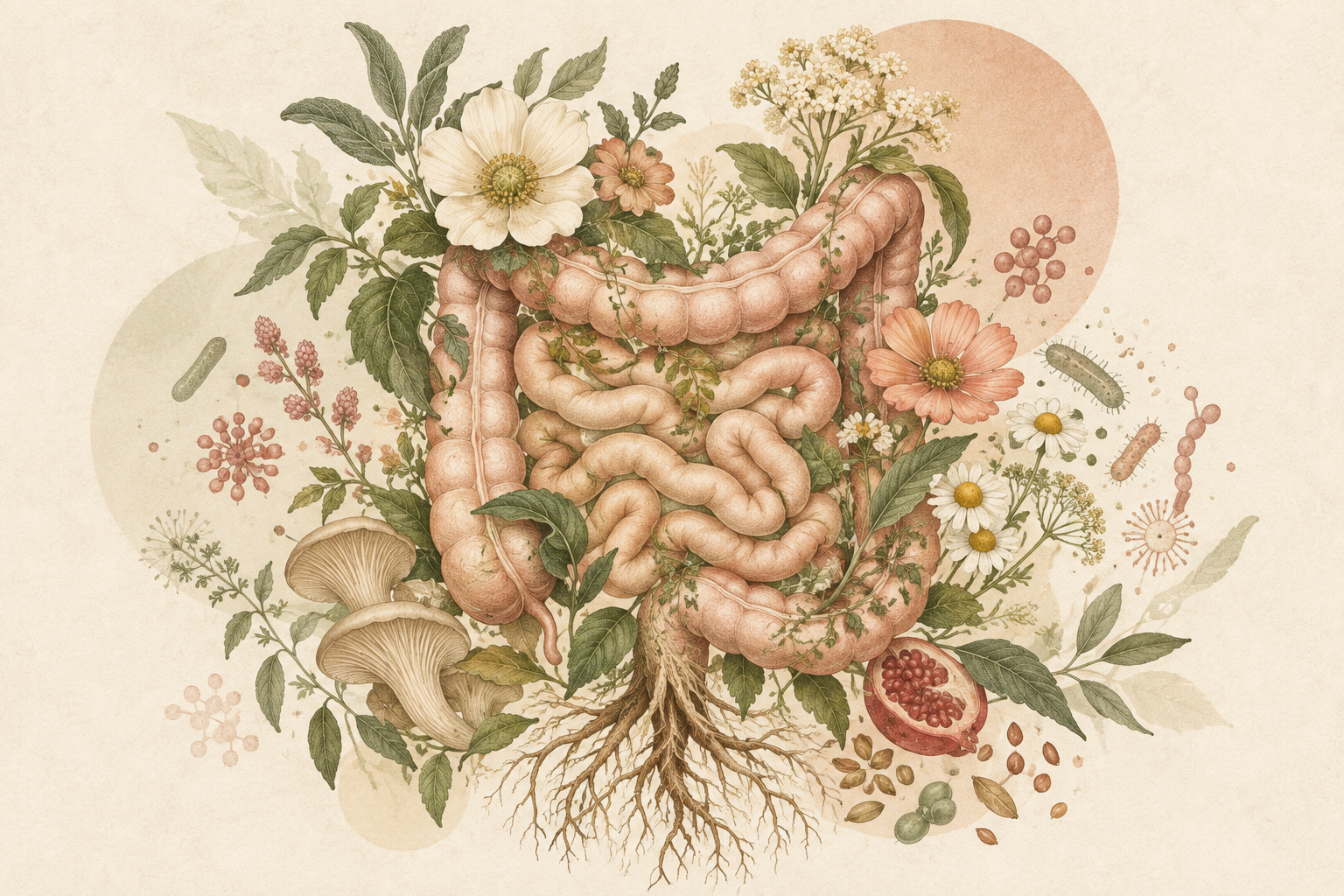
They can modify food components and produce metabolites. They can interact with immune pathways. They can affect the chemical environment near intestinal epithelial and sensory cells. And those host cells can translate information into hormonal, immune and neural signals.
A 2025 review in Nature Reviews Microbiology describes this intestinal neuroepithelial interface as an important part of microbiota–brain communication, while also emphasizing how many mechanisms are still being worked out.1
Important: “microbes affect the brain” is not the same as “your microbiome controls your mood.”
Animal studies have taught researchers a lot about possible pathways. Human research is growing. But translating a mechanism into a reliable treatment for one person is much harder.
That is why we are not turning your yogurt into an antidepressant or your kimchi into a personality test.
What About Serotonin, GABA and All Those Gut-Brain Headlines?
This is where wellness captions tend to sprint ahead of the evidence.
The gastrointestinal tract contains serotonin-producing enterochromaffin cells, and serotonin has major local roles in gut physiology. That does not mean serotonin made in the gut simply travels into the brain and creates happiness.
Likewise, some gut microbes can produce or influence compounds related to neurotransmitter systems, including GABA-related signaling. Researchers are interested in how microbial metabolites, epithelial cells, immune pathways and sensory nerves may translate these signals.
But the pathway from “microbe makes a compound” to “person feels emotionally different” has a lot of steps in the middle.
The science is fascinating enough without pretending a spoonful of fermented food is sending serotonin directly to your frontal lobe.
So What Can You Actually Feed an Ecosystem?
For most generally healthy adults, the practical answer is far less exotic than the supplement aisle suggests.
Think Variety, Color and Enough Nourishment
For gut health, the bigger win is usually not whether a food is raw, cooked, blended or roasted. It is whether your overall eating pattern gives your body—and your gut microbes—a variety of foods over time.
Different colors often bring different combinations of fibers, vitamins, minerals and plant compounds. Berries and purple grapes bring anthocyanins. Tomatoes and watermelon bring lycopene. Orange produce often brings carotenoids. Leafy greens, beans, nuts and seeds can contribute minerals such as magnesium and potassium along with fiber and other nutrients.
You do not need to turn your plate into a rainbow contest at every meal. Think across the week.
Color gives variety
Rotate red, orange, yellow, green, blue-purple and white plant foods when you can. The goal is a wider mix of fibers and plant compounds—not collecting colors for points.
Minerals matter too
Foods such as beans, lentils, leafy greens, potatoes, bananas, nuts, seeds, dairy or fortified alternatives and whole grains can contribute minerals the body needs for normal nerve, muscle, fluid and cellular function.
And yes, fruit juice can fit. A 100% fruit juice can provide vitamins, potassium and plant compounds, and it can be an easy way to add variety. But juice usually contains much less fiber than whole fruit, so I would treat it as one option—not a complete replacement for fruit.
A smoothie is a little different because blending usually keeps more of the fruit’s original fiber. If you enjoy juice, have it because you enjoy it and it fits your day—not because your microbiome requires a daily green potion with seventeen ingredients and emotional support ginger.
Frozen fruit counts. Canned fruit packed in water or juice counts. Cooked vegetables count. Soup counts. Roasted vegetables count. Fresh herbs count. Beans absolutely count. Your gut is interested in the pattern, not whether dinner looked Pinterest-ready.
What About People Who Eat a More Balanced Diet?
When researchers compare dietary patterns, the clearest signal is usually not one heroic food. It is the whole pattern.
Eating patterns that regularly include vegetables, fruit, legumes, whole grains, nuts, seeds and other minimally processed foods generally provide more fermentable fiber and a wider range of plant compounds for gut microbes to work with. A 2025 review in Nature Reviews Microbiology describes dietary fibers as major modulators of gut microbial ecology and metabolism, although responses vary from person to person.8
By contrast, Western-style dietary patterns that are high in ultra-processed foods and saturated fat while being low in fiber, fruits and vegetables are repeatedly associated with less favorable microbiome features, including lower microbial diversity in several studies.9
That does not mean someone who eats chips has a “bad microbiome” and someone who eats quinoa owns the deluxe edition.
It means that, over time, the gut ecosystem responds to the environment you repeatedly give it.
Usually gives gut microbes more fermentable material and supports production of metabolites such as short-chain fatty acids.
Provides less substrate for many fiber-fermenting microbes and is often paired with lower fruit, vegetable and whole-grain intake.
Is associated with poorer overall diet quality and gut-health concerns, but researchers are still separating the effects of processing, additives, nutrient profile and lifestyle context.10
For a real-life meal, “balanced” does not need to mean perfect. Think some protein, a fiber-containing carbohydrate or whole grain, a fruit or vegetable you actually like, and enough fat to make the meal satisfying. The exact combination can change with culture, budget, appetite, medical needs and what is currently hiding in your refrigerator.
Most importantly, one balanced dinner does not transform the microbiome overnight—and one takeout meal does not destroy it. Gut ecology responds to repeated patterns far more than one Tuesday.
Beans, lentils, oats, whole grains, vegetables, fruit, nuts and seeds provide different fibers and other compounds that microbes can use.
Different plants bring different fibers and polyphenols. You do not need 47 vegetables by Tuesday. Variety can build slowly.
Yogurt, kefir, kimchi and similar foods can be part of a varied diet. They are optional, not a moral requirement.
Your microbiome does not thrive on wellness restriction. Adequate nourishment matters too.
Physical activity is associated with many aspects of metabolic and gastrointestinal health. It does not have to be punishing.
Do not eliminate ten foods because a generic list called them inflammatory. Symptoms deserve context and, when needed, professional evaluation.
If you suddenly increase fiber and feel bloated, that does not necessarily mean fiber is “bad for your gut.” A large jump can increase gas and discomfort, especially in people with IBS or other gastrointestinal conditions.
Increase gradually when appropriate. Drink enough fluid for your needs. And if fiber reliably worsens symptoms, work with a qualified clinician or dietitian rather than forcing your intestines into a team-building exercise.
Do You Need a Probiotic?
Sometimes probiotics are useful. “Probiotic” is not one thing.
Effects are often strain-specific, condition-specific and dose-specific. Evidence for one strain in one condition cannot automatically be transferred to another bottle with different organisms.
That is also why “take a probiotic for gut health” is not especially precise advice.
Reasonable use
A clinician recommends a specific strain for a specific purpose, or you use a food containing live cultures that you enjoy and tolerate.
Less useful
Buying the supplement with the largest number on the label because 80 billion sounds more impressive than 20 billion.
People who are severely immunocompromised, critically ill or medically complex should discuss probiotic supplements with their healthcare team before using them.
The Microbiome Is Responsive—but Not Fragile Glass
Your gut community can shift with antibiotics, illness, travel, major dietary changes, age and many other factors.
That does not mean every restaurant meal has “destroyed your microbiome.”
Biological systems are dynamic. A healthy ecosystem is not one that never changes. It is one that can respond, adapt and—when possible—recover.
Antibiotics are a good example. They can alter gut microbial communities, sometimes substantially. They can also be lifesaving medicines.
The correct lesson is not “avoid antibiotics at all costs.” It is “use antibiotics appropriately when medically indicated, not casually when they are unlikely to help.”
A Lifvyt one-week experiment
Feed variety, not perfection
- Choose three plant foods you already like. No aspirational kale required.
- Add one different plant food during the week. Berries, beans, herbs, oats, nuts, lentils—anything that fits your life.
- Keep one familiar meal exactly familiar. A microbiome experiment should not require reorganizing the pantry.
- Notice digestion. Comfortable? Gassy? More regular? No dramatic conclusions from one afternoon.
- Keep what works. The goal is a repeatable diet with variety, not nutritional performance art.

What I Would Not Tell You About the Microbiome
I would not tell you that one stool test can explain your fatigue, skin, mood, hormones, bloating and childhood personality.
I would not tell you that every symptom means “bad bacteria took over.”
I would not tell you to eliminate half your diet because microbes need to be starved.
And I would not tell you that probiotics, fermented foods or fiber are universally comfortable for everyone.
The microbiome is scientifically important. It does not need exaggerated claims to become interesting.
When Digestive Symptoms Need a Clinician, Not an Ecosystem Metaphor
Persistent digestive symptoms deserve real evaluation. Do not assume bloating, pain, constipation, diarrhea, reflux or nausea is automatically a microbiome problem.
Contact a healthcare professional for recurring or disruptive symptoms. Seek prompt or urgent medical care when appropriate for:
- severe or rapidly worsening abdominal pain;
- blood in vomit or stool, or black/tarry stool;
- persistent vomiting or inability to keep fluids down;
- significant dehydration, fainting or marked weakness;
- unexplained weight loss or persistent loss of appetite;
- difficulty swallowing;
- fever with significant abdominal pain;
- yellowing of the skin or eyes; or
- a major or persistent change in bowel habits.
The Lifvyt Takeaway
Your gut is alive with activity.
Microbes are eating.
Cells are absorbing.
Nerves are signaling.
Immune cells are monitoring.
Your intestinal lining is somehow doing border control and nutrient delivery at the same time.
Very ambitious organ system.
You do not need to control every member of that ecosystem.
Feed yourself with reasonable variety. Notice what your body tolerates. Use fermented foods if you enjoy them. Be skeptical of miracle microbiome tests and one-size-fits-all supplement plans. Get persistent symptoms evaluated.
And maybe stop thinking of your gut as something you have failed to optimize.
It is already doing a tremendous amount of work.
Continue The Anatomy of a Calm Gut
Next: From Plate to Cell
Part 3 will follow minerals and nutrients from food through digestion, absorption and cellular use—including magnesium, potassium, sodium and iodine without turning lunch into chemistry homework.
Missed Part 1? Read The Vagus Nerve and Digestion: What “Rest and Digest” Really Means. For the broader overview, visit Gut-Brain Axis: Digestion, Mood & Your Nervous System.
Sources & Further Reading
- Ohara TE, Hsiao EY. Microbiota–neuroepithelial signalling across the gut–brain axis. Nature Reviews Microbiology. 2025.
- Nature Reviews Microbiology. Examining the healthy human microbiome concept. 2025.
- Grover M, Vanuytsel T, Chang L. Intestinal Permeability in Disorders of Gut-Brain Interaction: From Bench to Bedside. Gastroenterology. 2025.
- Aburto MR, Cryan JF. Gastrointestinal and brain barriers: unlocking gates of communication across the microbiota–gut–brain axis. Nature Reviews Gastroenterology & Hepatology. 2024.
- Spencer NJ, et al. The enteric nervous system. 2023.
- Mayo Clinic review. The role of the gut microbiome in disorders of gut-brain interaction. 2024.
- National Institute of Diabetes and Digestive and Kidney Diseases. Gastrointestinal Microbiology & Infectious Diseases research program.
- Delzenne NM, et al. The gut microbiome and dietary fibres: implications in obesity, cardiometabolic diseases and cancer. Nature Reviews Microbiology. 2025.
- Taglialegna A. A gut microbiome-restoring diet. Nature Reviews Microbiology. 2025.
- Whelan K, et al. Ultra-processed foods and food additives in gut health and disease. Nature Reviews Gastroenterology & Hepatology. 2024.
This Lifvyt article is provided for general educational and informational purposes only. It is not medical advice, diagnosis, treatment or prescribing and does not establish a clinician–patient relationship. Terms such as microbiome, gut barrier, permeability, dysbiosis and gut–brain axis describe active areas of research and should not be used to self-diagnose a gastrointestinal, immune, neurological or mental-health condition.
Dietary changes, fiber increases, fermented foods and probiotic supplements may not be appropriate or comfortable for everyone. People with significant gastrointestinal disease, immune suppression, recent surgery, pregnancy, complex medical conditions or prescription medication use should seek individualized guidance from an appropriately qualified physician, pharmacist or registered dietitian when making therapeutic dietary or supplement changes.
Do not stop, replace or change prescribed treatment because of this article. Seek appropriate medical care for severe, persistent, worsening or unusual symptoms rather than relying on a microbiome product, elimination diet or this website.
The Sunday Soft Reset
A calmer start to your week.
Get Lifvyt’s weekly collection of gentle wellness reads, nervous-system resets and practical tools — plus the free 5-Minute Nervous System Reset Guide.
By signing up, you’ll receive the free guide and one gentle Lifvyt email each week. Unsubscribe anytime.