

LIFVYT · EVERYDAY LIFE
You can be curious about sewing without immediately becoming the owner of a sewing machine, twelve accessories and a storage problem.
A library makerspace is a shared place to explore tools and creative projects. Depending on the branch, that might mean sewing, paper crafts, a vinyl cutter or digital fabrication. The useful part is the chance to find out what you enjoy before building an entire hobby department at home.
Your first visit does not need to end with a finished tote bag. Learning what a machine does, trying a supervised sample or finding the right beginner class can be a perfectly good result.

Why try a library makerspace?
Trying a tool before buying it can help you find out which part of a hobby you actually enjoy. A library makerspace may offer equipment, introductory sessions and a place to ask questions—without turning your home into a storage unit for a hobby you have not tried yet.
For a real example, Charlotte Mecklenburg Library lists dedicated makerspaces with equipment that varies by branch. Its guidance describes access through open labs or scheduled programs. It also distinguishes learning and experimentation from commercial mass production.
That distinction matters: a makerspace can be a place to explore a hobby. It is not automatically a place to produce fifty items for your shop, borrow a machine to take home or receive unlimited private lessons.
Find a session that actually welcomes beginners
Start with your library system’s own website. Search its calendar for makerspace, beginner sewing, adult craft, maker lab or the particular tool you want to try. Check nearby branches too: the closest branch may not have the equipment you need.
Then read the event type. These labels can mean different things locally, so treat them as clues rather than guarantees:
- Guided class: usually the clearest starting point when you want someone to explain a process. Check the listed skill level and supplies.
- Orientation or introduction: a chance to learn the space, requirements and basic operation. It may not include time to make a finished object.
- Open lab: time to work, potentially after training. Do not assume a staff member can teach an entire project from scratch.
- Equipment appointment: a reserved tool or time slot. Ask whether instruction is included or whether you must already know how to use it.
If you want a screen break, say so. Some making involves design software before the hands-on part. Ask about hand sewing, paper work or another analog activity instead of arriving at a 3D-design session expecting an hour away from a monitor.
Ask these questions before you book
You do not need a beautifully worded email. This short script does the job:
“I’m an adult beginner interested in trying sewing. Is there an introductory session? Do I need a library card or training first, and what supplies and costs should I expect?”
- Eligibility: Is a local card required? Are there residency or age restrictions?
- Access: Do you need a reservation, orientation or separate equipment sign-off?
- Cost: Is there a session charge, material fee or charge per print or cut? Are basic practice supplies included?
- Materials: Can you bring your own fabric or paper, and must staff approve it first?
- Timing: How much of the appointment is instruction? Must the project finish during that slot?
- Support: Can staff demonstrate one step at a time or provide written directions? Is there a seated workspace and an accessible route to it?
Write down the answers beside the appointment time. Add travel and parking to the plan; “free activity” and “zero-cost outing” are not always the same thing.
If childcare is part of your calendar puzzle, confirm the event’s audience. An adult session is not automatically suitable for children to attend alongside you. A separate children’s program is not necessarily supervised drop-off care.
Choose a first experiment, not a masterpiece
Before asking what you can make, decide what you want to learn. A narrow goal makes it easier for staff to tell you which session fits.
If sewing interests you
Ask to learn the approved machine setup and practice a few lines on suitable scrap fabric under instruction. Save the zippered bag for after you know whether you enjoy the process.
If paper design interests you
Ask whether a simple bookmark or large paper shape is appropriate for a beginner session. If a cutter is involved, check software and training requirements first.
If you are only curious
Book an introduction or ask when visitors can look around. Bring a notebook with two questions. You can leave with a next step instead of an object.
A helpful project description is specific but flexible: “I’d like to learn to sew a straight line on scrap cotton.” An ambitious one sounds like: “I brought three curtains and would love to be home by four.” Staff deserve the first version.
Bring a small kit you can carry home
Pack your required card or ID, appointment details, notebook, pencil and any materials the organizer has approved. Add glasses or other everyday items that help you work comfortably.
Keep fabric, paper and samples together in a pouch. Leave unapproved adhesives, blades and bulky supplies at home until you know the rules. Bring a bag that can protect your sample or notes on the trip back.
Charlotte Mecklenburg’s guidance says its makerspaces do not provide short- or long-term storage for projects and materials. Elsewhere, ask rather than assume you can leave a half-finished project behind.

A realistic first-visit plan
This is a sample plan for a booked hour, not a promise about any library’s program. Follow the actual session format and finish time.
- Arrive with a little breathing room. Find the correct desk or room and say you are new. A makerspace may be upstairs or away from the main checkout area.
- Explain one goal. Show your small idea and ask whether it fits the appointment. If it does not, ask for a smaller version.
- Watch the demonstration. Let staff show the required setup and safety steps. Ask before touching unfamiliar controls or changing materials.
- Try the agreed sample. Work at a pace that lets you follow the instructions. Stop and ask if a machine jams or something behaves differently from the demonstration.
- Leave time to reset the workspace. Follow staff directions for shutdown and cleanup. Put shared tools back where they belong.
- Record one useful next step. Write down the class name, material type or skill you want to practice next.
If the plan does not work, shrink it
- The introductory class is full.
- Ask about a waitlist or the next release date. Look for a different branch or a simpler adult craft session while you wait.
- The room is louder than expected.
- Ask when the space is quieter or whether a smaller appointment exists. Keep required safety instructions audible when using equipment.
- The equipment is unavailable.
- Ask whether you can still learn the preparation stage or look at examples. Do not substitute a different machine without instruction.
- You cannot finish in one visit.
- Confirm whether you can book more time and how to transport the work safely. Pause before a step that you cannot complete properly.
- Your library has no makerspace.
- Ask about adult craft programs or nearby community arts centers. A room full of expensive machines is not the only route into making things.
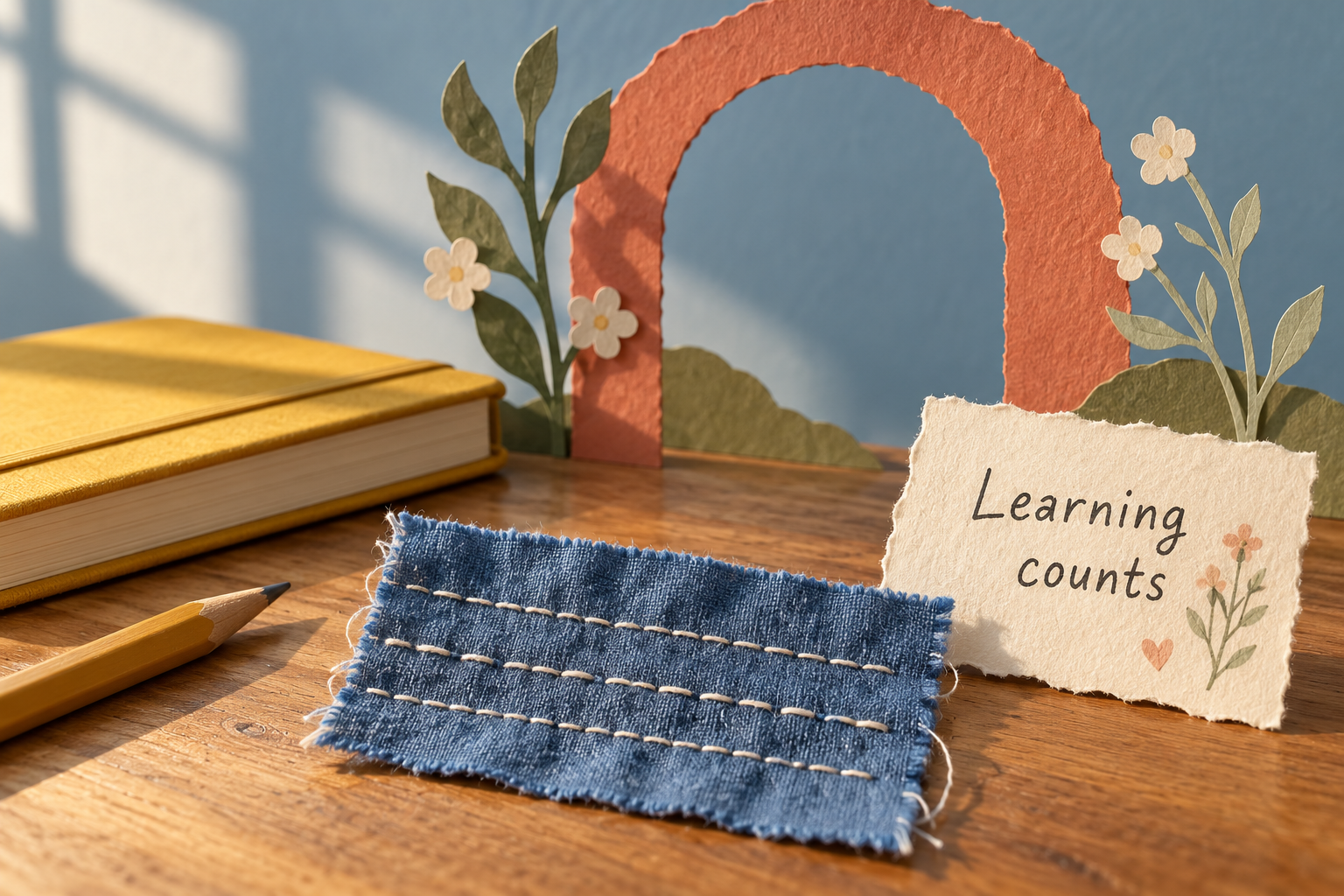
Leave with curiosity, not a shopping assignment
After the visit, ask yourself three things: Did I like the activity? What part was frustrating? Would I enjoy trying it again with the same shared equipment?
You do not need to buy anything that day. A practice sample, a useful question answered or a second booking can be the whole win.
For something to make at home with ordinary materials, try LIFVYT’s one-sheet mini zine. If you want another solo outing, the first solo museum visit guide keeps the plan similarly manageable.
Sources and useful starting points
- American Library Association: National Friends of Libraries Week, October 18–24, 2026 — seasonal context.
- Charlotte Mecklenburg Library: makerspace locations and guidelines — a local example; other systems have their own policies.
- Charlotte Mecklenburg Library: adult services — starting point for adult programs and resources.
Information checked October 27, 2026. The visit plan is an editorial example. AI-generated images illustrate an imagined space and sample materials; they do not depict a particular library or demonstrate equipment operation. Follow local staff instructions.
Note: Beginner visit guidance. Follow staff training and safety instructions, and confirm eligibility, costs and approved materials before attending.
The Sunday Soft Reset
A calmer start to your week.
Get Lifvyt’s weekly collection of gentle wellness reads, nervous-system resets and practical tools — plus the free 5-Minute Nervous System Reset Guide.
By signing up, you’ll receive the free guide and one gentle Lifvyt email each week. Unsubscribe anytime.