

LIFVYT · OFFLINE HOBBIES · NOTICE SOMETHING GOOD
The bird outside does not know your inbox exists. A refreshing quality in a morning companion.
A backyard bird count gives you a small reason to look outside and notice who is actually there. You can watch first, write on paper and look up an unfamiliar bird afterward. No hiking itinerary required.
There is a timely way to give those observations a purpose: Project FeederWatch begins November 1 and continues through April 30. For the approaching season, that means November 1, 2026–April 30, 2027. The project serves the United States and Canada.

First, choose a view you can actually use
Pick a comfortable spot with a clear view of outdoor plants or other places birds already visit. A kitchen chair works. So does a seat near a courtyard window. Choose a position that lets you look without leaning awkwardly over furniture.
For formal FeederWatch participation, select a consistent, clearly bounded site with resources you maintain, such as plantings, water or feeders. A feeder is not compulsory. Read the official site instructions before deciding whether your view qualifies.
If you rent or share a courtyard, start by observing. Ask permission before changing a shared space or adding food. You do not need to buy a feeder today to find out whether you enjoy watching birds.
A practice session that fits real life
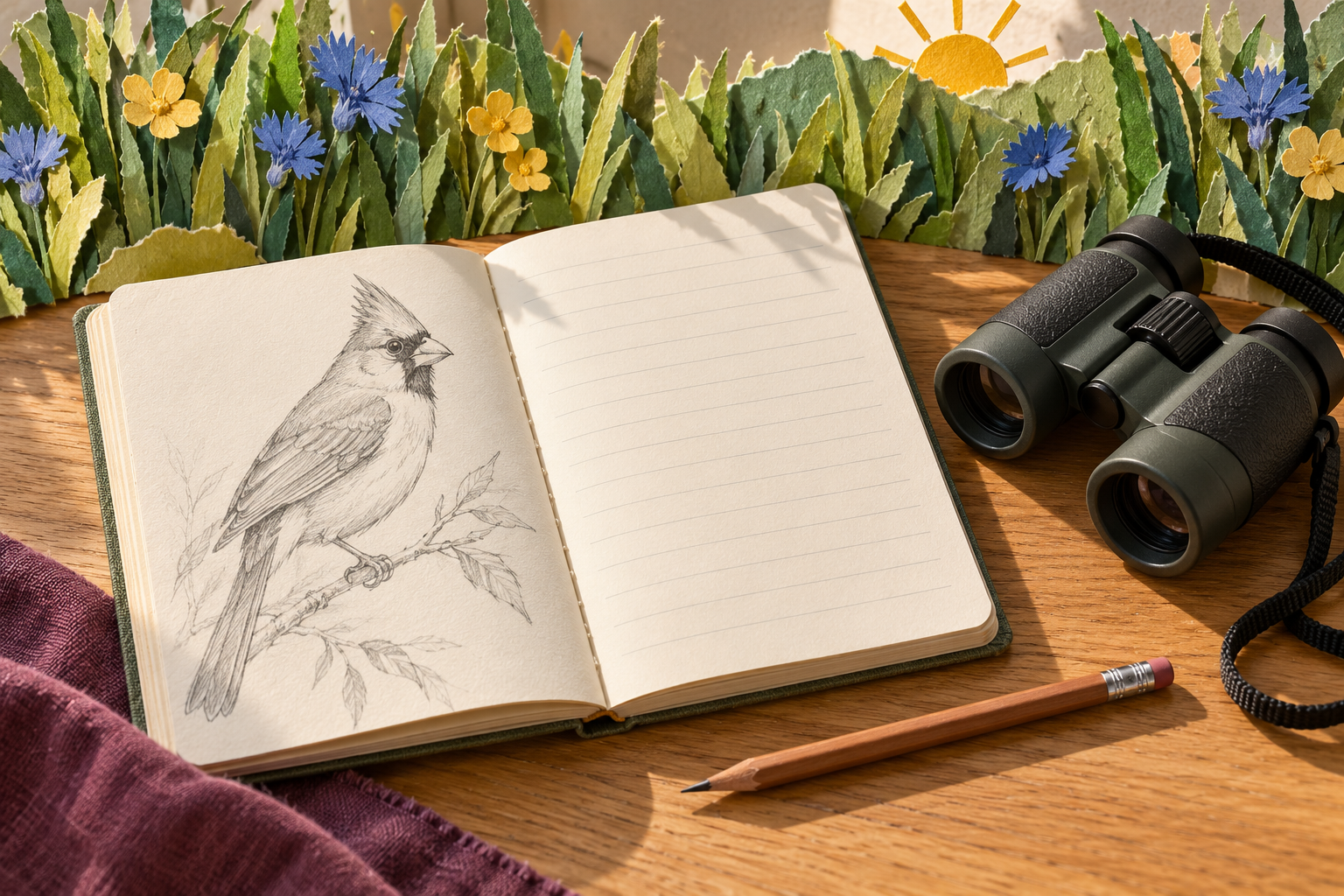
Put a pencil and notebook beside your chair. Watch for ten minutes on a free morning, then write one thing you noticed. This is a suggested practice session, not an official minimum or a promise that birds will arrive on cue.
If you are interrupted by a child, a delivery or a very urgent missing sock, stop the clock. Watching time means time spent watching.
What joining involves—and what it costs
The U.S. registration page currently lists an $18 annual fee and offers first-time participants free participation with the code FIRSTPFW. Check the live checkout terms before paying; these details were verified October 29, 2026.
Canadian readers should use Birds Canada’s registration route. Its page currently says a donation of any amount covers the season. Do not assume the U.S. price or offer applies there.
Print materials can take several weeks to arrive. You can read the online instructions while you wait. For an off-screen hobby, keep the observing and note-taking on paper, then use the website for submission later.
Keep useful paper notes, not a perfect nature journal
Use one spread for your practice observations. Leave a separate space for unidentified birds so guesses do not quietly turn into facts. Your notebook can contain crossed-out numbers and a drawing that looks suspiciously like a potato with a tail.
- At the top: date, place and the start and stop times of your actual watching periods.
- For each sighting: a species name if known, or a short description if not.
- For counting practice: the largest group of that species you see together.
- For your own enjoyment: one action, such as “hopped along the branch” or “waited in the shrub.”
For official reporting, use the project’s tally sheet and complete instructions, including the additional information they request. The small notebook structure above is an organizing aid, not a replacement form.
Look at the bird before looking at the guide
FeederWatch’s identification advice recommends recording what you can see before consulting a field guide. Note size, bill shape, head markings and where the bird was moving. A quick sketch can help.
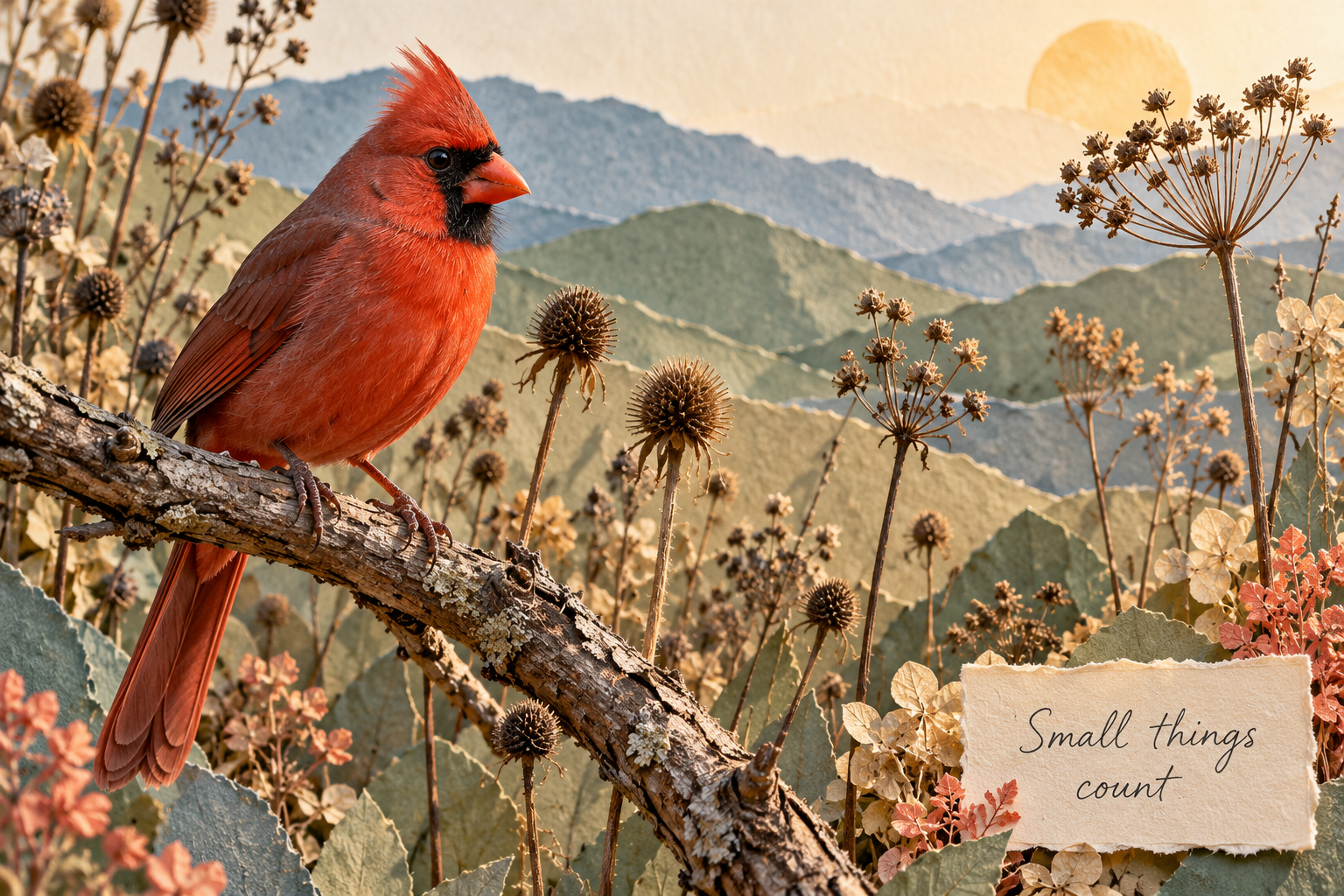
For example, “red, tall crest, thick orange-red bill, black around face” gives you clues to check. Cornell’s Northern Cardinal guide describes those features in the adult male. Females are mostly pale brown with reddish accents, so not every cardinal will match the bright red illustration.
For more starter species, use LIFVYT’s 10 North American birds to know by sight. Check a current regional guide as well: a continental list does not mean every bird lives outside your window.
The rule that prevents accidental bird inflation
FeederWatch asks for the highest number of each species visible at one time across the two-day count. Do not add every arrival. The same bird may return repeatedly, possibly with the confidence of someone who owns the place.
A simple counting example
- On day one, you see one cardinal.
- Later, you see three cardinals together.
- On day two, you see two together.
Your final cardinal count is 3. It is not 6. Keep a separate maximum for each species. If you watch from more than one window, do not add the separate views together; use the largest number seen from a single viewpoint at one time. This example shows the method; it is not a forecast of what your yard will attract.
Count qualifying birds within the chosen site, including those using maintained plantings. Exclude birds merely flying overhead, birds only heard, and camera-only sightings you did not see yourself. Keep off-day sightings in your personal notes rather than adding them to that count.
If a bird remains unidentified, keep its description and seek help rather than assigning a confident-looking name. Good notes beat a very persuasive guess.
Pick your count days before the exciting bird arrives
The project uses two consecutive days. Its scheduling guidance recommends no more than one pair a week, with at least five non-count days between pairs. You can participate less often.
Choose days that suit your routine in advance. Do not move a count just because a spectacular visitor appears; that would favor unusual sightings. Save the excitement in your personal journal instead.
A workable preparation plan is to read the rules on one evening, set out the tally sheet the next, and choose your first pair of dates. Separate learning the system from trying to identify everything at once.
When the backyard does not follow the plan
- No birds show up.
- That is different from not watching. If you watched during an official count and saw none, use the project’s no-birds option. An empty observation is still information.
- You can hear something but cannot see it.
- Enjoy the sound and jot it in your personal notes. Do not use a sound-only identification as a FeederWatch visual count.
- You keep losing track.
- Write the current maximum beside each species and change it only when a larger group appears together. Avoid a running list of every visit.
- You have only a short break.
- Try a personal practice watch. If you join the project, follow its timing guidance and report actual observation effort. Do not turn an entire workday near a window into eight hours of watching.
- You do not have a suitable site.
- Keep a casual notebook or ask a local nature center about organized opportunities. A walk can be enjoyable without being submitted under the wrong project’s rules.
Let the birds set the distance
Observe without tapping on glass or approaching for a better picture. If you decide to feed birds, read Cornell’s feeding guidance first, including cleaning and placement. Food attracts living visitors, so upkeep belongs in the plan too.
Keep the first goal modest: notice what already uses the space. A shopping cart full of equipment is not an entry requirement for curiosity.
Finish with one clear next step
After your two-day count, transfer your paper tally through the project’s website. Its submission guide explains how to set up a site and finish the report. Check the dates and numbers before submitting; keep your paper record until you know the entry is complete.
Not ready to register? Leave the notebook beside the window and try again another day. You can also take that noticing habit outdoors with LIFVYT’s five-things photo walk.
Note: Birdwatching guidance, not the full research protocol. Follow current Project FeederWatch instructions for submitted counts and avoid disturbing wildlife.
The Sunday Soft Reset
A calmer start to your week.
Get Lifvyt’s weekly collection of gentle wellness reads, nervous-system resets and practical tools — plus the free 5-Minute Nervous System Reset Guide.
By signing up, you’ll receive the free guide and one gentle Lifvyt email each week. Unsubscribe anytime.