
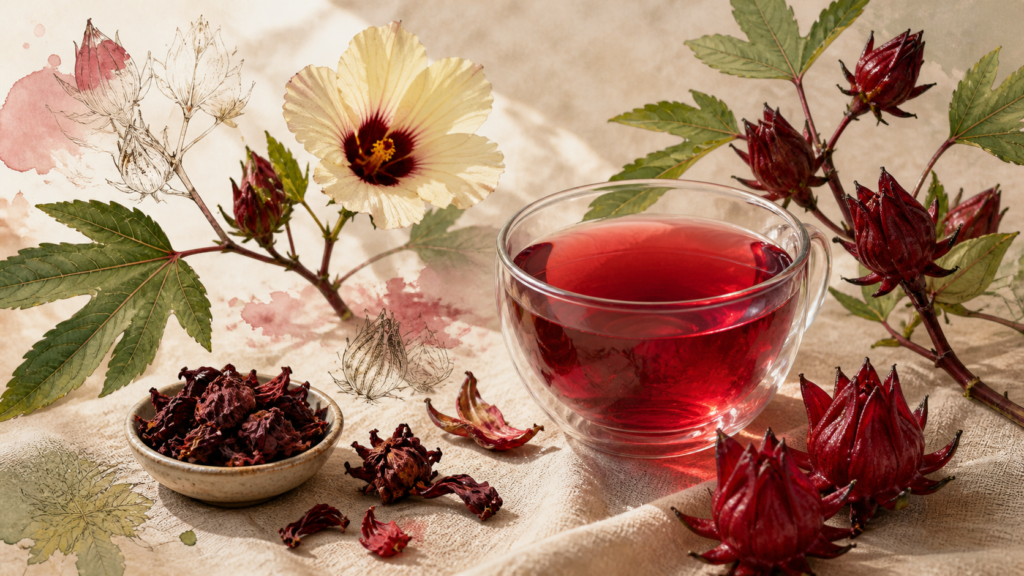
Plant identity first: This article is about Hibiscus sabdariffa—roselle, the tart red plant used for hibiscus tea, sorrel, bissap, zobo and agua de Jamaica. It is not a blanket guide to every ornamental hibiscus growing beside somebody’s driveway.
A Lifvyt reported herb feature · Body Wellness
Hibiscus benefits are usually introduced with blood-pressure numbers. But this plant reaches most people first as color: ruby tea in a sweating glass, Christmas sorrel bright with ginger, or a bowl of red calyces waiting to become something beautiful.
Roselle has the rare confidence to be festive, tart and scientifically interesting at the same time. It does not enter the room quietly—and honestly, neither should a drink this red.
Say it without wrestling it
Pronunciation Guide
Botanical Latin varies by speaker. Clarity matters more than courtroom-level pronunciation.
Hibiscushy-BIS-kus
sabdariffasab-duh-RIFF-uh
roselleroh-ZELL
calyx / calycesKAY-liks / KAY-lih-seez
First, Meet the Right Hibiscus
The name hibiscus covers a large genus. The giant tropical blossom in a vacation photo may be a relative, but hibiscus tea research usually concerns Hibiscus sabdariffa, commonly called roselle. Kew recognizes it within the mallow family, and the plant is cultivated widely across tropical and subtropical regions.1
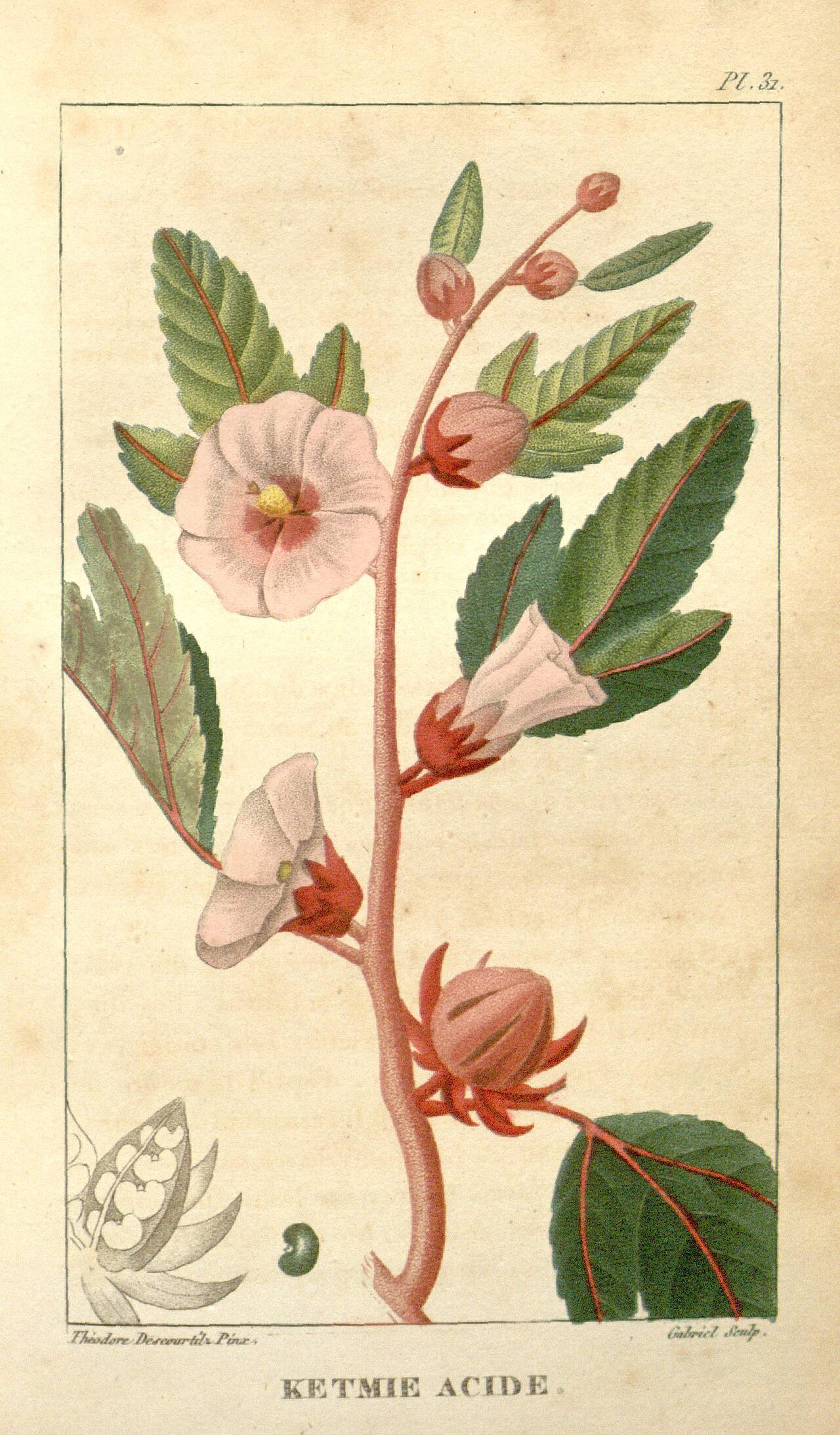
Roselle can grow into a tall, branching herb or shrub with reddish stems and lobed leaves. Its flower is often pale yellow or cream with a dark burgundy center. After the petals fall, the cup-like calyx around the developing seed capsule becomes thick, juicy and deep red. That calyx—not a handful of showy ornamental petals—is what gives most familiar hibiscus drinks their tartness and jewel color.
The flower
Pale petals and a dark center attract the eye, but the petals are not usually the main commercial tea material.
The calyx
The fleshy red structure that enlarges around the seedpod. This is the tart, pigment-rich part dried for most teas and studied in many trials.
The leaves
Young leaves and shoots are eaten as sour greens in some South and Southeast Asian food traditions. Leaf research cannot automatically be assigned to calyx tea.
One Plant, Many Kitchens: Traditional and Cultural Life
Roselle is not a laboratory discovery that later wandered into a teacup. It has long been grown as food, drink, fiber and household plant. Names and recipes travel with language, migration and celebration; the same species can arrive hot, iced, spiced, fermented, thick with sugar or sharp enough to make your cheeks briefly reconsider their life choices.2
A plant with many passports
The names tell you where the story has traveled
Bissap in Senegal, zobo in Nigeria and wonjo in The Gambia are family members in a broad tradition of red roselle drinks. Recipes may include ginger, mint, pineapple, cloves or generous sweetness.
Karkadé may be served hot or cold and can carry meanings of refreshment, hospitality and everyday care. The tea’s cultural life is larger than its blood-pressure data.
Sorrel often appears around Christmas and year-end gatherings, especially with ginger and warming spices. Rum may join the party. So may enough sugar to completely change the nutritional conversation.
Agua de Jamaica is a familiar chilled drink made from the red calyces. It can be wonderfully tart, softly sweet or essentially dessert wearing an ice cube.
Roselle leaves and young shoots may be cooked for their pleasant sourness in parts of India and Myanmar. This is an important reminder that “how hibiscus is used” depends on which part of the plant is in the pot.
Dried calyx tea is used as a cooling, refreshing beverage and is often discussed for circulation, fluid balance and metabolic health. Those traditional ideas are context—not automatic clinical proof.
Keep tradition and clinical evidence in neighboring rooms—not the same chair
Traditional knowledge tells us which plant communities valued, which parts they prepared, how taste and season guided use, and what roles a drink held in family life. A clinical trial asks a narrower question: what changed in a defined group after a defined dose for a defined time? Respecting both means naming both. It does not require pretending they are identical.
Calyces, Leaves, Seeds and Stems: What Is Used?
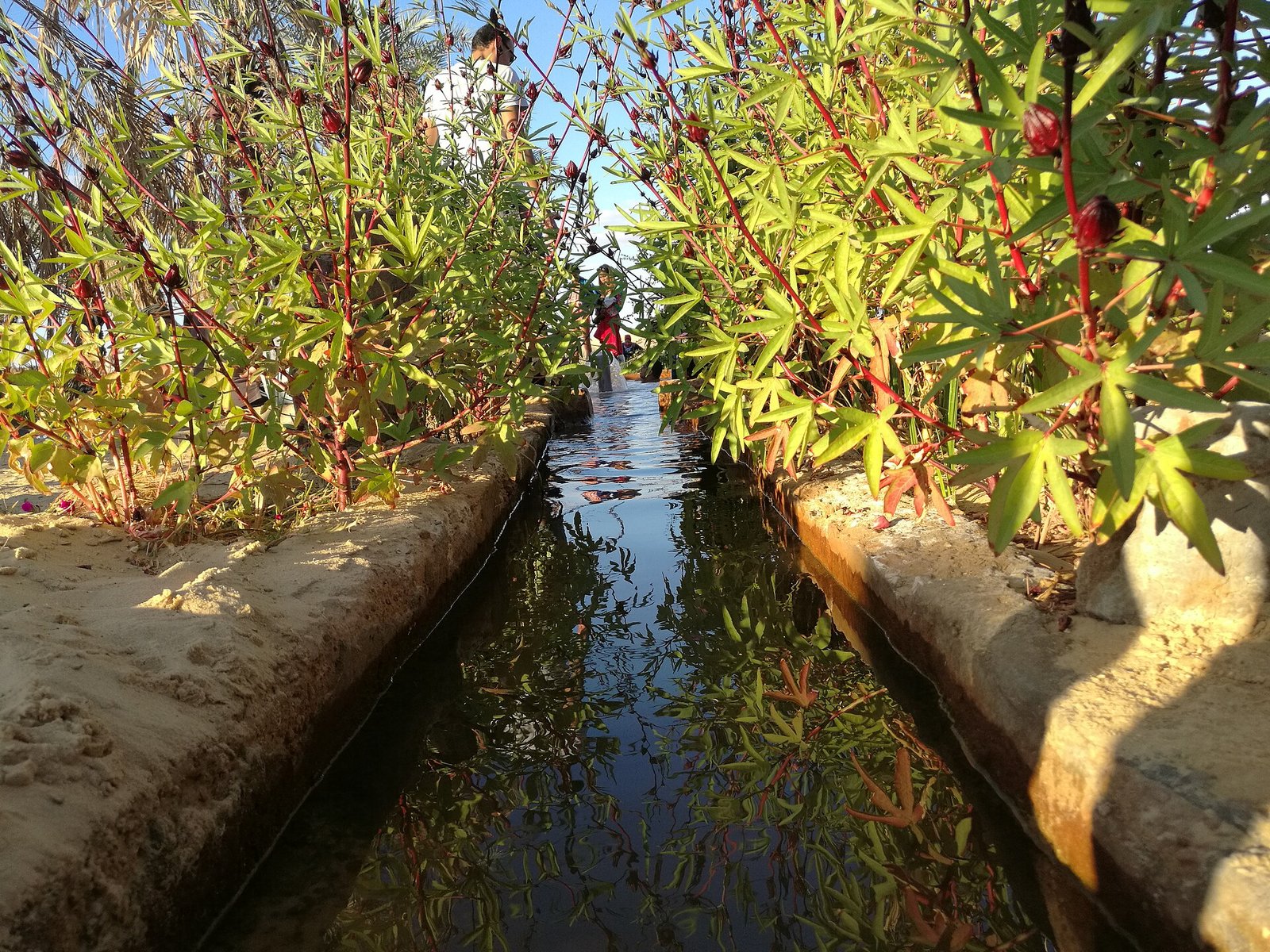
Calyces dominate tea, syrup, jam, sauce and most clinical research. Leaves are culinary sour greens in several regions and have a different chemical profile. Seeds contain oil, protein and tocopherols and are used as food or feed in some places, but they are not interchangeable with calyx tea. Stems from fiber varieties have practical uses closer to cordage than to your evening mug.
Packages often say “hibiscus flowers.” That is friendly retail language, but peek inside: the crinkled burgundy pieces are usually dried calyces. If a study used calyx extract and a product uses leaf powder, the shared word hibiscus is not enough to make them equivalent.
Fresh, Dried, Brewed and Extracted Are Different Experiences
Fresh calyces
Juicy and sharply tart. Used for jams, sauces, syrups, relishes and drinks. Fresh material contains much more water than dried material, so gram-for-gram comparisons mislead.
Dried tea
The most familiar form. Hot water extracts acids, pigments, minerals and water-soluble polyphenols. Steeping time and the amount of calyx strongly affect the cup.
Decoction
Simmered or boiled longer than an infusion. Often stronger and culturally common, but heat, water volume and reduction change what reaches the final glass.
Powder or capsule
May contain ground whole calyx or a dried extract. Read the label carefully: 500 mg of powder is not automatically equal to 500 mg of extract.
Standardized extract
Designed to deliver a stated amount of anthocyanins or other marker compounds. This is the form used in several metabolic and antihypertensive trials.
Tincture or “essential oil”
Tinctures are product-specific and underrepresented in human trials. Hibiscus essential oil is not a standard evidence-based form; fragrance oil is certainly not tea and should not be swallowed.
Inside That Ruby Color: Hibiscus Compounds in Plain English
Roselle chemistry changes with variety, soil, harvest, drying, storage and extraction. A very red tea tells you pigments made it into the cup; it does not provide a laboratory certificate for an exact clinical dose. Reviews consistently identify anthocyanins, phenolic acids, flavonoids, organic acids and polysaccharides among the important compound families.23
Delphinidin-3-sambubioside
One of roselle’s signature anthocyanins. It absorbs light in a way that helps create the red-purple color. In laboratory models it can influence oxidative and inflammatory signaling, but a human drinking tea receives a changing mixture—not an isolated pigment performing solo.
Cyanidin-3-sambubioside
Another major pigment in red calyces. Anthocyanins and their breakdown products are absorbed, transformed by the gut and cleared. Their presence supports biological plausibility; it does not make every “antioxidant” claim clinically meaningful.
Hibiscus acid
A tart organic acid studied for possible effects on digestive enzymes and metabolic pathways. Much of that work is laboratory or animal research, so it helps explain hypotheses more than personal outcomes.
Protocatechuic acid
A compound formed in plants and also produced as anthocyanins are metabolized. Cell and animal studies suggest antioxidant and signaling effects. Human hibiscus trials test the whole preparation, not a protocatechuic-acid pill.
Citric, malic and tartaric acids
These organic acids help make hibiscus taste bright and mouth-puckering. They also affect acidity, stability and extraction. Your face recognizes them before your biochemistry textbook does.
Quercetin relatives and polysaccharides
Flavonoid derivatives add to the polyphenol mixture, while soluble polysaccharides contribute body and may interact with digestion or immune signaling in preclinical models. Their human importance remains preparation-specific.
Possible biology
How could hibiscus affect blood vessels?
Researchers have focused on several overlapping routes: less angiotensin-converting enzyme activity, easier vessel relaxation, changes in endothelial nitric-oxide signaling, and altered sodium or fluid handling.
The honest translation
A mechanism is not a promise
ACE helps produce angiotensin II, a signal that tightens blood vessels. A Mexican extract trial measured lower plasma ACE activity, while a UK meal study found better flow-mediated dilation after one hibiscus drink.79 Those findings make a blood-pressure effect plausible. They do not prove that every tea bag, dose or person will respond the same way.
Four Evidence Lanes—Clearly Separated
Longstanding food, drink and household practice. Valuable cultural knowledge; not a controlled test.
Extracts, isolated compounds, enzymes or cells. Useful for mechanisms; cannot predict a person by itself.
Whole-body biology under controlled conditions, often at doses far beyond an ordinary cup.
Tea or extracts tested in people. Most relevant, but quality, dose, comparison and outcome still matter.
Laboratory studies report ACE inhibition, antioxidant activity, digestive-enzyme inhibition and effects on inflammatory or fat-storage pathways. Animal models add clues about blood pressure, glucose, liver fat and fluid balance. The human evidence is strongest and most repeated for blood pressure. Lipids, glucose and body-weight outcomes are less consistent.4
What Human Hibiscus Studies Actually Did
Three cups a day lowered systolic pressure—not every measure
Participants65 adults, ages 30–70, with prehypertension or mild hypertension and no blood-pressure medicine
PreparationBrewed hibiscus tea, about 1.25 g dried calyx per 240 mL serving
DoseThree 240 mL servings daily
Duration6 weeks
ComparisonFlavor- and color-matched placebo drink
Systolic blood pressure fell by an average 7.2 mmHg with hibiscus and 1.3 mmHg with placebo; the between-group difference was statistically significant. Diastolic pressure fell 3.1 versus 0.5 mmHg, but that comparison was not statistically significant. Mean arterial pressure landed just outside the conventional significance line.5
Hibiscus and captopril ended with similar readings in an older trial
Participants90 adults enrolled; 75 completed analysis, ages 30–80, with untreated mild-to-moderate hypertension
PreparationInfusion of 10 g dried calyx in 0.5 L water, providing 9.6 mg total anthocyanins
DoseOnce daily before breakfast
Duration4 weeks
ComparisonCaptopril 25 mg twice daily
Among the 39 hibiscus participants analyzed, average pressure fell from about 139/91 to 124/80 mmHg. At the end, blood-pressure readings and the proportion meeting the study’s response definition did not differ significantly from the 36-person captopril group.6
The extract lowered pressure, but lisinopril lowered it more
Participants193 adults at baseline; 171 included in outcome analysis, ages 25–61, with stage I or II hypertension
PreparationDried calyx extract standardized to 250 mg total anthocyanins per daily dose
DoseDaily herbal medicinal product
Duration4 weeks
ComparisonLisinopril 10 mg daily
Hibiscus lowered average pressure from about 146/98 to 130/86 mmHg and reduced measured plasma ACE activity. That is a meaningful biological signal. Yet blood-pressure reduction and the study’s response rate were lower than with lisinopril.7
A small month-long trial found a larger drop with tea
Participants46 adults with stage 1 hypertension; 23 per group
PreparationTwo tea bags daily, each containing 1.25 g H. sabdariffa
DoseTwo cups / 480 mL daily, morning and evening
Duration1 month
ComparisonThe same diet, activity and blood-pressure advice without hibiscus tea
Both groups improved, which matters because both received lifestyle guidance. The tea group improved more: systolic pressure fell 7.43 mmHg versus 1.91, and diastolic pressure fell 6.70 mmHg versus 3.96.8
Vessel function improved while blood pressure stayed put
Participants25 men with low-to-moderate estimated cardiovascular risk
Preparation250 mL aqueous hibiscus-calyx extract served with breakfast
DoseOne drink on the test day
Duration4-hour measurement window; two-week washout between visits
ComparisonWater in a randomized single-blind crossover design
Flow-mediated dilation—a measure of how well an artery widens—improved after hibiscus. Blood pressure, arterial stiffness, glucose, insulin, triglycerides and inflammatory measures did not significantly differ from water during the short test window.9
Lipids: an encouraging study inside a mixed larger picture
An Iranian trial randomized 60 adults with type 2 diabetes to sour tea or black tea twice daily for one month; 53 completed it. Several lipid measures improved in the sour-tea group, including HDL, total cholesterol, LDL and triglycerides.16 But other trials have changed only some lipid markers—or none. Meta-analyses differ depending on which populations, preparations and comparators they include, so “hibiscus fixes cholesterol” runs ahead of the evidence.1213
The fairest summary is not “hibiscus works” or “hibiscus does nothing.” It is: repeated human trials suggest a modest blood-pressure effect, while glucose, cholesterol and weight findings depend much more on the exact study.
What the Reviews See From Farther Back
A 2022 systematic review and meta-analysis found hibiscus lowered systolic pressure more than placebo by about 7.1 mmHg, but the studies were extremely heterogeneous—meaning their results varied widely. Effects appeared larger in people who began with higher pressure. The same review found potential reductions in LDL and no clear consistent effect on triglycerides or HDL.12
That broader view strengthens the blood-pressure signal while making the uncertainty visible. A pooled average is not a personal forecast. It combines tea, decoctions and extracts; different doses; different baseline health; and trials lasting weeks rather than years. We still lack strong long-term evidence on cardiovascular events, sustained control and the best practical preparation.
Why Hibiscus Studies Disagree
One trial brewed 1.25 g per cup. Another used 10 g in half a liter. Extract trials delivered concentrated marker compounds. Those are different interventions.
Leaf powder, whole calyx, filtered tea and anthocyanin-standardized extract carry different chemical profiles.
Water, colored placebo, black tea, lifestyle advice, captopril and lisinopril each answer a different question.
People with higher baseline systolic pressure sometimes show larger drops. A near-normal reading has less room to move.
An acute vascular response may appear without an immediate BP change; repeated use may create a different pattern.
Sugar, ginger, alcohol, fruit and other herbs change the drink. A traditional recipe can be lovely without matching a single-ingredient trial.
Many studies include fewer than 100 people. Random variation and dropout can make results look larger or smaller than they really are.
Clinic pressure, home pressure, fasting glucose, insulin resistance and liver imaging are related but not interchangeable outcomes.
Cultivar, climate, harvest and drying can change acids and anthocyanins before brewing even begins.
What You Might Reasonably Expect
From an ordinary cup
A caffeine-free, tart drink with color, hydration and ritual. One cup is more likely to feel refreshing than medically dramatic.
From regular brewed tea
In adults with mildly elevated blood pressure, daily tea for roughly four to six weeks may contribute to a modest reduction—especially in systolic pressure.
From a standardized extract
A response tied to that product’s dose and chemistry. Extract findings should not be copied directly onto tea, powder or syrup.
For weight or glucose
No dependable transformation. Some small studies are positive; newer and pooled evidence is mixed or negative for several metabolic outcomes.
Hibiscus Tea: A Practical Cup, Hot or Cold
For a gentle food-style infusion, use the package directions or begin with roughly one to two teaspoons of dried roselle calyces per 8–12 ounces of hot water. Cover and steep five to ten minutes, then strain. Taste before sweetening; hibiscus has opinions. For iced tea, brew a little stronger, cool promptly and refrigerate.
Traditional sorrel, bissap, zobo and agua de Jamaica recipes may steep or simmer larger amounts and add spices, fruit or sugar. Those drinks deserve their own names and pleasures. They also should not be treated as chemically identical to an unsweetened tea used in a trial. If blood sugar or calorie intake matters to you, the sweetener can influence the practical result more than the calyx’s résumé.
What I Would Not Tell You About Hibiscus
I would not tell you a ruby cup “cleans your arteries,” melts belly fat, reverses diabetes or replaces blood-pressure medicine. I would not borrow a 17-point pressure drop from a concentrated extract trial and paste it onto one supermarket teabag.
I would not call the evidence weak simply because it is herbal, either. Multiple countries have produced human blood-pressure trials, and the signal has survived pooled analysis. That deserves more than a shrug. It also deserves the maturity to notice that diastolic pressure did not separate from placebo in one strong tea study, lisinopril outperformed an extract, and a single drink improved vessel dilation without lowering blood pressure.
The interesting story is the real one: hibiscus may be useful, particularly as a regular unsweetened beverage inside a broader blood-pressure plan. It is not required to become a miracle to earn a place in the kitchen.
A Lifvyt Hibiscus Ritual for Bringing Color Back
Seven unproductive minutes
Make something beautiful without making it a project.
Drop the calyces into a clear cup or small pot. Watch the water move from blush to ruby. While it steeps, choose one thing you are allowed not to solve tonight.
Add a slice of citrus, a sprig of mint or nothing at all. Hold the cup near a window. Let the color be unnecessarily lovely.
You do not need to optimize the ritual, photograph it or turn it into a new personality. Drink it while it is yours.

Before You Use Hibiscus: One Practical Safety Section
- Food use and medicinal use differ. An occasional food-style tea is a different exposure from a concentrated extract or several strong cups taken daily.
- Blood-pressure medicine: hibiscus may add to pressure-lowering effects. If you use antihypertensives—or already run low—monitor appropriately and discuss regular concentrated use with your clinician or pharmacist.
- Diabetes medicine: glucose results are mixed, but possible additive effects and recipe sweeteners both matter. A sweetened sorrel drink is not a glucose-lowering strategy.
- Pregnancy and breastfeeding: human safety data for medicinal doses are inadequate, and reproductive concerns appear in animal research. Avoid concentrated medicinal use unless an obstetric clinician familiar with your situation approves it.
- Kidney, liver or fluid-balance conditions: concentrated use deserves individualized guidance, particularly when medicines or electrolyte management are involved.
- Surgery: include hibiscus supplements and strong regular herbal preparations when reviewing medicines with the surgical team.
- Stomach and teeth: the drink is acidic. Very strong tea may cause stomach discomfort; frequent sipping can expose teeth to acid. Rinse with plain water and avoid brushing immediately after an acidic drink.
- Product identity: choose food-grade H. sabdariffa from a reliable seller. Ornamental hibiscus, fragrance oil and unspecified “hibiscus blends” are not substitutes.
- Do not chase low readings. Dizziness, faintness, weakness or unusually low home blood-pressure readings deserve attention, not another cup for good measure.
Let the cup be beautiful. Let the reset be practical.
Pair your hibiscus ritual with a gentle nervous-system practice designed for actual days—the kind with unfinished lists, noisy rooms and approximately fourteen open mental tabs.
Explore Lifvyt reset resourcesOr begin with the free 5-Minute Reset and the guide to signs your nervous system needs a reset.
Sources & Further Reading
- Royal Botanic Gardens, Kew. Hibiscus sabdariffa L. in Plants of the World Online.
- Da-Costa-Rocha I, et al. Hibiscus sabdariffa L.—a phytochemical and pharmacological review. Food Chemistry. 2014.
- Izquierdo-Vega JA, et al. Organic acids from roselle: a brief review of pharmacological effects. Biomedicines. 2020.
- Montalvo-González E, et al. Physiological effects and human health benefits of Hibiscus sabdariffa: a review of clinical trials. 2022.
- McKay DL, et al. Hibiscus tea lowers blood pressure in prehypertensive and mildly hypertensive adults. Journal of Nutrition. 2010.
- Herrera-Arellano A, et al. Standardized hibiscus infusion compared with captopril in mild-to-moderate hypertension. Phytomedicine. 2004.
- Herrera-Arellano A, et al. Standardized hibiscus medicinal product compared with lisinopril. Planta Medica. 2007.
- Jalalyazdi M, et al. Effect of sour tea on blood pressure in stage 1 hypertension. 2019.
- Abubakar SM, et al. Acute effects of hibiscus calyx extract on post-meal vascular function and cardiometabolic markers. Nutrients. 2019.
- Chang HC, et al. Hibiscus extract, obesity measures and liver steatosis in humans. Food & Function. 2014.
- Chaisungnern K, et al. Hibiscus extract in adults with abdominal obesity and mild metabolic syndrome. Complementary Therapies in Medicine. 2025.
- Ellis LR, et al. Systematic review and meta-analysis of hibiscus on blood pressure and cardiometabolic markers. Nutrition Reviews. 2022.
- Bule M, et al. Antidiabetic and antilipidemic effects of hibiscus: systematic review and meta-analysis of randomized trials. Food Research International. 2020.
- Descourtilz’s 1821 public-domain roselle plate, Biodiversity Heritage Library / Wikimedia Commons.
- Roselle at Bir Wahid, Siwa Oasis, Sara Nabih, CC BY-SA 4.0 / Wikimedia Commons.
- Mozaffari-Khosravi H, et al. Effects of sour tea on lipids and lipoproteins in adults with type 2 diabetes. Journal of Alternative and Complementary Medicine. 2009.
_BHL2956017.jpg)

This Lifvyt article is provided for general educational and informational purposes only. It is not medical advice, diagnosis, treatment or prescribing and does not establish a clinician–patient relationship. Traditional herbal uses described here are historical, cultural or practice-based information—not promises that hibiscus will diagnose, treat, cure or prevent disease.
Herbs, teas, tinctures, powders, extracts, supplements, essential oils and topical preparations can cause side effects, allergic reactions and medication interactions. Plant identity, purity, concentration, extraction method, formulation and individual response vary. Before medicinal internal use—especially during pregnancy or breastfeeding, for a child, before surgery, alongside prescription or over-the-counter medication, or when you have a medical condition—consult an appropriately qualified physician, pharmacist or healthcare professional.
Do not stop, replace or change prescribed blood-pressure, diabetes, lipid or other treatment because of this article. You are responsible for your own purchasing, preparation and personal-use decisions. Lifvyt cannot assess your allergies, diagnoses, medicines, product quality, dose or individual risk. Seek appropriate medical care for severe, persistent, worsening, unusual or emergency symptoms rather than relying on an herbal remedy or this website.
The Sunday Soft Reset
A calmer start to your week.
Get Lifvyt’s weekly collection of gentle wellness reads, nervous-system resets and practical tools — plus the free 5-Minute Nervous System Reset Guide.
By signing up, you’ll receive the free guide and one gentle Lifvyt email each week. Unsubscribe anytime.