
Offline Hobbies · The anti-hustle edition
Hobbymaxxing Without Turning Fun Into Another Job
Eleven rules for making more things, trying more interests and keeping your precious free time out of its performance-review era.
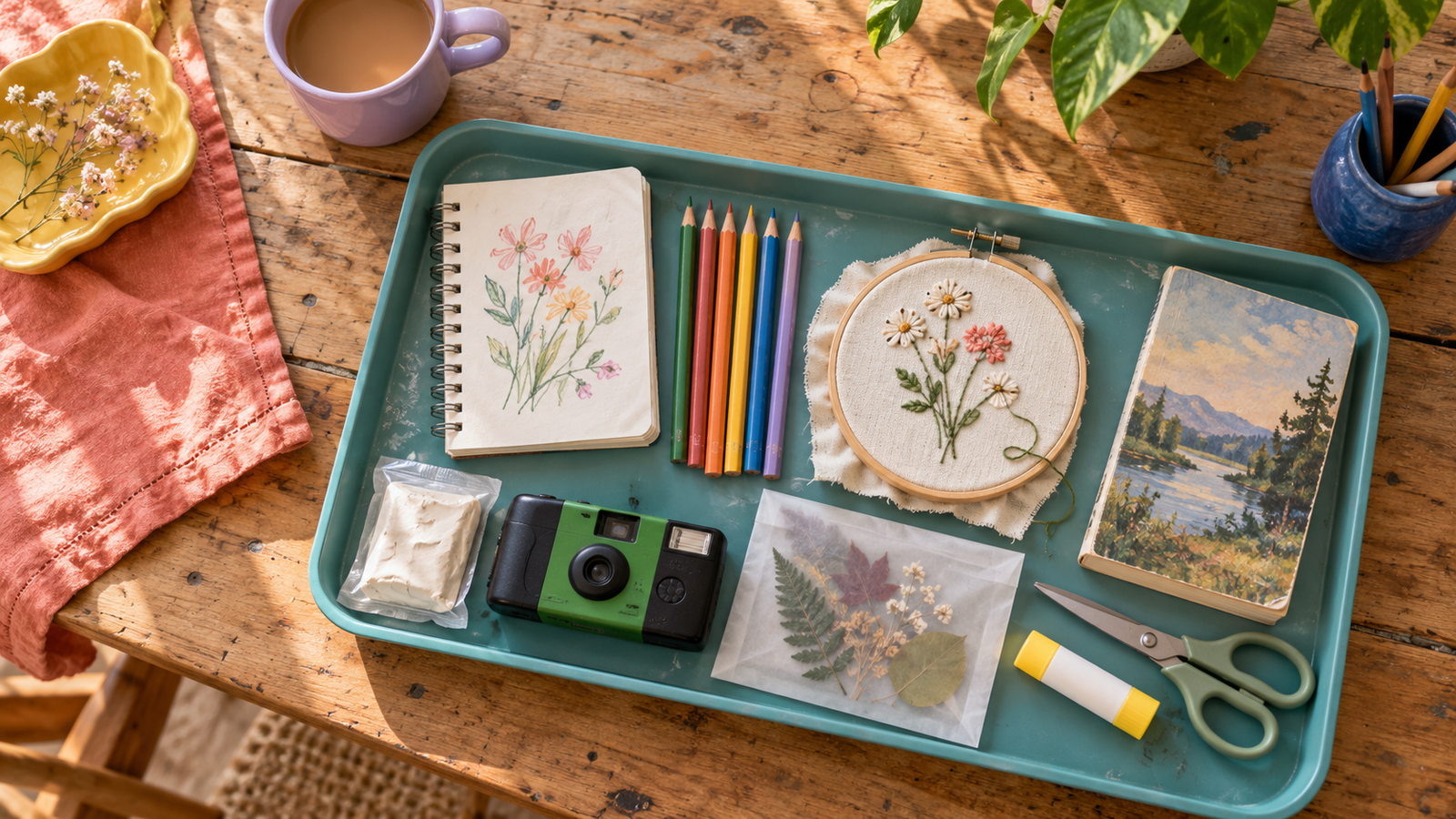
Hobbymaxxing without pressure sounds almost contradictory. The trend says: collect interests, make things and build a life that is bigger than work and scrolling. Then the internet quietly adds a scoreboard—streaks, supply hauls, progress videos and the question every creative person eventually hears: “Are you going to sell that?”
You can keep the good part. Try the pottery class. Borrow the bird guide. Make the oddly shaped bowl. You simply do not have to turn every pleasant hour into content, mastery or income.
Why hobbymaxxing is everywhere right now
Pinterest’s 2026 Hobbies Trend Report says 51% of Gen Z respondents feel that having a hobby contributes to their joy. Searches are rising for tactile interests including herbal apothecaries, pressed flowers, candle making and nature drawing. Michaels also reported strong growth around analog crafts such as knitting, embroidery, journaling and painting.
At the same time, September coverage of “hobbymaxxing” has focused on the pressure to track, optimize and monetize leisure. Bank of America reported that hobby spending rose faster than hobby transactions in August 2026—a useful reminder that a new interest can become an expensive shopping project before it becomes something you actually do.
Keep this part
Curiosity, tactile focus, local classes, meeting people, making imperfect things and having something to anticipate after work.
Leave this part
Buying the expert setup, forcing a daily streak, documenting every attempt or treating beginner-level work as a branding problem.
11 rules for low-pressure hobbymaxxing
Pick a curiosity, not a new identity
You do not have to become “a ceramicist.” You can be a person who wants to make one lopsided pinch pot this month.
Finish the sentence “I wonder what it feels like to…” and choose the smallest answer.
Borrow before you build a cart
Libraries, friends, Buy Nothing groups, community studios and tool libraries can help you test an interest without adopting a cabinet of supplies.
Borrow the book, needles, puzzle or binoculars for one weekend first.
Give it one container
A tote, tray or shoebox makes a hobby easier to start and easier to stop. When the container is full, use what you have before adding more.
Keep the first version small enough to move with one hand.
Create a 15-minute version
Big projects are lovely; tiny entry points are repeatable. Read five pages, color one corner, press one flower or stitch one patch.
Write the “bare minimum fun” version on a note inside your supply box.
Skip the streak
A hobby is not overdue because you ignored it for three weeks. It can wait without sending a reminder or lowering your score.
Replace “daily” with “when it sounds good.”
Keep one thing off-camera
Not every page, loaf or wonky bracelet needs an audience. A private hobby gives you room to be bad long enough to discover whether you enjoy it.
Make one project you promise not to post.
Use a 90-day no-side-hustle rule
If you eventually want to sell something, lovely. But give yourself one season to learn without pricing, packaging or customer expectations.
For 90 days, your only customer is your curiosity.
Leave evidence of play
Keep a small basket visible, a sketchbook open or a paperback beside the chair. Easy access matters more than a perfect hobby room.
Put one offline option where you usually reach for your phone.
Try parallel play with friends
Everyone can bring a different project. Nobody has to teach, host a production or make the same object. Tea, music and a shared table are enough.
Text: “Bring whatever you are working on—even if it is just a book.”
Let hobbies have seasons
You may knit in winter, garden in spring and forget both during a busy month. Rotation is not failure; it is how real lives work.
Store paused supplies together and label the box “later,” not “abandoned.”
Quit cleanly when it is not fun
A hobby can teach you that you dislike it. Donate usable supplies, keep one favorite result and release the sunk-cost guilt.
Ask: “Do I want to do this—or do I want to be the kind of person who does this?”

Pick by energy, not ambition
Instead of maintaining a long hobby schedule, choose from three levels. Your low-energy option is not the inferior one; it is the version that fits today.
If choosing is the hardest part, use LIFVYT’s 45 things to do instead of scrolling. For something portable, build an analog bag from items you already own.

A friend night that does not require hosting Olympics
- Invite two to four people and ask everyone to bring one portable project.
- Offer one drink, one snack and one clear table—no themed menu required.
- Set out a small “free supplies” basket for extras people can trade.
- Put phones in one visible spot if everyone agrees, but keep the rule casual.
- Stop after 60–90 minutes while the night still feels light.
Someone can bring junk journaling, another can try slow stitching, and one person can simply read. You are gathering, not running a workshop.
Your hobby passes the vibe check if…
- you can start without buying something every time;
- missing a week does not create guilt;
- being average at it is still enjoyable;
- you would sometimes do it even if nobody saw the result.
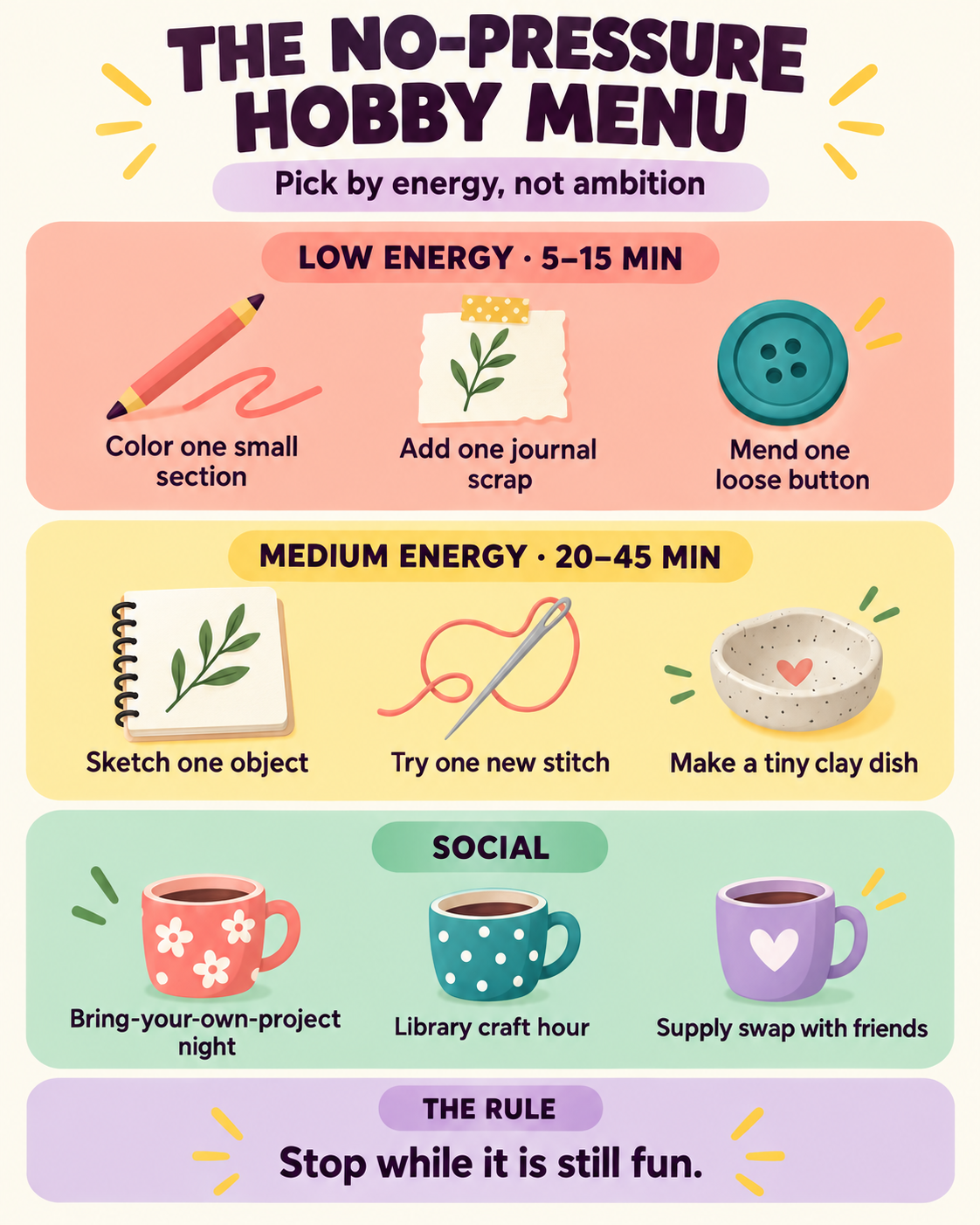
Save this menu for the next time you want something to do but do not want another commitment.
The useful takeaway
Hobbymaxxing does not have to mean fitting seven impressive interests into your week. Pick one small curiosity, give it one container and stop while it is still fun. Your free time is allowed to produce nothing more marketable than a crooked little bowl and a better Tuesday night.
Sources & trend notes
- Pinterest Hobbies Trend Report 2026: Find Your Joy. Pinterest Newsroom. August 25, 2026.
- Gen Z’s hobby obsession ruins the point of leisure. The Washington Post. September 13, 2026.
- The hobby economy and the price of fun. Bank of America Institute. September 2026.
- Michaels 2026 Creativity Trend Report. March 10, 2026.
The Sunday Soft Reset
A calmer start to your week.
Get Lifvyt’s weekly collection of gentle wellness reads, nervous-system resets and practical tools — plus the free 5-Minute Nervous System Reset Guide.
By signing up, you’ll receive the free guide and one gentle Lifvyt email each week. Unsubscribe anytime.