
LIFVYT · Everyday Life · A realistic home guide

Some days you want a sparkling house. Some days you want to find the counter, wear tomorrow’s shoes without a scavenger hunt and sit down before your tea becomes room temperature.
Soft cleaning is a short, selective reset that restores function without pretending you have the time or energy for a full-house clean. You choose the few tasks that will make the next several hours easier, work for a fixed amount of time and stop on purpose.
The phrase is having a seasonal editorial moment, including a fall 2026 feature from Southern Living. Here, we are turning the idea into a repeatable method for real homes: no decanted products, no twelve-step caddy and no surprise decision to reorganize the spice drawer at 9:14 p.m.
What soft cleaning is—and what it is not
Soft cleaning is maintenance with boundaries. It works best for ordinary clutter, dishes, visible crumbs, laundry drift and the random collection of cups that appears wherever people sit.
It is not the right response to broken glass, spoiled food, a leaking appliance, pet accidents, pests, smoke, suspected mold or another problem that needs prompt, specific handling. Deal with the actual hazard first. It is also not a substitute for the cleaning directions that apply when someone in the household is ill.
The useful distinction is this: cleaning removes dirt and many germs with soap or detergent and water. Disinfecting uses a product intended to kill remaining germs. The CDC says regular cleaning is enough in many home situations; disinfection is more likely to be needed when someone is sick or recently visited while sick. Follow current guidance and the product label rather than spraying everything because the bottle looked persuasive.
Set up in two minutes
Choose one basket for misplaced items, one trash bag, one washable cloth and one suitable cleaner you already know how to use. Add gloves only when the label or task calls for them. Put on comfortable shoes if the floor may be wet or slippery.
Set a 20-minute timer. Decide where you will stop before you start. If you have young children or pets, keep products closed and out of reach while you work; return them to secure storage immediately afterward.
- Pick a finish line: one room, one floor or the path from the entryway to the kitchen.
- Pick one visible win: the sink, coffee table, bathroom basin or shoe area.
- Pick tomorrow’s favor: refill water bottles, place keys by the door or clear a breakfast space.
The 20-minute soft-cleaning method
Minutes 0–5: Remove
Collect trash, spoiled food and dishes. Clear walkways. Put laundry in its hamper and misplaced items into one basket. Do not leave the room to re-home every object yet.
Minutes 5–14: Restore
Choose one working surface. Wash or load the dishes needed next, wipe the appropriate surface and make the sink, counter, table or bathroom basin usable.
Minutes 14–20: Prepare
Return the basket items that have obvious homes, set out tomorrow’s essentials and do one visual finish: fold a blanket, straighten the bath mat or line up the shoes.
When the timer ends, stop unless you freely choose another short round. Carry the trash out, return supplies safely and wash your hands. A deliberate ending keeps a reset from quietly becoming unpaid overtime in your own house.
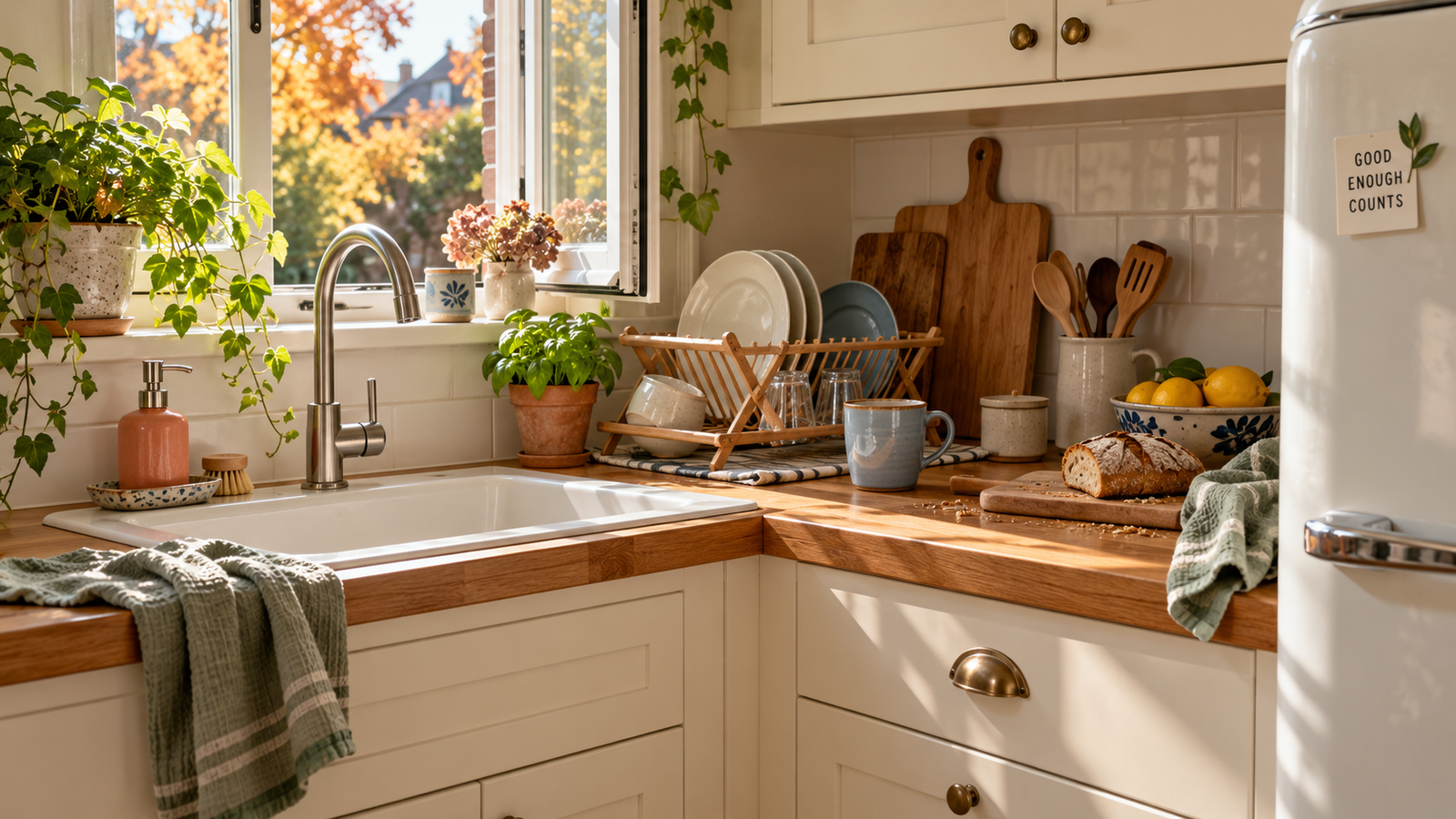
Choose the tasks that give the room its job back
Kitchen
Prioritize food safety, the dishes you need next and one clear preparation area. Put leftovers away, remove obvious crumbs and wipe the counter with a product appropriate for that surface. The top of the refrigerator is not involved in tonight’s plot.
Bathroom
Clear the basin, wipe the sink and faucet, replace the hand towel and empty the trash if needed. Save grout projects and cabinet sorting for a planned clean with the right supplies.
Living room
Remove cups and trash, clear a safe walking path, gather small items and put soft furnishings back where you use them. Leave books and décor that are not causing a problem.
Entryway
Pair shoes, hang the daily jacket, give bags a landing place and make sure the door path is clear. Put anything that needs to leave tomorrow beside the bag—not directly in front of the door.
Bedroom
Put sleepwear within reach, move clothes to a hamper or designated “wear again” hook and clear one bedside surface. Making the bed is optional; removing yesterday’s coffee cup is less optional.
Home office
Throw away food packaging, park paperwork in one inbox and prepare the tools for the next work block. Do not begin filing every receipt you have produced since 2019.
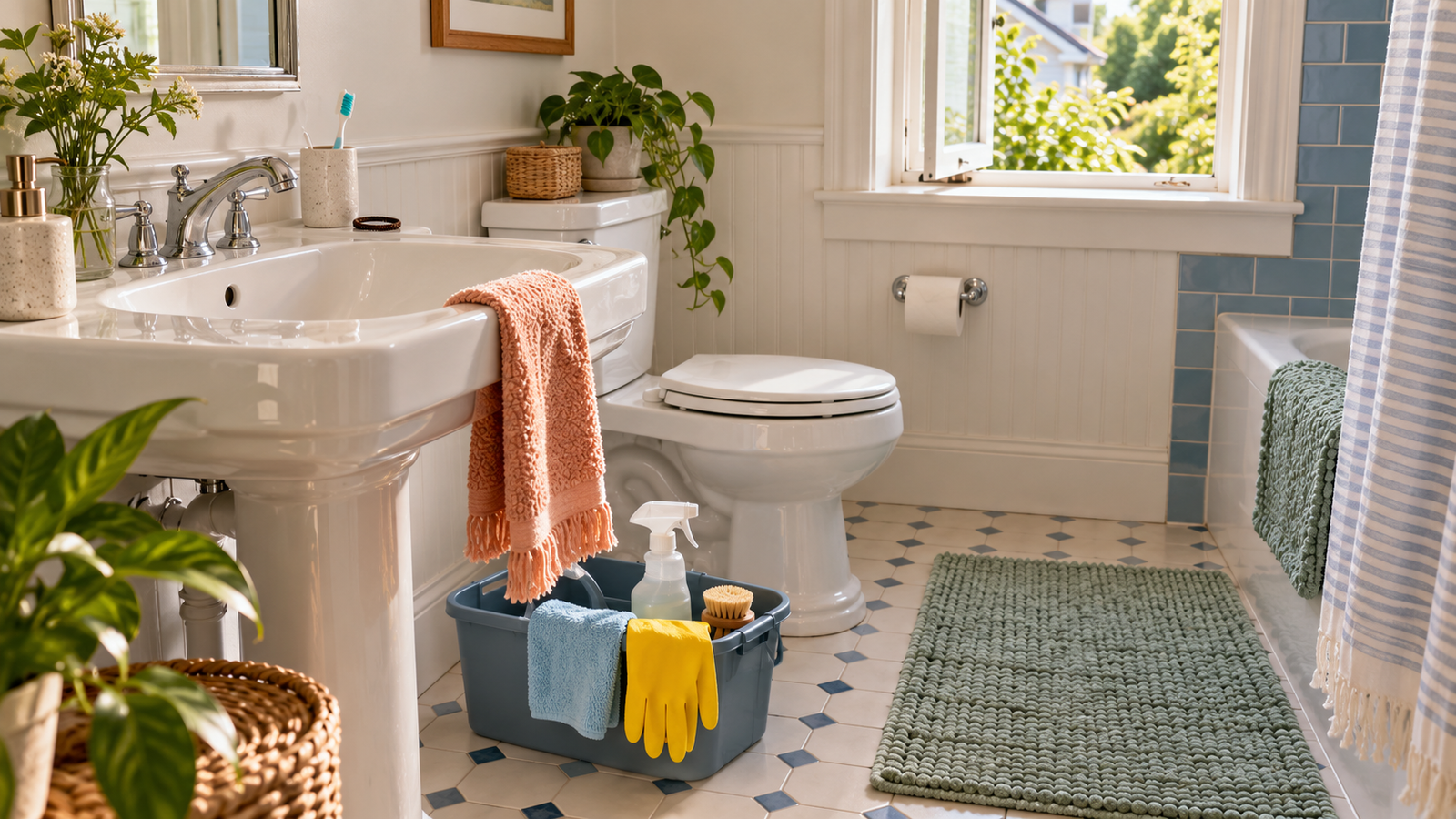
Keep the products simple and the rules serious
Soft cleaning describes the size of the task, not a special chemical recipe. Read the product label, use the stated amount, check whether it is suitable for the surface and follow ventilation or protective-equipment directions.
Keep cleaners in their original containers with labels intact. Do not pour them into drink bottles or attractive unlabeled jars. If fragrance bothers you, the EPA’s Safer Choice product search includes a fragrance-free filter; certification does not replace reading the product directions.
Cleaning sprays and wet floors can also create ordinary risks. Aim a spray away from your face, ventilate as directed, keep children and pets away from the active area and avoid leaving a bucket or caddy where someone can trip over it.
Pick the version that matches today’s energy
Five-minute rescue
Trash, dishes, clear path, stop. Choose only the room you are currently using. This is enough for a rough night or the ten minutes before you leave.
Twenty-minute reset
Use the three-pass method above. It is the everyday version: enough to restore function and prepare one thing for tomorrow.
Forty-five-minute catch-up
Complete two 20-minute rounds with a five-minute break. Pick two zones. Do not expand the list just because you found the good podcast episode.
A smaller version is still the method. The timer changes; the priorities do not.
Let the household participate without becoming the household manager
If you live with other people, assign complete jobs rather than narrating every movement. One person handles dishes, one clears the shared floor and one resets the entryway. Children can do age-appropriate jobs with supervision, but adults should handle cleaning products unless the label and the child’s age make a particular task appropriate.
Try one song for the removal pass, then a timer for the surface pass. Put the communal basket in the middle and let each person reclaim their things. If you must identify, carry and put away everyone’s possessions yourself, that is not a family reset. That is a solo project with witnesses.
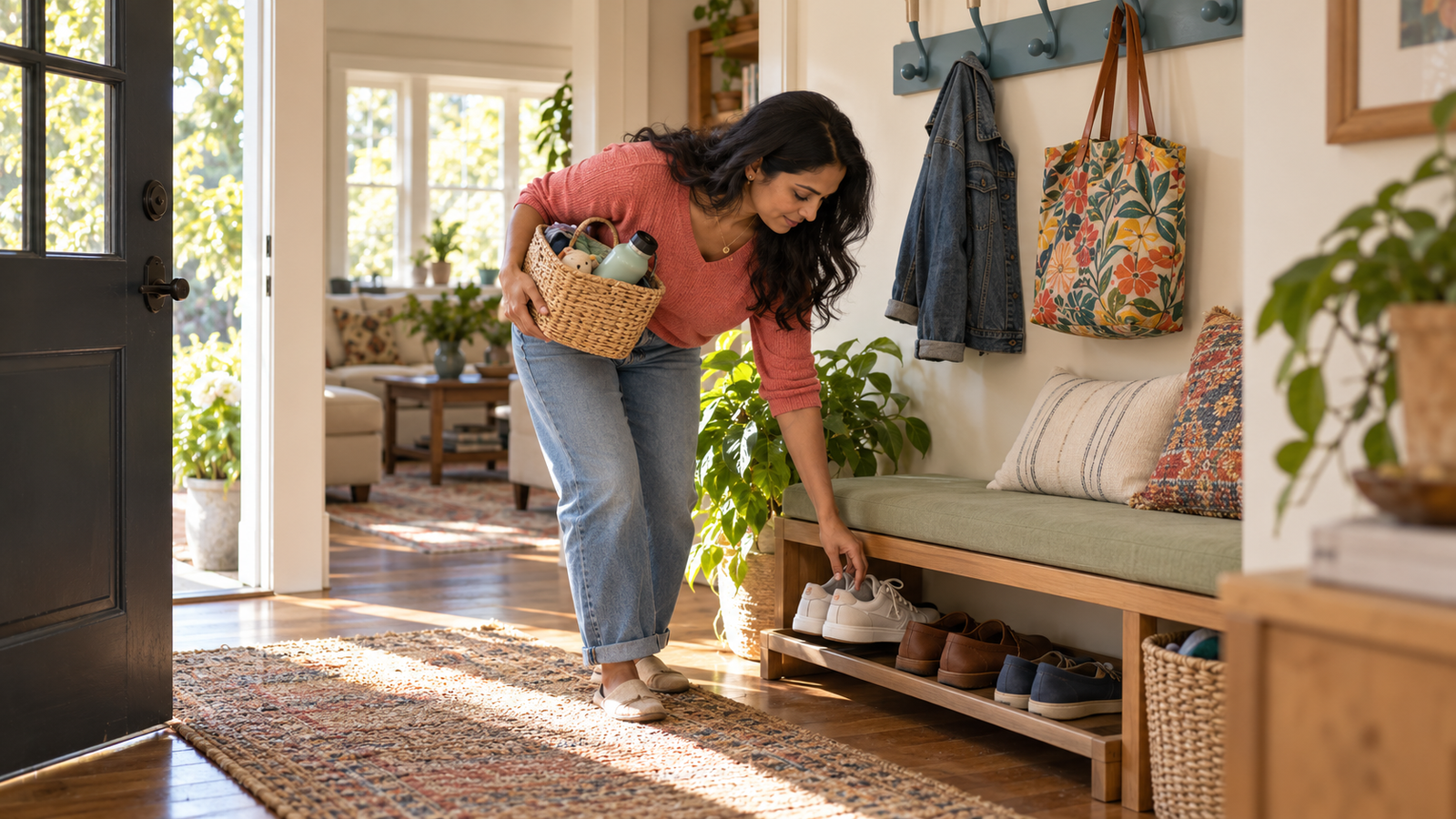
The stop rule that keeps “cozy” from becoming code for more work
Stop when the chosen surface works, the walkway is clear and tomorrow’s essential item has a home. Take a quick photo if it helps you remember the setup, then sit down. Do not scan the room for proof that you should feel guilty.
For maintenance, attach the reset to a real cue two or three times a week: after dinner, before the last episode or when you plug in your phone. Start with one 20-minute round. Add frequency only if the routine is actually helping.
Keep going, if it would genuinely help
- For a larger plan, use How to Reset Your Home When It Feels Messy and Overwhelming.
- If clothes are the recurring problem, try 9 Better Places for Clothes That Aren’t Clean or Dirty.
- For a softer finish after the practical work, see 10 Cozy Lighting Ideas for After 6 PM.
Sources and further reading
- Southern Living: Why I Stop Deep-Cleaning and Start “Soft Cleaning” Every Fall — published October 17, 2026; current seasonal editorial context.
- CDC: When and How to Clean and Disinfect Your Home — cleaning, sanitizing and disinfecting distinctions.
- U.S. EPA Safer Choice — information and certified-product search.
- Poison Control: Top Tips for Safe Cleaning — label use, ventilation and why household cleaners should not be mixed.
This practical home guide does not replace product labels, manufacturer care directions or professional help for hazards such as mold, pests, leaks or damaged surfaces. Images are AI-generated editorial illustrations, not photographs of tested products.
The Sunday Soft Reset
A calmer start to your week.
Get Lifvyt’s weekly collection of gentle wellness reads, nervous-system resets and practical tools — plus the free 5-Minute Nervous System Reset Guide.
By signing up, you’ll receive the free guide and one gentle Lifvyt email each week. Unsubscribe anytime.