
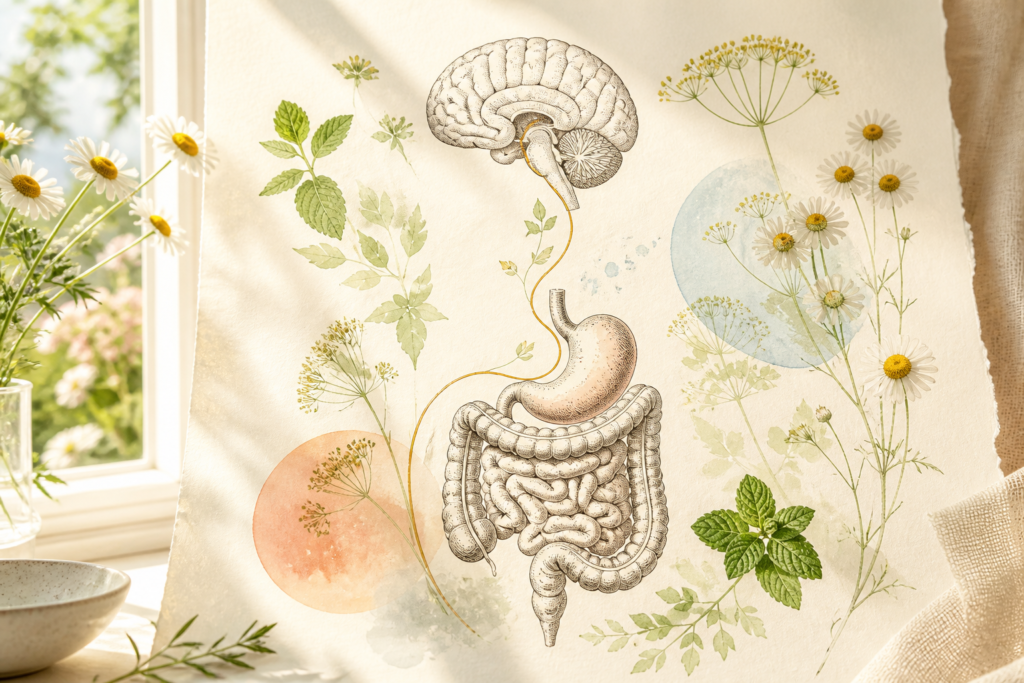
Lifvyt Journal · The gut–brain connection
Stress can make your stomach hurt because the brain and digestive system are in constant two-way communication. Nausea, cramping, butterflies, appetite changes, and unpredictable bathroom habits can be physical—not imagined—even when stress is part of the picture.
You get difficult news and suddenly feel nauseated. Your stomach tightens before a presentation. A rushed week brings bloating, heartburn, constipation, diarrhea, or the feeling that food is sitting heavily. These experiences are often described as a “nervous stomach,” but the biology is more interesting than that phrase suggests.
Your digestive tract has its own network of nerves, called the enteric nervous system. It helps coordinate swallowing, digestive secretions, blood flow, movement through the intestines, and elimination. It also exchanges information with the brain through nerves, hormones, immune signals, and other pathways.
This does not mean every stomach symptom comes from stress. Digestive symptoms can have many causes, including infection, medication effects, food intolerances, reflux, ulcers, gallbladder disease, inflammatory conditions, and other health problems. The gut–brain connection is one part of a careful explanation—not a reason to dismiss symptoms.
How stress can affect digestion
When your brain perceives a threat or major demand, it coordinates a stress response designed to help you act. Heart rate, attention, muscle tension, and hormone signaling may change. Digestion can change too because it is not separate from the rest of the nervous system.

The conversation goes both ways
The brain can influence the gut, and the gut can send information back. Nerves in the digestive tract detect stretching, nutrients, movement, and irritation. Those signals help regulate digestion and contribute to sensations such as hunger, fullness, nausea, pain, and the need to use the bathroom.
This two-way relationship helps explain why digestive disorders can affect mood and quality of life—and why approaches such as cognitive behavioral therapy or gut-directed hypnotherapy may be included in care for some disorders of gut–brain interaction. These treatments do not imply that symptoms are invented. They work with real communication pathways and should be discussed with an appropriately qualified clinician.
The gut microbiome also receives enormous attention online. Research is active and promising, but the science is more complex than “good bacteria equal good mood.” No single probiotic, detox, or restrictive diet is a universal answer for stress-related digestive symptoms.
Try this before a meal
A gentle 5-minute arrival
- Pause the input. Put down the phone and reduce one source of noise or visual clutter.
- Unbrace. Let your shoulders drop. Soften your jaw and loosen clothing that feels restrictive.
- Exhale comfortably. Without forcing a deep breath, let the exhale become a little slower for four or five rounds.
- Notice what is true. Are you hungry, nauseated, rushed, very full, in pain, or simply distracted? Information is more useful than judgment.
- Begin at a human pace. Take the first few bites without multitasking. You do not need to chew perfectly or create a silent ritual.
Gentle ways to support a stress-sensitive stomach
- Eat with some regularity.
Long gaps can leave some people shaky, nauseated, overly hungry, or more likely to eat quickly. A realistic rhythm may be more supportive than a perfect schedule. - Slow the transition, not necessarily the entire meal.
Even two calmer minutes before eating can create a boundary between rushing and receiving food. - Hydrate steadily.
Small, regular amounts may feel more comfortable than suddenly drinking a large volume. Individual medical needs differ. - Use movement gently.
A comfortable walk can support stress regulation and digestion for many people. Avoid using exercise to punish yourself for eating. - Protect sleep where you can.
Poor sleep can make stress and physical discomfort harder to manage. Aim for repeatable cues rather than a flawless routine. - Track patterns without turning food into the enemy.
Briefly note timing, symptoms, stress, sleep, medications, and meals. Look for repeatable patterns before cutting out entire food groups. - Treat the digestive condition too.
If you have reflux, IBS, functional dyspepsia, IBD, celiac disease, or another diagnosis, stress support belongs alongside—not instead of—appropriate medical care.
Your symptoms are not a personal failure
You are not weak because your stomach reacts during a hard season. And you do not need to become perfectly calm before you deserve food, comfort, or medical attention. Regulation is support—not a test you can fail.

When stomach pain needs medical care
Do not assume a new, persistent, or severe symptom is “just stress.” Seek prompt medical guidance for symptoms that worry you or do not improve. Urgent or emergency care may be appropriate for:
- severe or suddenly worsening abdominal pain;
- vomiting blood, black or tarry stool, or visible blood in stool;
- persistent vomiting, fainting, significant dehydration, or inability to keep fluids down;
- fever with significant abdominal pain, a rigid or markedly swollen abdomen, chest pain, or trouble breathing;
- yellowing of the skin or eyes;
- unintentional weight loss, loss of appetite, trouble swallowing, or symptoms that repeatedly wake you from sleep.
Pregnancy, recent surgery, immune suppression, and existing digestive disease can change what needs urgent evaluation. When in doubt, contact a healthcare professional.
A softer place to begin
Lower the noise before solving everything
The free Lifvyt Reset Guide offers simple prompts for reducing sensory and mental overload—without restrictive rules, perfection, or pressure.
Get the Free Reset GuideFrequently asked questions
Can stress really cause stomach pain?
Stress can contribute to real digestive symptoms by changing gut movement, sensitivity, appetite, muscle tension, and brain–gut signaling. But stomach pain has many possible causes, so persistent or concerning symptoms should be evaluated.
What does a stress stomach feel like?
People may describe butterflies, nausea, cramping, tightness, bloating, indigestion, urgency, diarrhea, constipation, or appetite changes. These symptoms are not specific to stress and can overlap with digestive conditions.
How do I calm a nervous stomach?
Try reducing stimulation, relaxing the jaw and abdomen, using a comfortable slower exhale, eating at a realistic pace, and addressing the stressor when possible. Medical treatment may also be needed depending on the cause.
Is the vagus nerve the whole gut–brain connection?
No. The vagus nerve is important, but communication also involves the enteric nervous system, spinal and pelvic pathways, hormones, immune signaling, and other mechanisms.
Should I take probiotics for stress-related stomach problems?
Evidence varies by strain, symptom, and condition. Probiotics are not interchangeable, and they can sometimes worsen gas or bloating. Ask a qualified clinician what fits your situation.
Keep reading
NIDDK: Your Digestive System and How It Works
Johns Hopkins Medicine: The Brain–Gut Connection
Cleveland Clinic: Stress Nausea—Why It Happens and How To Deal
NIDDK: Symptoms and Causes of Indigestion
Medical note: This article is educational and does not diagnose or treat digestive symptoms. Seek personalized advice from a qualified healthcare professional, especially for new, persistent, severe, or worsening symptoms.
The Sunday Soft Reset
A calmer start to your week.
Get Lifvyt’s weekly collection of gentle wellness reads, nervous-system resets and practical tools — plus the free 5-Minute Nervous System Reset Guide.
By signing up, you’ll receive the free guide and one gentle Lifvyt email each week. Unsubscribe anytime.