

Motherhood · Sensory overload · Body boundaries
Your toddler is climbing into your lap. The baby needs to be held. Someone is pulling your sleeve while another person reaches for a hug. You love them—and suddenly every touch feels like one touch too many.
Feeling touched out does not mean you are cold, ungrateful, or failing at attachment. It is an informal way parents describe physical saturation: the urgent need to have their body belong only to them for a little while. Affection can still matter deeply while your capacity for more contact is temporarily gone.

What does “touched out” feel like?
There is no official diagnosis called “touched out.” Parents use the phrase for experiences such as:
- flinching when a child or partner reaches toward you;
- feeling prickly, trapped, itchy, hot, or desperate for physical space;
- becoming irritable during nursing, contact naps, hair pulling, climbing, or repetitive stroking;
- wanting closeness emotionally but not wanting skin contact;
- being able to tolerate predictable touch but not sudden grabbing;
- feeling guilty because affection that normally feels good suddenly feels unbearable.
Research on this everyday experience is still limited, but it is not imaginary. A small qualitative study of 39 U.S. parents found that more than half reported reduced affection after a child’s birth, including feeling physically saturated and needing bodily autonomy. A 2026 survey from Lurie Children’s Hospital reported that nearly three in four Illinois parents experienced some form of child-rearing sensory overload; 16% specifically named children wanting to be held or climbing on them.
Why loving parents reach a physical limit
Touch is rarely the only input. It arrives on top of crying, conversation, toys, decisions, mess, interrupted sleep, hunger, bright screens, time pressure, and the mental load of noticing what everyone needs. Your system may cope well with each item separately and still reach capacity when they accumulate.

A qualitative study of autistic mothers found that increased tactile and auditory demands could become overwhelming and affect caregiving, relationships, fatigue, and anxiety. That does not mean every touched-out mother is autistic—or that every autistic mother has the same experience. It simply reinforces that sensory thresholds differ, and practical accommodations are legitimate.
A five-minute reset before you snap
You do not have to wait for an empty afternoon. When children are safe and appropriately supervised, try a brief reduction in input:
- Name the limit: “My body needs five minutes with no climbing or grabbing.”
- Create safe space: move an older child beside you with a book or toy; ask another adult to take over; or use a child-safe play area appropriate for their age.
- Reduce one channel: turn off background audio, dim one light, clear one noisy toy, or step into a quieter room while supervision remains covered.
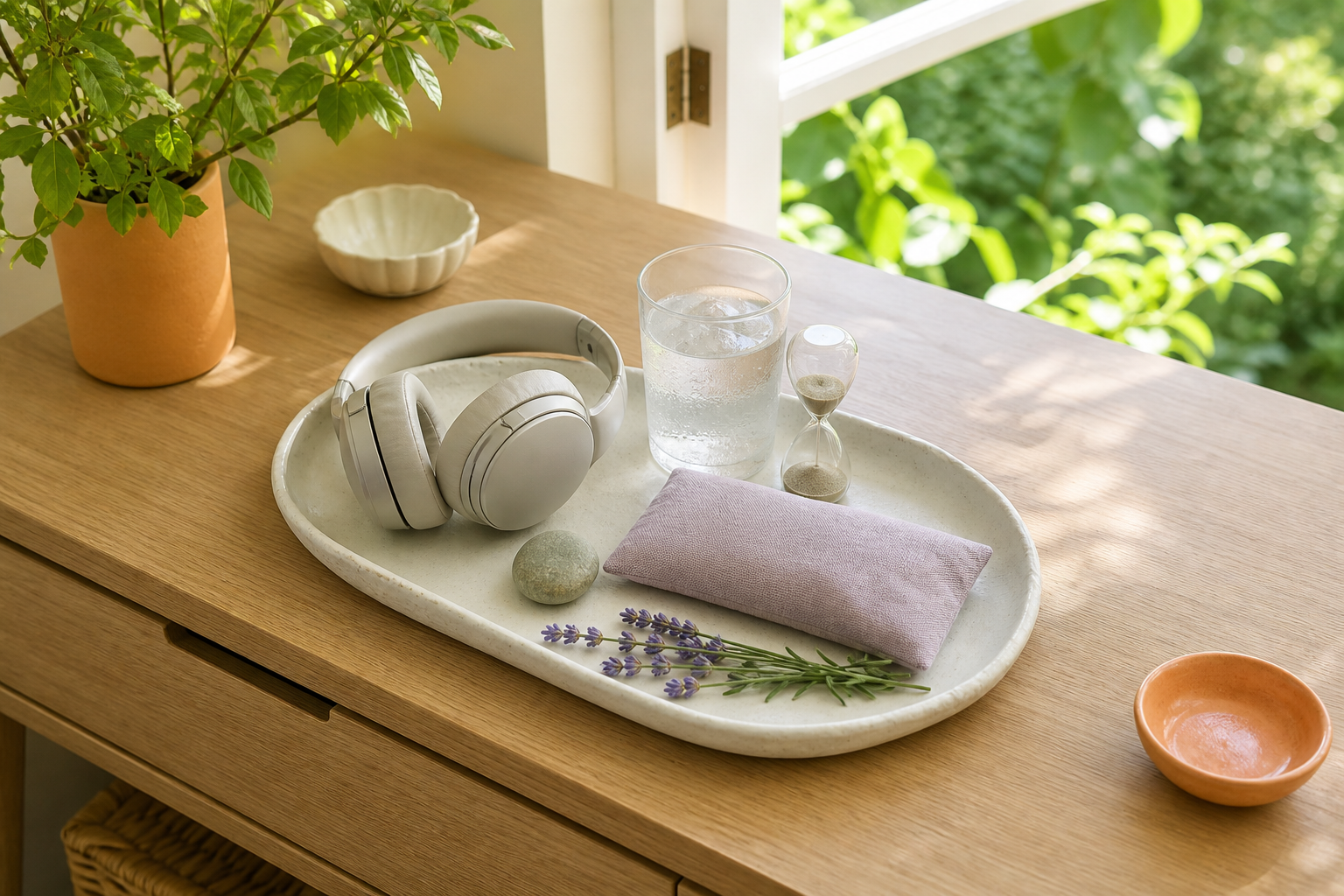
- Change the physical signal: sip cool water, wash your hands, press your palms into a wall, loosen tight clothing, or hold a smooth object.
- Return with a boundary: offer a form of connection you can currently tolerate—sitting nearby, a hand squeeze, one hug, reading aloud, or talking face-to-face.
If you are overwhelmed by a crying baby
Check feeding, diapering, temperature, pain, and illness concerns. If you feel yourself becoming angry or unable to cope, the American Academy of Pediatrics advises placing the baby on their back in a safe crib or playpen without blankets or stuffed animals, stepping away briefly, and calling for support. Never shake a baby. Contact the pediatrician when crying may signal illness or something feels wrong.
Body-boundary scripts children can understand
Children are not trying to violate a boundary in an adult sense. Babies seek regulation and toddlers use bodies before they have mature impulse control. A clear limit works best when it is short, concrete, and followed by an available alternative.
| Situation | Try saying |
|---|---|
| A toddler climbs on you | “I won’t let you climb on my body. You may sit beside me or climb on the cushion.” |
| A child repeatedly grabs | “Hands off my shirt. If you need me, tap my arm once or say ‘Mom.’” |
| You cannot handle a hug | “I love you. My body needs space. Would you like a high five, a smile, or to sit next to me?” |
| Siblings talk and touch at once | “One person at a time. Feet on the floor, hands to yourselves, and I will listen to each of you.” |
| Your child feels rejected | “You did nothing wrong. I am taking care of my body so I can be calm with you.” |
| An older child forgets | “Please ask before sitting on me. My answer may be yes, later, or choose another kind of closeness.” |
Holding the boundary is not “soft” in the sense of having no limit. The limit is firm: no climbing, pulling, pinching, or grabbing. The delivery is regulated and age-appropriate. You are showing your child both sides of consent: their body belongs to them, and other people’s bodies do too.
Design the day so touch does not pile up
Small environmental changes can protect capacity before the late-afternoon crash:
- Create a “beside me” spot with a floor cushion, small chair, or blanket next to your usual seat.
- Use predictable affection: one morning cuddle, a hug before leaving, or a short book beside each other instead of continuous climbing.
- Give sensory-seeking children alternatives such as pushing a laundry basket, carrying safe groceries, outdoor play, a crash cushion designed for play, play dough, or a firm pillow squeeze.
- Wear clothes that reduce irritation and tie back hair if pulling is a trigger.
- Turn off television or music when the household is already loud. If tiny sounds are the main problem, read Why Tiny Noises Feel So Loud When You’re an Overstimulated Mom.
- Put both adults on school, medical, and calendar communications so you are not carrying touch overload and the entire default-parent mental load.

Talk to your partner before contact becomes conflict
A partner may interpret “please do not touch me” as a relationship verdict when it is actually a current sensory limit. Explain the pattern outside the heated moment, and ask for a concrete change rather than hoping they notice.
Avoid turning the mother’s recovery into another task she must manage. The other adult can fully own bath time, bedtime, after-dinner cleanup, or the morning routine—including noticing, planning, and follow-through.
Touched out, burned out, or something else?
A short sensory spike often improves after reduced input, food, sleep, pain relief, or protected space. Parental burnout is broader and more persistent. Research describes it through severe exhaustion in the parenting role, emotional distancing, feeling fed up, and a painful contrast with the parent you used to be.
Consider talking with a health professional if touch aversion is sudden, severe, painful, worsening, or paired with panic, depression, rage, intrusive thoughts, migraines, breastfeeding pain, relationship distress, or difficulty functioning. A lactation consultant or clinician can help with nursing pain or breastfeeding aversion without assuming that you must continue or stop in any particular way.
For more context, see Stay-at-Home Mom Burnout With Toddlers and Signs Your Body Needs a Reset.
Get support now when safety is at risk
If you may hurt yourself or someone else, place the child with a safe adult or in an age-appropriate safe place and get immediate help. In the United States, call or text 988; call emergency services for imminent danger.
Pregnant and postpartum people—and their partners or families—can call or text the free, confidential, 24/7 National Maternal Mental Health Hotline at 1-833-TLC-MAMA.
Your body is allowed to have a boundary
If your mind is also holding every unfinished task, the Mental Clarity Reset Workbook can help you move the open loops onto paper and choose one gentler next step.
Explore Lifvyt resourcesFrequently asked questions
Does feeling touched out mean I do not love my child?
No. Love and sensory capacity are different. You can be deeply attached to your child and temporarily unable to tolerate more physical input. A short, clear boundary may help you return more calmly.
Is “touched out” a medical diagnosis?
No. It is an informal description of physical saturation and a need for bodily autonomy. Persistent or severe symptoms may overlap with burnout, anxiety, depression, migraine, neurodivergent sensory differences, trauma responses, pain, or postpartum mental-health concerns that deserve individualized care.
Will saying no to a hug harm attachment?
A respectful no does not erase a secure relationship. Keep the message warm and concrete, and offer another form of connection you can genuinely tolerate. Children also learn that consent applies to everyone.
Can I use earplugs or headphones around my children?
Reducing background noise may help, but supervision and situational awareness come first. Avoid blocking so much sound that you cannot hear a child, alarm, traffic, water, or another safety cue. Use the least reduction needed and have another capable adult take over when you need full quiet.
What if my partner takes the boundary personally?
Discuss it when neither of you is activated. Explain that the limit is temporary and sensory, name what contact is currently welcome, and agree on a no-touch recovery window. Consent still applies within a loving partnership.
- Lurie Children’s: The Sensory Overload of Child-Rearing
- Changes in affection and feeling touched out after the birth of a child
- A qualitative exploration of autistic mothers’ sensory experiences
- The Parental Burnout Assessment
- American Academy of Pediatrics: taking a safe break from a crying baby
- National Institute of Mental Health: when to seek help
Gentle note: This article is educational and does not replace medical, mental-health, lactation, or pediatric care. Use strategies appropriate to your child’s age, development, and safety needs.
The Sunday Soft Reset
A calmer start to your week.
Get Lifvyt’s weekly collection of gentle wellness reads, nervous-system resets and practical tools — plus the free 5-Minute Nervous System Reset Guide.
By signing up, you’ll receive the free guide and one gentle Lifvyt email each week. Unsubscribe anytime.