
A Lifvyt reported herb feature · Body Wellness
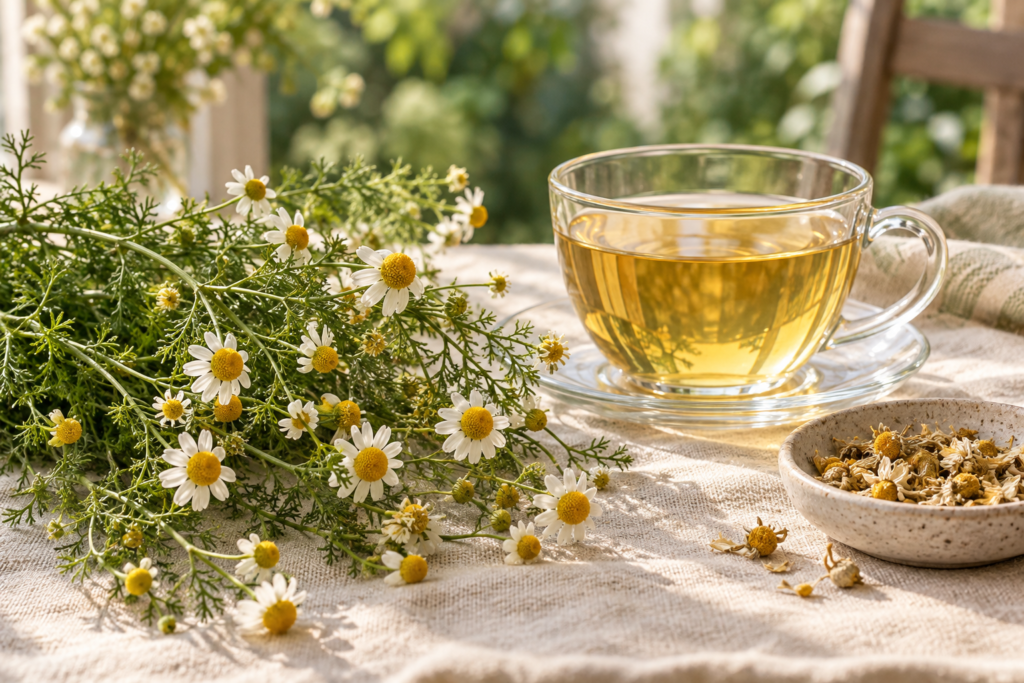
Chamomile looks like the herb equivalent of somebody saying, “I made you tea,” and not asking twelve follow-up questions.
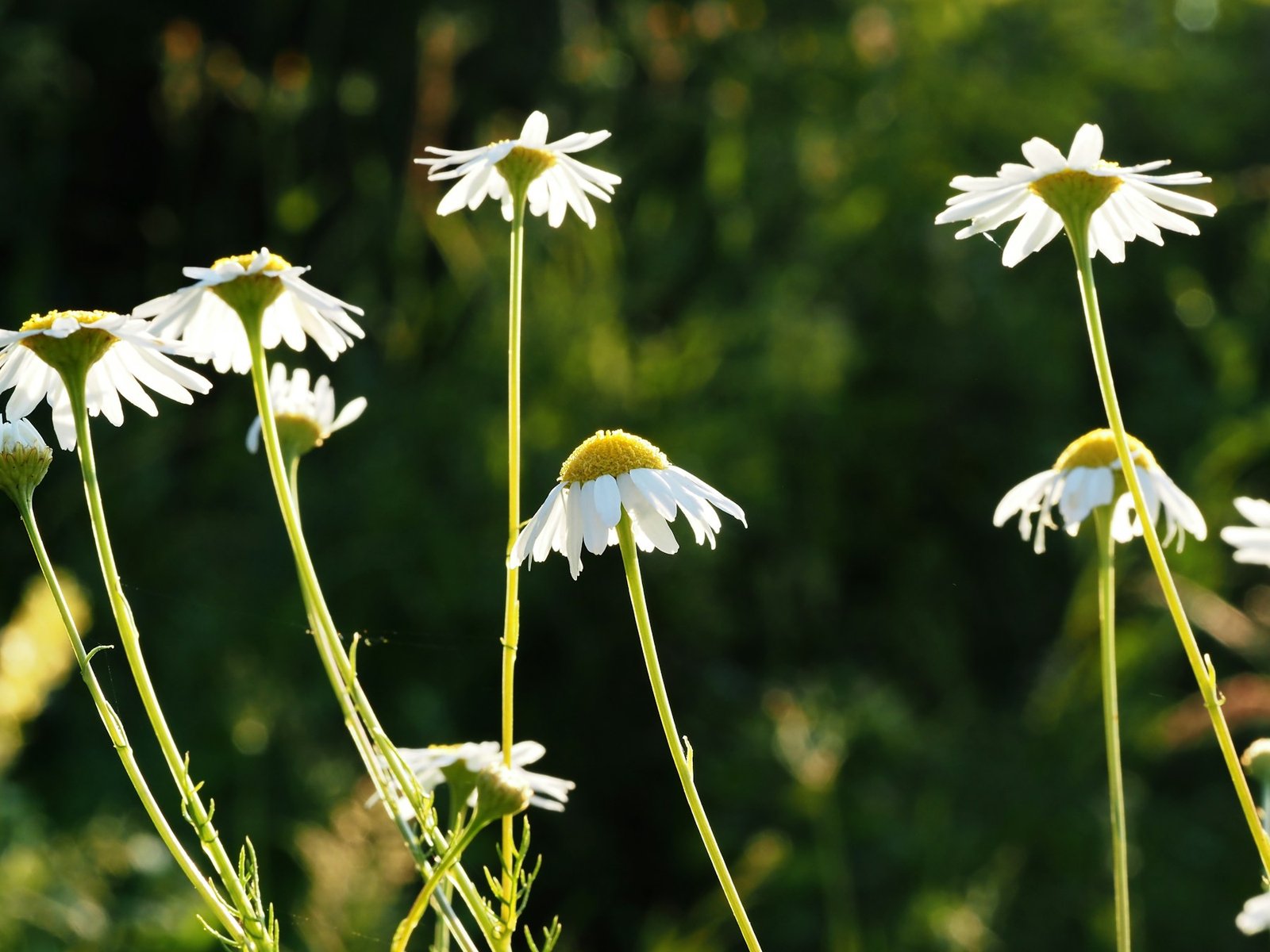
Small white petals. Golden centers. A scent that is soft, apple-like and just slightly grassy. It has spent so long in bedtime cupboards that we sometimes forget chamomile has a life beyond sleep.
European monographs document the flowers for digestive spasms, mouth and throat irritation, minor skin inflammation and cold-related preparations. Moroccan surveys record chamomile in living household medicine. Iranian researchers have studied it in diabetes, menstrual pain and endometriosis. Taiwanese nurses tested the tea in postpartum women who were not sleeping well. American psychiatry researchers spent years studying standardized chamomile extract in generalized anxiety disorder.
The interesting question is no longer, “Is chamomile calming?” It is: which chamomile, which preparation, for which problem—and why does a flower known for bedtime keep turning up in studies about the gut, blood sugar, pain, the mouth and the nervous system?
Say It With Confidence
Chamomile KAM-uh-mile
Matricaria chamomilla approximately muh-trih-KAIR-ee-uh kam-oh-MILL-uh
Apigenin uh-PIJ-uh-nin
α-Bisabolol al-fuh bih-SAB-uh-lol
Chamazulene kam-AZ-yoo-leen
Matricin MAT-rih-sin
Flavonoid FLAY-vuh-noyd
Antispasmodic an-tee-spaz-MOD-ik
Botanical Latin varies across regions and traditions. This is an approachable English-language guide, not a chamomile pronunciation emergency.
First: Which Chamomile Are We Talking About?
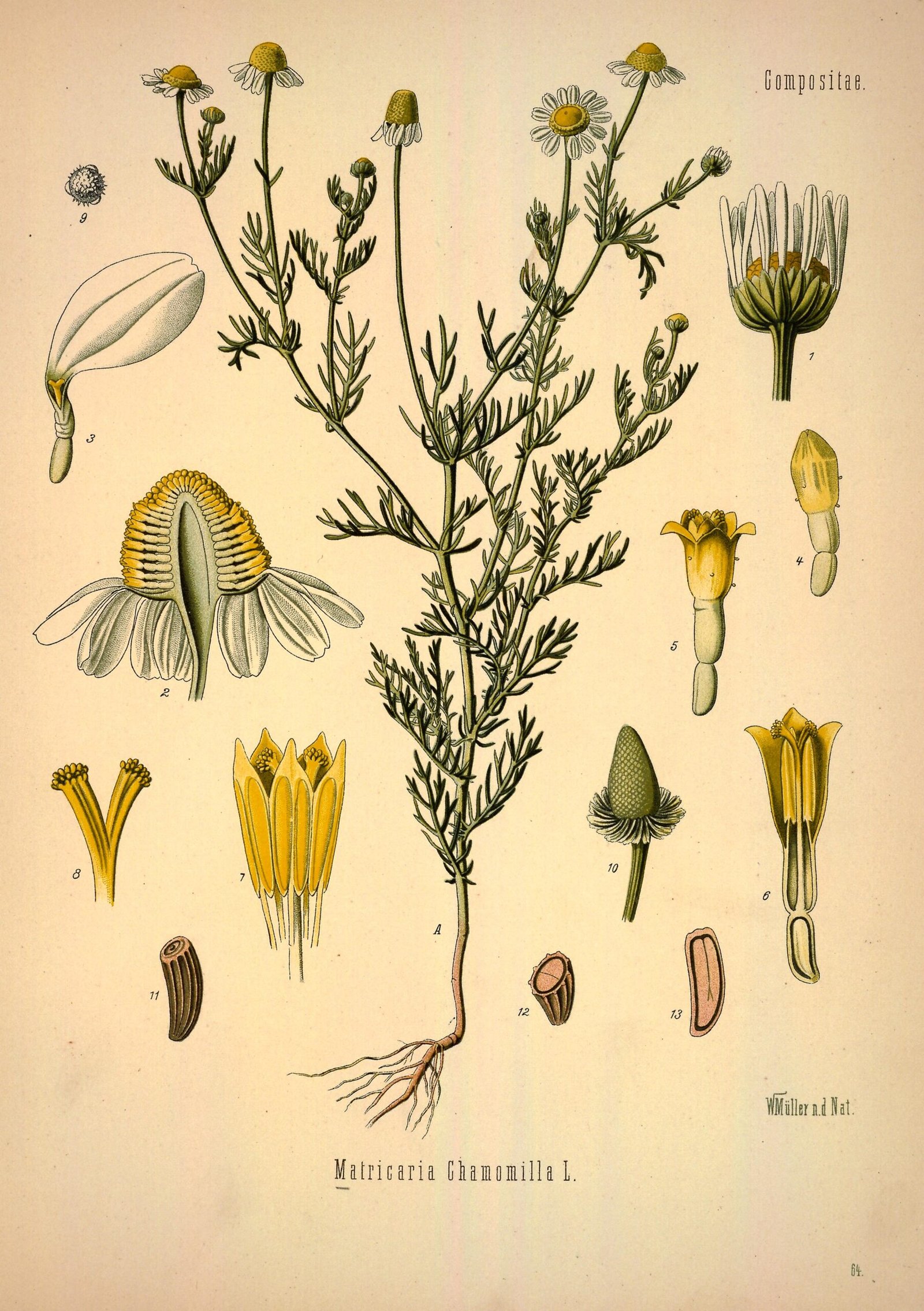
“Chamomile” is a common name shared by more than one plant. This article focuses on German chamomile, Matricaria chamomilla L., an accepted species in the daisy family Asteraceae. Kew lists its native range across North Africa, temperate Eurasia and into parts of Asia.1
You will also see the names Matricaria recutita and Chamomilla recutita in scientific papers and herbal monographs. Roman chamomile, Chamaemelum nobile, is a different species with a different essential-oil profile. A 2026 species comparison emphasized that German and Roman chamomile should not be treated as chemically interchangeable ingredients.4
That distinction sounds botanical until it becomes practical. If a trial uses German chamomile extract, a bottle of Roman chamomile essential oil cannot quietly borrow the result.
What Herbalists Have Traditionally Said About Chamomile
In Western herbalism, chamomile is often described as a gentle antispasmodic, carminative, soothing topical herb and mild nervine. Those words describe patterns, not diagnoses.
An antispasmodic herb is traditionally chosen when discomfort feels tight, crampy or gripping. A carminative is an aromatic digestive herb used around gas, fullness and bloating. A nervine is traditionally used when the nervous system feels frayed, restless or unable to settle.
Chamomile sits at the intersection of all three. That may be why old herbal practice often reaches for it when the stomach and the nervous system seem to have formed an unhelpful group chat.
The traditional chamomile picture
- Crampy digestion: flower infusions have long been used when the abdomen feels tight, gassy or unsettled.
- After-meal heaviness: chamomile is traditionally used as a mild aromatic digestive tea rather than a harsh bitter.
- Nervous tension: household and herbal traditions reach for chamomile when someone is restless, irritable, overwound or simply needs help transitioning out of the day.
- Evening settling: chamomile is deeply associated with bedtime, but traditionally more as a gentle settling herb than a pharmaceutical-style “knockout.”
- Mouth and throat comfort: cooled infusions and other preparations have been used as rinses or gargles for minor irritation.
- Skin and bath use: chamomile preparations have a long history in washes, compresses and baths for irritated skin.
- Cold-season household care: European traditional preparations include inhalation of vapour from chamomile infusions for common-cold symptoms.
- Menstrual cramping: several Middle Eastern traditions use chamomile around painful menstruation, a pattern that later became the subject of Iranian clinical research.
The European Medicines Agency’s monograph on matricaria flower formally recognizes traditional uses involving minor gastrointestinal complaints, mouth and throat inflammation, common-cold symptoms, minor skin inflammation and superficial wounds.2 Sleep is strangely not the center of that regulatory monograph—which is a useful reminder that the supermarket reputation and the older medicinal record are not identical.
The Flower Head Is a Tiny Botanical Neighborhood
The herbal material is the flower head, or capitulum. What looks like one flower is actually a collection of many tiny flowers: yellow tubular disc florets in the center and white ray florets around the edge.
Dried flower heads become tea. Liquid and dry extracts concentrate different compounds. Steam distillation produces an essential oil. Mouthwashes and topical products create still another exposure. Chamomile is therefore less like one product and more like a family of preparations sharing the same plant.
Inside Chamomile: The Compounds Behind the Golden Cup
German chamomile contains more than 100 identified constituents. The flowers contain flavonoids such as apigenin and luteolin derivatives, while the essential oil contains terpenoids including α-bisabolol and compounds that lead to the familiar blue chamazulene found in some distilled oils.35
Apigenin
Apigenin is one of chamomile’s best-known flavonoids. Laboratory work has shown that it can interact with benzodiazepine-related receptor sites, which is one reason it appears so often in discussions about chamomile and calm. That does not mean chamomile tea behaves like a benzodiazepine. Human absorption studies do show that apigenin metabolites appear after chamomile tea, so this is not merely a molecule trapped in a chemistry diagram.67
α-Bisabolol
α-Bisabolol is a fragrant sesquiterpene found in chamomile essential oil. Experimental research explores anti-inflammatory, antimicrobial and tissue-soothing actions. Most of those broad effects remain laboratory or animal evidence rather than proof that tea treats inflammatory disease.
Chamazulene
Chamazulene contributes the striking blue color seen in some chamomile essential oils. Much of it forms during heating or distillation from precursor compounds such as matricin. The blue compound people associate with chamomile oil is therefore partly a product of processing.
Matricin
Matricin is a sesquiterpene lactone found in German chamomile. It helps explain why dried flower, hot-water infusion and essential oil do not carry the same chemical balance.
Luteolin & quercetin relatives
Chamomile flowers contain other flavonoids and phenolic compounds that contribute to antioxidant chemistry. Human trials generally test the plant preparation rather than isolating one supporting compound.
No single “sleep molecule”
Chamomile is not apigenin with petals attached. Water, alcohol, drying, distillation and formulation alter what reaches the body. A capsule trial, a tea trial and a mouthwash trial can all be about chamomile without being the same intervention.
The chemistry gives chamomile’s old reputation a plausible story. Human trials tell us whether the story survives contact with real people.
Tea, Extract, Mouthwash and Essential Oil: Preparation Changes the Question
Dried-flower tea
Hot water pulls flavonoids and other water-soluble compounds from the flower while capturing some aromatic material. Tea is the form most connected with household use and the easiest to over-credit with results from stronger extracts.
Standardized oral extract
Several anxiety trials used pharmaceutical-grade chamomile extract in measured capsules. Those milligram doses cannot be translated directly into “cups of tea.”
Powdered flower capsules
Some Iranian menstrual-pain and endometriosis studies used gram-level capsules of chamomile material. Powder is closer to whole dried plant than a concentrated extract, but it is still different from infusion.
Mouthwash
Brazilian and Iranian oncology research has studied chamomile-containing mouth rinses for oral mucositis. The result belongs to a topical oral route and does not establish a systemic effect from tea.
Topical or bath preparations
European traditional practice includes washes, creams, bath additives and compresses. These are locally applied preparations with a different exposure from internal use.
Essential oil
Steam-distilled chamomile oil is highly concentrated and chemically distinct. It is not “extra-strong tea,” and its route, dilution and species identity matter.

Around the World, Chamomile Keeps Escaping the “Sleep Tea” Box
If chamomile were only a bedtime story, the research would be much easier to summarize. Instead, different countries have asked very different questions.
The flower’s older job description is much wider than sleep
The EMA assessment of German chamomile flower covers minor gastrointestinal spasms and bloating, mouth and throat irritation, minor skin inflammation, superficial wounds and cold-related inhalation uses.2
Roman chamomile has its own separate European monograph and chemistry. That regulatory separation reinforces an important Lifvyt rule: “chamomile” is not enough information when the species matters.
A small 2009 trial opened a much bigger research program
At the University of Pennsylvania, 57 adults with mild-to-moderate generalized anxiety disorder were randomized to chamomile extract or placebo for eight weeks. Chamomile produced a statistically greater reduction in Hamilton Anxiety Rating scores than placebo. The authors described the effect as modest and called for replication.8
Researchers then conducted a larger two-phase study. A total of 179 adults with moderate-to-severe GAD first received pharmaceutical-grade chamomile extract at 1,500 mg per day. Ninety-three responders entered a 26-week randomized continuation phase: 46 remained on chamomile and 47 switched to placebo. Relapse occurred in 15.2% of the chamomile group versus 25.5% of placebo, but the difference in time to relapse did not reach statistical significance. Chamomile participants nevertheless maintained lower anxiety symptom scores during follow-up.9
Tea—not an extract—was finally the actual intervention
In a randomized study of 80 Taiwanese postpartum women with poor sleep, 40 women drank chamomile tea for two weeks while 40 received usual postpartum care. The tea group had better scores for sleep inefficiency related to physical symptoms and lower depression scores immediately after the intervention. The benefit did not persist at the four-week follow-up.10
Chamomile went somewhere very different: after meals
In Tabriz, 64 adults with type 2 diabetes were randomized to chamomile tea or water for eight weeks. The chamomile group drank tea made with 3 grams of chamomile in 150 mL of hot water three times a day immediately after meals. Compared with control, the chamomile group had reductions in glycated hemoglobin, insulin, insulin resistance and a marker of oxidative stress, along with increases in several antioxidant enzyme measures.11
That is an intriguing metabolic signal from an actual tea preparation. It is still one small, short study and does not justify replacing diabetes treatment with chamomile tea.
Menstrual pain has its own Iranian evidence base
A 2021 systematic review identified seven clinical trials involving 1,033 participants that examined chamomile for primary dysmenorrhea and menstrual bleeding. Most studies reported improvement, but the individual trials varied in product, comparison and quality.12
One older Iranian trial used two cups of chamomile tea daily beginning one week before menstruation and continuing through the first five days of the cycle for three months. It included 82 university students, but the study was not blinded and its randomization methods were poorly described.13
More recently, a randomized study of 102 women with endometriosis compared chamomile capsules, flaxseed and placebo. Participants used 1,000 mg capsules three times daily for eight weeks. Pelvic pain, painful intercourse and dysmenorrhea scores fell more in the chamomile and flaxseed groups than placebo.14
Chamomile is not a wellness import here
Ethnobotanical work documents Matricaria chamomilla, locally called forms of babounj, in Moroccan traditional practice. Flower infusions and decoctions have been recorded for digestive complaints, nervousness, painful menstruation and other concerns. In some regions, the flowers are also traditionally used around diabetes.3
That does not prove effectiveness. It tells us something equally important for a global herbal story: people in North Africa have living, locally specific chamomile traditions, and those traditions cannot be reduced to “Europeans drink chamomile before bed.”
A flower rinse entered a high-stakes clinical setting
In Brazil, researchers ran a randomized phase II trial in 40 adults undergoing allogeneic hematopoietic stem-cell transplantation. Participants received usual care alone or mouthwash containing 0.5%, 1% or 2% liquid Chamomilla recutita extract. The 1% group had lower incidence, intensity and duration of oral mucositis than control, with no moderate or severe adverse effects reported.15
So What About Sleep?
This is the part where chamomile’s reputation and the research record finally meet—and do not perfectly agree.
A 2019 systematic review found improvement in some sleep-quality measures but little evidence for insomnia as a diagnosis. A newer 2024 systematic review included 10 studies with 772 participants. Pooled analysis found improvement in Pittsburgh Sleep Quality Index scores, and several studies reported easier sleep onset or fewer awakenings. Yet daytime functioning did not improve, sleep efficiency was unchanged in two studies and worse in one, and the studies were highly heterogeneous.1617
That is a much more useful answer than either “chamomile is proven for sleep” or “chamomile does nothing.” The current human evidence suggests a possible improvement in subjective sleep quality, while evidence for reliably treating insomnia remains much weaker.
What Research Suggests, Benefit by Benefit
Generalized anxiety symptoms
U.S. extract trials have shown modest symptom improvement. Longer-term continuation did not significantly reduce relapse on the primary endpoint, so the evidence is encouraging rather than definitive.
Sleep quality
A 2024 review of 10 studies suggests improvement in some subjective sleep measures, but not consistently in sleep efficiency, daytime function or insomnia severity.
Digestive cramping
European traditional use strongly supports the digestive history. Laboratory antispasmodic findings make it plausible, but modern human digestive trials of plain chamomile alone are surprisingly limited.
Menstrual pain
Several Iranian trials and reviews report benefit for dysmenorrhea, but study quality and preparations vary. This is a meaningful research area, not yet a universal clinical recommendation.
Type 2 diabetes markers
One 64-person Iranian trial found improved glycemic and antioxidant measures after chamomile tea with meals for eight weeks. That finding needs replication before it becomes treatment advice.
Oral mucositis
Small oncology trials suggest some chamomile mouthwashes may help. This evidence belongs to a locally applied oral product—not to tea, capsules or essential oil.
What You Might Reasonably Expect
From an ordinary food-grade tea: floral aroma, warmth, a gentle after-meal or evening ritual, and possibly a subjective sense of settling. A cup is not a measured anxiety medication.
From a standardized extract studied for GAD: some people may experience a reduction in anxiety symptoms over several weeks. The strongest trials used specific pharmaceutical-grade extracts at doses much more standardized than tea.
From tea used around sleep: research suggests possible improvement in certain sleep-quality measures, but not a reliable “knockout” effect and not strong evidence that chamomile treats chronic insomnia.
From chamomile around menstrual pain: several studies suggest potential benefit, especially with repeated use around the menstrual period, but product form and study quality differ.
What not to expect: a cure for anxiety, diabetes, endometriosis, insomnia, infection or cancer-treatment complications—or the exact effect of a clinical extract from whatever chamomile tea happens to be in the cupboard.
Chamomile Tea: The Simple Version Still Has a Place
For an ordinary food-grade infusion, follow the package directions on a reputable chamomile tea. Loose dried flower preparations are often steeped covered in hot water for several minutes. Covering helps keep some aromatic compounds near the cup rather than letting the kitchen enjoy the entire bouquet first.
A good chamomile infusion should smell distinctly floral, lightly apple-like and fresh. A dusty bag that smells mainly of cardboard may still be technically chamomile, but it is not offering the plant’s best introduction.
Fresh flower heads can be used in culinary contexts when correctly identified and grown for food use, but most research and traditional monographs work with dried flowers or defined extracts. Fresh, dried, powdered and extracted are not dose-for-dose equivalents.
What I Would Not Tell You About Chamomile
I would not tell you apigenin turns chamomile tea into a natural benzodiazepine. I would not call it “nature’s Xanax,” because that is catchy, inaccurate and unfair to both chamomile and pharmacology.
I would not take one Iranian diabetes trial and tell someone to lower their medication because tea improved HbA1c in a small study. I would not turn a 1% mouthwash trial into “chamomile fights cancer mouth sores” without mentioning the transplant setting, concentration and local route.
I would not promise that a bedtime cup will cure insomnia just because chamomile has been invited to every sleepy-tea blend since approximately forever.
But I also would not dismiss it as scented water. Human studies have found measurable signals in anxiety, sleep quality, menstrual pain, metabolic markers and oral care. The traditional digestive and soothing record is broad and well documented. The flower contains compounds that are absorbed and biologically active.
Chamomile is not boring. We simply made it boring by flattening a complicated plant into the sentence “good for sleep.”
A Chamomile Ritual for the Evening That Does Not Need Another Goal
Make the tea because the day has had enough access to you.
Let it steep. Put the phone facedown. Smell the cup before you drink it. If you are someone who tends to turn every wellness habit into a performance review, do not ask the chamomile to prove itself tonight.
Maybe your shoulders drop a little. Maybe your stomach feels warmer. Maybe you simply like the taste. None of those experiences needs to become a medical claim to count as part of a good evening.
Ten quiet minutes are allowed to remain ten quiet minutes.
Before You Use Chamomile: Practical Safety
- Asteraceae allergy: chamomile can cause allergic reactions, including rare severe reactions. Risk may be higher in people allergic to ragweed, chrysanthemums, marigolds, daisies or related plants.
- Medication interactions: interactions with warfarin and some liver-metabolized medicines have been reported; sedative interactions are also theoretically possible. Ask a pharmacist before regular medicinal use with prescription or over-the-counter drugs.18
- Pregnancy and breastfeeding: safety information for medicinal amounts is limited. Discuss concentrated or regular medicinal use with an obstetric clinician or pharmacist.
- Hormone-sensitive conditions: NCCIH notes preliminary estrogen-like concerns. People with hormone-sensitive conditions or using hormonal medication should seek individualized guidance.
- Children: food and tea exposure is not the same as giving a concentrated herbal medicine. Use age-appropriate products and professional guidance for medicinal use.
- Essential oil: German and Roman chamomile oils differ chemically. Do not ingest essential oil because chamomile tea is commonly consumed; use only by the intended route and dilution.
- Eyes and skin: chamomile near the eyes can irritate them. Stop topical use for burning, rash, swelling or worsening irritation.
- Persistent symptoms: chronic insomnia, significant anxiety, unexplained abdominal pain, heavy or worsening menstrual symptoms, palpitations, abnormal blood sugar or severe mouth sores deserve appropriate medical evaluation.
Sources & Further Reading
- Royal Botanic Gardens, Kew: Matricaria chamomilla L., Plants of the World Online.
- European Medicines Agency: Matricariae flos / German chamomile flower monograph and assessment.
- El Mihyaoui A, et al. Chamomile (Matricaria chamomilla L.): ethnomedicinal use, phytochemistry and pharmacological uses. Life. 2022.
- German and Roman Chamomile: Species-Specific Phytochemical Profiles. 2026.
- McKay DL, Blumberg JB. A review of the bioactivity and potential health benefits of chamomile tea. Phytotherapy Research. 2006.
- Viola H, et al. Apigenin, a component of Matricaria recutita flowers, and benzodiazepine-related receptor binding. Planta Medica. 1995.
- Absorption, distribution, metabolism and excretion of apigenin and its glycosides in healthy adults, including chamomile tea. 2022.
- Amsterdam JD, et al. Randomized double-blind placebo-controlled trial of chamomile extract for generalized anxiety disorder. 2009.
- Mao JJ, et al. Long-term chamomile treatment for generalized anxiety disorder: randomized clinical trial. Phytomedicine. 2016.
- Chang SM, Chen CH. Chamomile tea, sleep quality and depression in sleep-disturbed postnatal women: randomized controlled trial. Journal of Advanced Nursing. 2016.
- Zemestani M, et al. Chamomile tea and glycemic/antioxidant markers in type 2 diabetes: randomized clinical trial. Nutrition. 2016.
- Niazi A, Moradi M. The effect of chamomile on pain and menstrual bleeding in primary dysmenorrhea: systematic review. 2021.
- Cochrane review summary of the Iranian Jenabi chamomile-tea dysmenorrhea trial.
- Khalajinia Z, et al. Chamomile and flaxseed for pelvic pain, dyspareunia and dysmenorrhea in endometriosis: randomized trial. 2024.
- Braga FTMM, et al. Chamomile mouthwash for oral mucositis in stem-cell transplantation: randomized phase II clinical trial. Cancer Nursing. 2015.
- Hieu TH, et al. Chamomile for anxiety, GAD, insomnia and sleep quality: systematic review and meta-analysis. Phytotherapy Research. 2019.
- Effects of chamomile on sleep: 2024 systematic review and meta-analysis of clinical trials.
- National Center for Complementary and Integrative Health: Chamomile—Usefulness and Safety. Updated 2024.
This Lifvyt article is provided for general educational and informational purposes only. It is not medical advice, diagnosis, treatment or prescribing and does not establish a clinician–patient relationship. Traditional herbal uses described here are historical, cultural or practice-based information—not promises that chamomile will diagnose, treat, cure or prevent disease.
Herbs, teas, tinctures, extracts, supplements, essential oils, mouthwashes and topical preparations can cause side effects, allergic reactions and medication interactions. Plant identity, product purity, concentration, extraction method, formulation and individual response vary. Before medicinal internal use—especially during pregnancy or breastfeeding, for a child, before surgery, alongside prescription or over-the-counter medication, or when you have a medical condition—consult an appropriately qualified physician, pharmacist or healthcare professional.
Essential oils require particular caution. Essential oil is not interchangeable with tea or dried flower. German and Roman chamomile are different species with different oil chemistry. Do not ingest or otherwise use an essential oil by a route not intended on the specific product label.
You are responsible for your own purchasing, preparation and personal-use decisions. Lifvyt cannot assess your allergies, diagnoses, medications, product quality, dose or individual risk. Seek appropriate medical care for severe, persistent, worsening, unusual or emergency symptoms rather than relying on an herbal remedy or this website.
The Sunday Soft Reset
A calmer start to your week.
Get Lifvyt’s weekly collection of gentle wellness reads, nervous-system resets and practical tools — plus the free 5-Minute Nervous System Reset Guide.
By signing up, you’ll receive the free guide and one gentle Lifvyt email each week. Unsubscribe anytime.