
A Lifvyt reported herb feature · Body Wellness
Tulsi is the rare herb that can be a household plant, a sacred presence, a cup of tea—and the subject of a cortisol experiment involving cold water and mental arithmetic.
That is quite a range for one leafy member of the mint family.
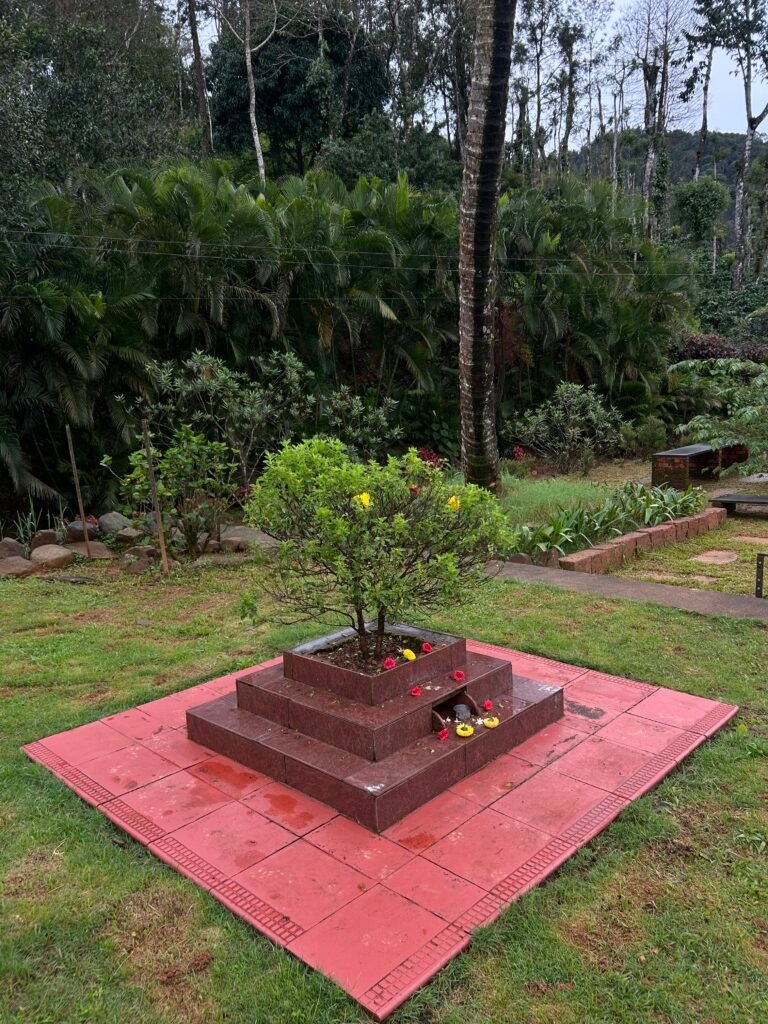
Tulsi has lived close to people for centuries. It grows in courtyards and temple gardens, appears in Ayurvedic and Siddha practice, and moves easily between food, household care and spiritual life. Modern supplement culture often files it under one tidy word—adaptogen—but tulsi had a much larger story long before beige bottles discovered stress.
The human research is also more interesting than “tulsi lowers cortisol.” Indian trials have examined stress symptoms, blood glucose, cognition and anxiety. A newer Australian study paired questionnaires with hair cortisol, saliva, blood pressure, a laboratory stress test and wrist-worn sleep tracking. Some measures improved. Others did not. That disagreement is not an inconvenience; it is where the useful story begins.
Say it with confidence
A pronunciation garden
Botanical Latin changes across languages. These are friendly English-language guides, not a tulsi pronunciation tribunal.
TulsiTOOL-see
Holy basilHOH-lee BAY-zuhl
Ocimum tenuiflorumOSS-ih-mum ten-yoo-ih-FLOR-um
EugenolYOO-juh-nawl
Rosmarinic acidrohz-muh-RIN-ik acid
Ursolic acidur-SOL-ik acid
β-CaryophylleneBAY-tuh care-ee-oh-FILL-een
Ocimumosidesoss-ih-moo-MOH-sides
First: Holy Basil Is Not Simply “Basil, but Holier”
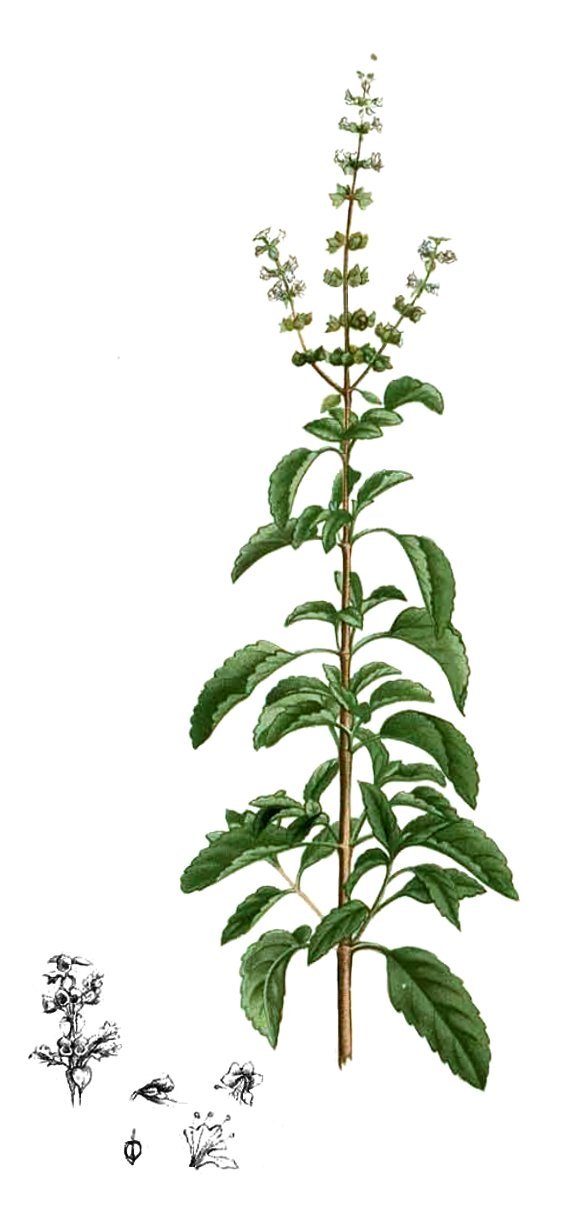
The accepted botanical name is Ocimum tenuiflorum L.; Ocimum sanctum is a widely used synonym that still appears throughout older studies and supplement labels. It belongs to the mint family, Lamiaceae. Sweet basil, Ocimum basilicum, is a close culinary relative but not the same species.1
Names such as Rama tulsi and Krishna tulsi are used for cultivated forms with different coloring and aroma. Product labels do not always describe variety, growing conditions or plant part, so two tulsi products can begin with the same common name and arrive with noticeably different chemistry.
Family
Mint family
Aromatic square stems, opposite leaves and small flower spikes place tulsi among familiar mint relatives.
Herbal material
Leaf + aerial parts
Tea commonly centers the leaf; many extracts use leaves or the richer flowering aerial portions.
Identity matters
Species before claims
A sweet-basil study, a tulsi tea and a standardized holy-basil extract are not interchangeable.
What Tulsi Has Meant in Ayurvedic and Household Tradition
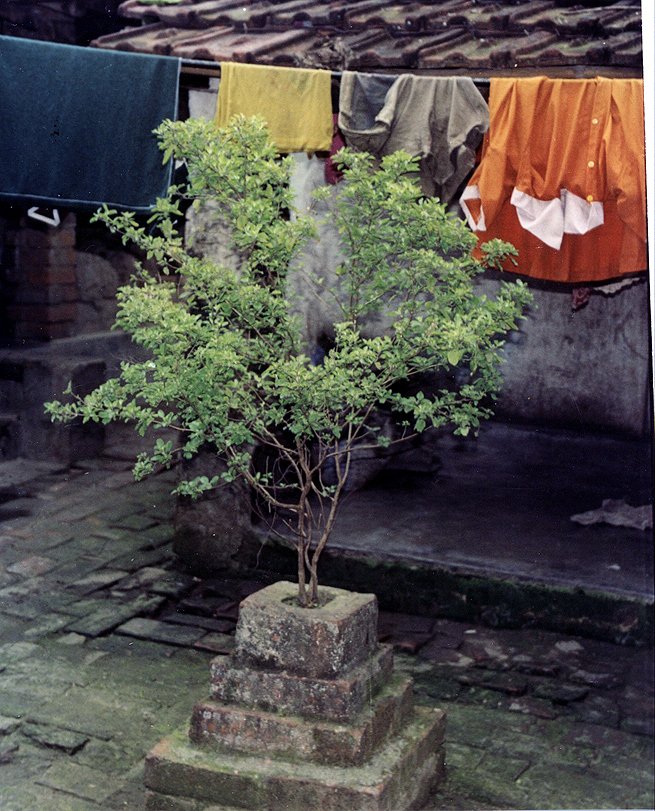
In India and across South Asian communities, tulsi is more than a list of uses. It can be cultivated near the home, tended daily and understood through cultural and spiritual relationships as well as herbal practice.
So Why Is It Called Holy Basil?
The English name reflects tulsi’s sacred place in Hindu tradition. Tulsi—often translated as “the incomparable one”—is personified as the goddess Tulsi, also known through traditions connected with Vrinda, and is especially associated with Vishnu and Krishna. The living plant may be tended near homes and temples as part of daily devotion. Customs and stories vary among families, regions and Hindu traditions, but the word holy is not marketing language; it points to a genuine religious and cultural relationship with the plant.2
And the basil part? Tulsi belongs to the basil genus Ocimum. It is botanically related to culinary sweet basil, but it is a different species with a more peppery, clove-like personality. Calling tulsi an “adaptogen” captures only one modern slice of a much older life.
Ayurvedic and Siddha traditions use the aromatic leaf and aerial parts in broader patterns involving the respiratory system, digestion, clarity, vitality and resilience during strain. Household preparations may combine tulsi with ginger, black pepper, honey or other plants depending on the season, family and purpose. These are living traditions, not one standardized recipe.
The traditional tulsi picture
- Cold-season care: warm leaf preparations around cough, congestion and throat discomfort.
- Aromatic digestion: tea when the stomach feels heavy, gassy or slow after food.
- Clarity without heaviness: a reputation for feeling bright and steady rather than sedating.
- Daily resilience: regular household use during physically or emotionally demanding periods.
- Appetite and warmth: pungent-aromatic preparations when warmth and movement are desired.
- Ritual and relationship: care of the living plant as part of daily spiritual and domestic life.
Traditional knowledge answers questions a capsule trial cannot: Which plant stayed close to the home? Which aromas became associated with seasonal care? Which preparations felt suited to a particular pattern? Clinical research asks a narrower question—what happened to measured outcomes when a defined product was given for a defined time. Both are valuable, but they should keep their own name.
Leaves, Flowers and Seeds: Which Parts Are Used?
Leaf and flowering tops
The leaf is the best-known tea material. Flowering aerial parts may be dried with the leaves or used in standardized extracts. Aroma, color and pungency vary with variety and harvest.
Seeds and root
Tulsi seeds and roots appear in regional traditions, but most modern tea and stress research centers on leaf, aerial parts or whole-plant extracts. The plant part in a study belongs in the result.
Fresh leaf is lively, peppery and clove-like. Dried leaf is easier to store and brew, but volatile aromas gradually fade. Powdered leaf delivers more of the whole dried material than a strained tea. A tincture uses alcohol and water to extract a different chemical spectrum. A standardized extract may concentrate selected compounds many times beyond an ordinary cup.
Inside Tulsi: The Compounds Behind the Peppery Green Aroma
Tulsi is chemically busy. Its profile changes with variety, soil, weather, harvest, drying and extraction. Researchers have reported volatile compounds, phenolic acids, flavonoids, triterpenes and distinctive glycosides. The goal is not to crown one molecule king of the courtyard; it is to understand what each family might contribute.
Eugenol
Eugenol gives clove its signature smell and contributes to tulsi’s warm, spicy aroma. In laboratory systems it can influence cyclooxygenase activity, inflammatory signaling and oxidation. That helps explain biological plausibility, while human tulsi trials still test the preparation—not isolated eugenol.
Rosmarinic acid
Also found in rosemary, lemon balm and peppermint, rosmarinic acid can interact with inflammatory and oxidative pathways in cells and animals. Water can extract some of it, but the amount in tea depends on plant and preparation.
Ursolic acid
This less water-friendly compound is studied for effects on cell stress, inflammatory pathways and metabolism. An alcohol-containing extract may capture it differently from hot water, which is one reason preparation changes the chemistry.
β-Caryophyllene
β-Caryophyllene can interact with cannabinoid type-2 receptors in experimental research. That receptor story is interesting, but it does not mean tulsi tea behaves like cannabis or delivers a known clinical dose.
Ocimumosides A and B
These compounds attracted attention in animal stress research, including work on corticosterone and brain signaling. They offer a possible bridge to the “resilience” story, but their contribution to human trial outcomes has not been isolated.
Linalool, cineole and friends
Tulsi oils can contain linalool, 1,8-cineole, methyl eugenol and other aromatics in highly variable proportions. Variety matters enough that “tulsi essential oil” is not one fixed chemical recipe.
What might happen biologically?
Experimental work suggests tulsi extracts and compounds may influence the body’s stress-response systems, including the HPA axis and sympathetic signaling, while also affecting inflammatory and oxidative pathways.10
What does that actually prove?
Mechanisms explain how a result could be possible. Human trials tell us whether people’s stress ratings, sleep, cognition, glucose or physiology actually changed. Tulsi has both kinds of evidence—but much more laboratory and animal evidence than large replicated clinical research.
Tea, Powder, Tincture, Extract and Essential Oil
Fresh leaf
Bright, aromatic and suited to food or household infusion. Its chemistry changes quickly after harvest.
Dried-leaf tea
Hot water captures aromatic and water-soluble compounds. Most stress trials did not test an ordinary cup.
Leaf powder
Whole dried material swallowed in measured grams. The 1996 diabetes trial used 2.5 g daily.
Tincture
Alcohol-water extraction captures a broader range than tea. Ratios and serving sizes differ across brands.
Standardized extract
A concentrated, repeatable research product. The 2022 trial used 250 mg daily of one specific aerial-parts extract.
Essential oil
A highly concentrated aromatic fraction, chemically unlike tea. Its composition and intended route matter.
The Human Research: Encouraging, Uneven and Mostly Centered in India
A 2017 systematic review identified 24 human intervention studies involving tulsi. The studies covered stress and cognition, glucose and metabolic outcomes, immunity and other questions. The overall direction was favorable, but the preparations, doses, trial designs and populations were remarkably varied. Some studies were randomized and blinded; others were small, open or missing important reporting details.3
Geography matters here. Much of the older human evidence comes from India, where tulsi’s traditional importance made it a natural research subject. A well-designed newer trial came from Australia. That is a real evidence map—not a reason to decorate the article with countries that did not actually conduct the studies.
Six weeks, 150 adults and a standardized whole-plant extract
Participants150 adults, ages 18–65, reporting stress symptoms
PreparationOciBest standardized whole-plant extract capsules
Dose400 mg three times daily; 1,200 mg/day
Duration6 weeks
ComparisonMatching cellulose placebo
Participants rated stress-related symptoms at baseline and during the trial. Compared with placebo, the tulsi group reported larger reductions in forgetfulness, exhaustion, recent sleep problems and recent sexual problems. Total symptom improvement was reported as 39% greater than placebo.5
Questionnaires improved; the sleep tracker mostly shrugged
Participants100 stressed adults with sleep complaints, ages 18–65; 85 completed week 8 questionnaires
PreparationHydroalcoholic aerial-parts extract standardized to a bioactive complex
Dose125 mg twice daily; 250 mg/day
Duration8 weeks
ComparisonMatched placebo
Perceived Stress Scale scores fell by 37% in the tulsi group and 19% with placebo. Athens Insomnia Scale scores fell by 48% versus 27%. Hair cortisol was lower at week eight, and during a laboratory challenge involving cold-water hand immersion and mental arithmetic, the tulsi group showed lower overall salivary cortisol, salivary amylase, blood pressure and stress ratings.4
Then came the useful contradiction. The broader mood and quality-of-life measures did not separate from placebo. Fitbit measurements found no significant between-group difference in total sleep time, time in bed or sleep efficiency. People reported sleeping better; their wrist devices did not clearly confirm it.
A few cognitive measures changed—and several did not
Participants40 healthy adults, ages 18–30
PreparationEthanolic tulsi-leaf extract capsules
Dose300 mg/day before meals
Duration30 days
ComparisonCellulose placebo capsules
Compared with placebo, the tulsi group improved on selected reaction-time and error-rate measures from the Sternberg and Stroop tasks. P300 latency, an electrical brain-response measure, also differed between groups.7
Not everything moved. Both groups improved on some tasks—practice effects are real—and heart rate, skin conductance, anxiety scores and salivary cortisol did not show broad between-group advantages.
Anxiety: positive change without a placebo group
A 2008 Indian study followed 35 adults diagnosed with generalized anxiety disorder who took a 500 mg tulsi extract capsule twice daily for 60 days. Anxiety, stress, depression, attention and adjustment scores improved over time.8 The missing piece was a placebo comparison. Without one, improvement could reflect the extract, expectation, repeated attention from researchers, natural symptom change or several things at once. The study is promising enough to justify a better trial, not strong enough to finish the conversation.
Tulsi’s human evidence contains a repeated stress signal. What it does not yet contain is the same well-described preparation succeeding across several large, independent trials.
Why Tulsi Studies Can Disagree
Whole-leaf powder, hydroalcoholic extract and whole-plant capsules deliver different chemical profiles.
Trials have used 250 mg standardized extract, 1,200 mg extract and 2.5 g leaf powder. Milligrams alone do not make them comparable.
Stressed but otherwise healthy adults, people with diabetes and young cognitive-test volunteers are different populations.
A stress questionnaire, hair cortisol, blood glucose and a wrist tracker do not measure the same experience.
A person may feel less distressed about sleep without sleeping significantly longer according to a device.
Several early tulsi trials are small, short or incompletely blinded, making impressive-looking findings harder to reproduce.
What You Might Reasonably Expect
From tulsi tea
A peppery-clove aroma, warmth, hydration and a useful pause. Human trials do not give us a reliable percentage for what an ordinary cup will do to stress or sleep.
From a standardized stress extract
Some adults may notice lower perceived stress or fewer stress-related sleep complaints after roughly six to eight weeks. The result belongs most closely to a comparable extract.
From powdered leaf
Whole-leaf powder has older metabolic research, but one small crossover trial is not enough to predict a personal glucose response.
From one dose
Probably less drama than supplement marketing suggests. The positive stress studies used daily products for weeks, not a single emergency capsule on a terrible Tuesday.
Tulsi Tea: A Simple Cup With a Long Memory
For an ordinary food-grade infusion, follow the package directions or use roughly one to two teaspoons of dried tulsi leaf per mug. Add hot water, cover and steep for about five to ten minutes. Covering the cup keeps more of the aromatic steam near the tea instead of letting your kitchen receive the entire serving.
Fresh leaves can also be infused. Some people pair tulsi with ginger, lemon, honey or black pepper; that becomes a combination preparation with its own taste and chemistry. There is no prize for making the cup medicinally aggressive. If it tastes like punishment, the ritual has lost the plot.
What I Would Not Tell You About Holy Basil
I would not tell you tulsi “erases cortisol,” balances every hormone, reverses diabetes or makes a tired brain brilliant. Cortisol is not a household stain, and the nervous system does not accept one-click optimization.
I would not take a 250 mg proprietary extract trial and quietly paste its percentages onto a teabag. I would not describe an open anxiety study as placebo-controlled, or turn an improvement on a few cognitive tests into proof of universal memory enhancement.
But I also would not dismiss tulsi as merely pleasant tea. Human studies repeatedly return to stress, and the 2022 trial found changes not only in questionnaires but in several physiological stress measures. The evidence is not finished. It is alive—and that is much more interesting than either worshipping the herb or shrugging at it.
A Lifvyt Tulsi Ritual for Leaving the Day Where It Belongs
Five quiet minutes
Make the transition visible.
Cover the tea while it steeps. Put away one object from the workday—a badge, laptop, notebook or shoe that has been silently judging you from the floor.
Lift the lid. Notice the peppery-green scent. Take the cup somewhere that is not your work chair. You do not need to measure your cortisol. You do not need to become resilient before dinner.
Let the cup say something simpler: that part of the day is over now.

A tea ritual can open the door. A reset practice helps you walk through it.
Pair the cup with a nervous-system practice that asks very little of you. Lifvyt’s resources are built for real days, not imaginary mornings with unlimited time.
Explore Lifvyt reset resourcesOr start with the free 5-Minute Reset and the guide to signs your nervous system needs a reset.
Before You Use Holy Basil: One Practical Safety Section
- Food and medicinal use are different. Occasional food-grade tea is a different exposure from gram-level powder or standardized extract taken daily.
- Pregnancy and breastfeeding: medicinal-dose safety is not well established. Discuss concentrated or regular medicinal use with an obstetric clinician or pharmacist.
- Blood-glucose medicines: tulsi has shown glucose-lowering effects in a small human trial. Combining a concentrated product with insulin or other glucose-lowering medicine may require monitoring and professional guidance.
- Bleeding, clotting and surgery: discuss supplements with the surgical team and with a pharmacist when using anticoagulant or antiplatelet medicines.
- Children: use age-appropriate food or tea products and obtain pediatric guidance for concentrated preparations.
- Essential oil: it is not extra-strong tea. Use it only by its intended route and dilution; do not casually swallow aromatherapy oil.
- Allergy or irritation: stop use and seek appropriate care for rash, swelling, wheezing or other signs of a significant reaction.
- Symptoms still deserve names: persistent breathing difficulty, severe anxiety, major sleep disruption or unexplained glucose changes need appropriate evaluation.
Sources & Further Reading
- Royal Botanic Gardens, Kew. Ocimum tenuiflorum L. in Plants of the World Online.
- Cohen MM. Tulsi—Ocimum sanctum: A herb for all reasons. Journal of Ayurveda and Integrative Medicine. 2014.
- Jamshidi N, Cohen MM. The clinical efficacy and safety of tulsi in humans: a systematic review of the literature. 2017.
- Lopresti AL, et al. Randomized double-blind placebo-controlled trial of a holy-basil extract for stress, mood and sleep. Frontiers in Nutrition. 2022.
- Saxena RC, et al. OciBest extract in the management of general stress: double-blind placebo-controlled study. 2012.
- Agrawal P, Rai V, Singh RB. Randomized placebo-controlled crossover trial of holy-basil leaves in type 2 diabetes. 1996.
- Sampath S, et al. Holy-basil leaf extract and specific cognitive parameters in healthy adults. 2015.
- Bhattacharyya D, et al. Controlled programmed trial of Ocimum sanctum leaf in generalized anxiety disorder. 2008.
- Gupta P, et al. Constituents of Ocimum sanctum with antistress activity. Journal of Natural Products. 2007.
- Jothie Richard E, et al. Anti-stress activity of Ocimum sanctum: possible effects on the HPA axis. Phytotherapy Research. 2016. Preclinical research.
- Francisco Manuel Blanco’s public-domain botanical plate of Ocimum tenuiflorum, Wikimedia Commons.

This Lifvyt article is provided for general educational and informational purposes only. It is not medical advice, diagnosis, treatment or prescribing and does not establish a clinician–patient relationship. Traditional herbal uses described here are historical, cultural or practice-based information—not promises that holy basil will diagnose, treat, cure or prevent disease.
Herbs, teas, tinctures, powders, extracts, supplements, essential oils and topical preparations can cause side effects, allergic reactions and medication interactions. Plant identity, purity, concentration, extraction method, formulation and individual response vary. Before medicinal internal use—especially during pregnancy or breastfeeding, for a child, before surgery, alongside prescription or over-the-counter medication, or when you have a medical condition—consult an appropriately qualified physician, pharmacist or healthcare professional.
Essential oil is not interchangeable with tea or culinary leaf. Do not ingest or otherwise use one by a route not intended on its specific product label. You are responsible for your own purchasing, preparation and personal-use decisions. Lifvyt cannot assess your allergies, diagnoses, medications, product quality, dose or individual risk. Seek appropriate medical care for severe, persistent, worsening, unusual or emergency symptoms rather than relying on an herbal remedy or this website.
The Sunday Soft Reset
A calmer start to your week.
Get Lifvyt’s weekly collection of gentle wellness reads, nervous-system resets and practical tools — plus the free 5-Minute Nervous System Reset Guide.
By signing up, you’ll receive the free guide and one gentle Lifvyt email each week. Unsubscribe anytime.