

Offline Hobbies · A beginner guide
Cozy Coloring for Beginners: How to Try the Bold-and-Easy Hobby Without Buying Everything
Cozy coloring for beginners should feel easy, but the internet can turn one peaceful coloring page into a 72-marker shopping list. This guide brings it back to the part that matters: a simple page, a small palette and a little time that does not need to become another project.
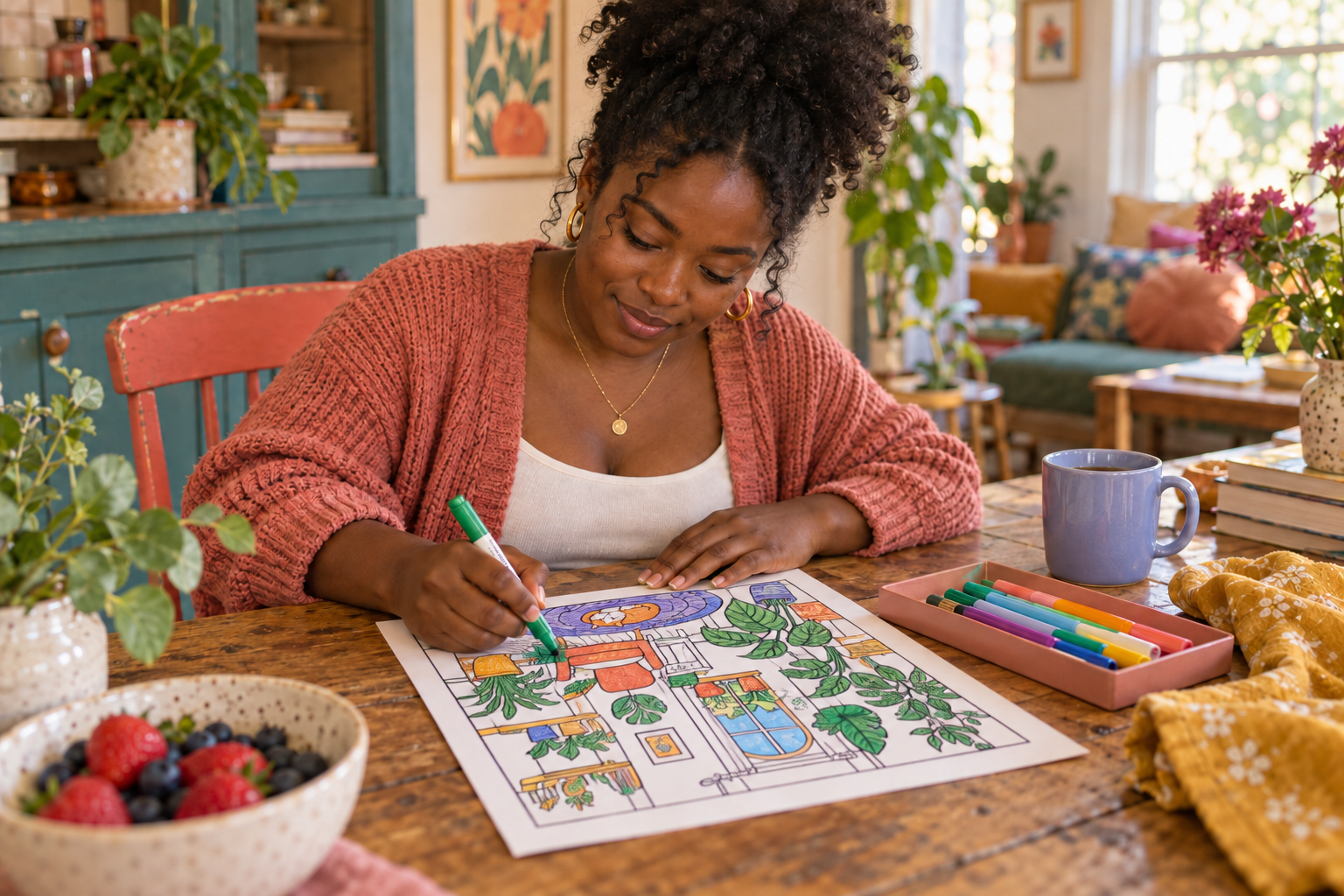
If your feed is suddenly full of tiny cafés, mushroom cottages and chunky flowers being filled with buttery marker strokes, you are seeing the cozy coloring comeback. The newer “bold-and-easy” style uses thick outlines and roomy shapes instead of hundreds of tiny details.
It is friendly to beginners because the page gives you somewhere obvious to start. You do not need to draw, understand advanced color theory or finish the whole picture in one sitting.
Why cozy coloring is everywhere right now
This is more than a pretty-feed illusion. In the Sunday Times coloring-book chart covering late December 2025 through April 25, 2026, five cozy titles by Coco Wyo led the category; the top title sold 92,890 copies in that period. The Bookseller also reported that the creator’s independently published UK sales rose from £221,841 to £1.3 million in 2025.
The coloring boom also sits inside a wider return to tactile hobbies. Michaels’ 2026 creativity report found searches for analog hobbies up 136%, while “craft night” searches rose 103%. The useful part of the trend is not owning the exact viral markers. It is having a low-entry activity your hands can do while the phone stays somewhere else.
What you actually need to start
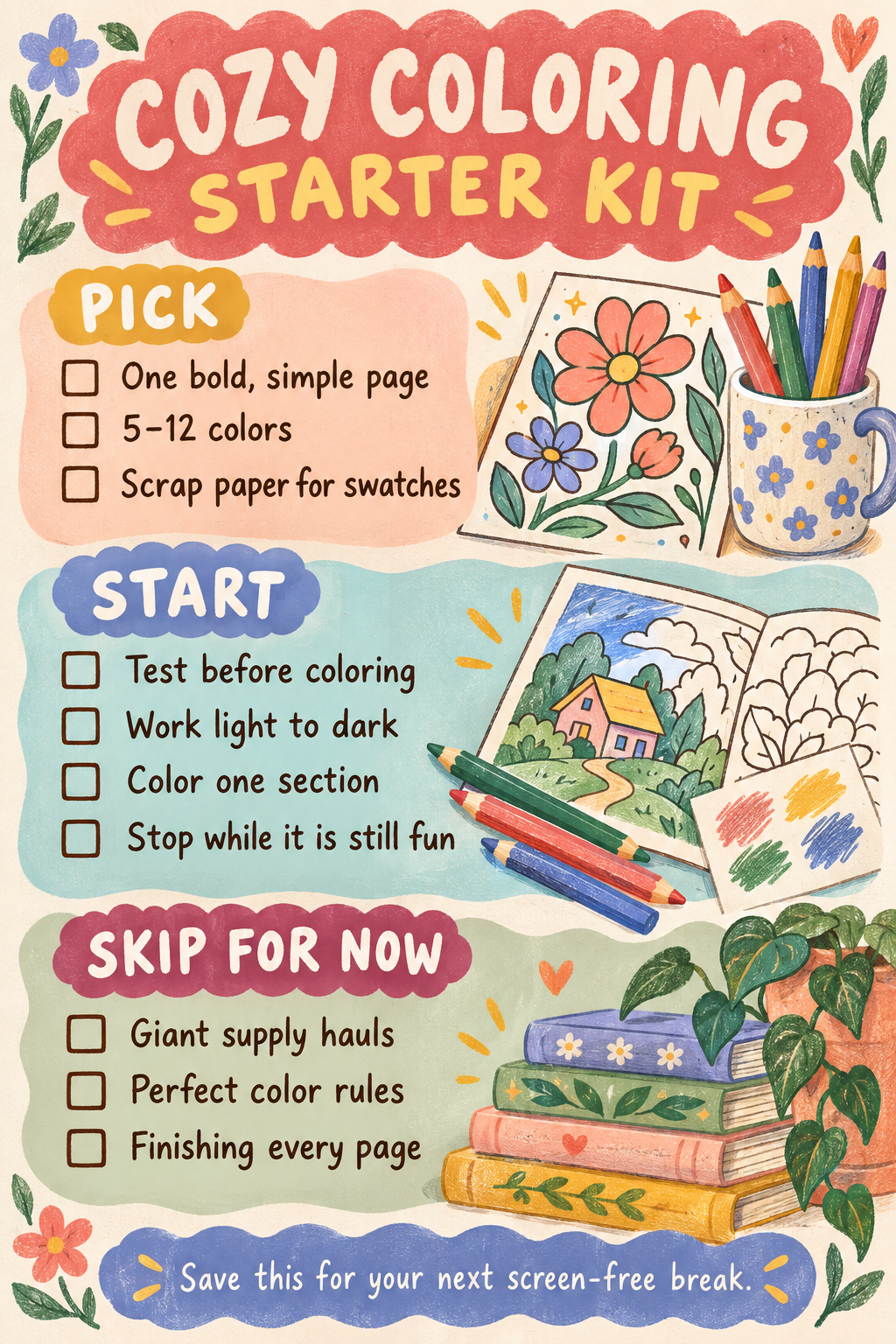
Start with what is already in a drawer. If nothing is there, buy the smallest set that feels pleasant to use. A beginner kit can be this short:
- One page with large shapes. Use a coloring book, a legal printable from an artist or a library activity sheet.
- Five to twelve colors. A tight palette is easier to choose from and helps the page look connected.
- One scrap sheet. Swatch colors on it and slide it behind the page to catch marks or bleed-through.
- A pencil or fine liner you already own. Optional, for tiny details after the main coloring is done.
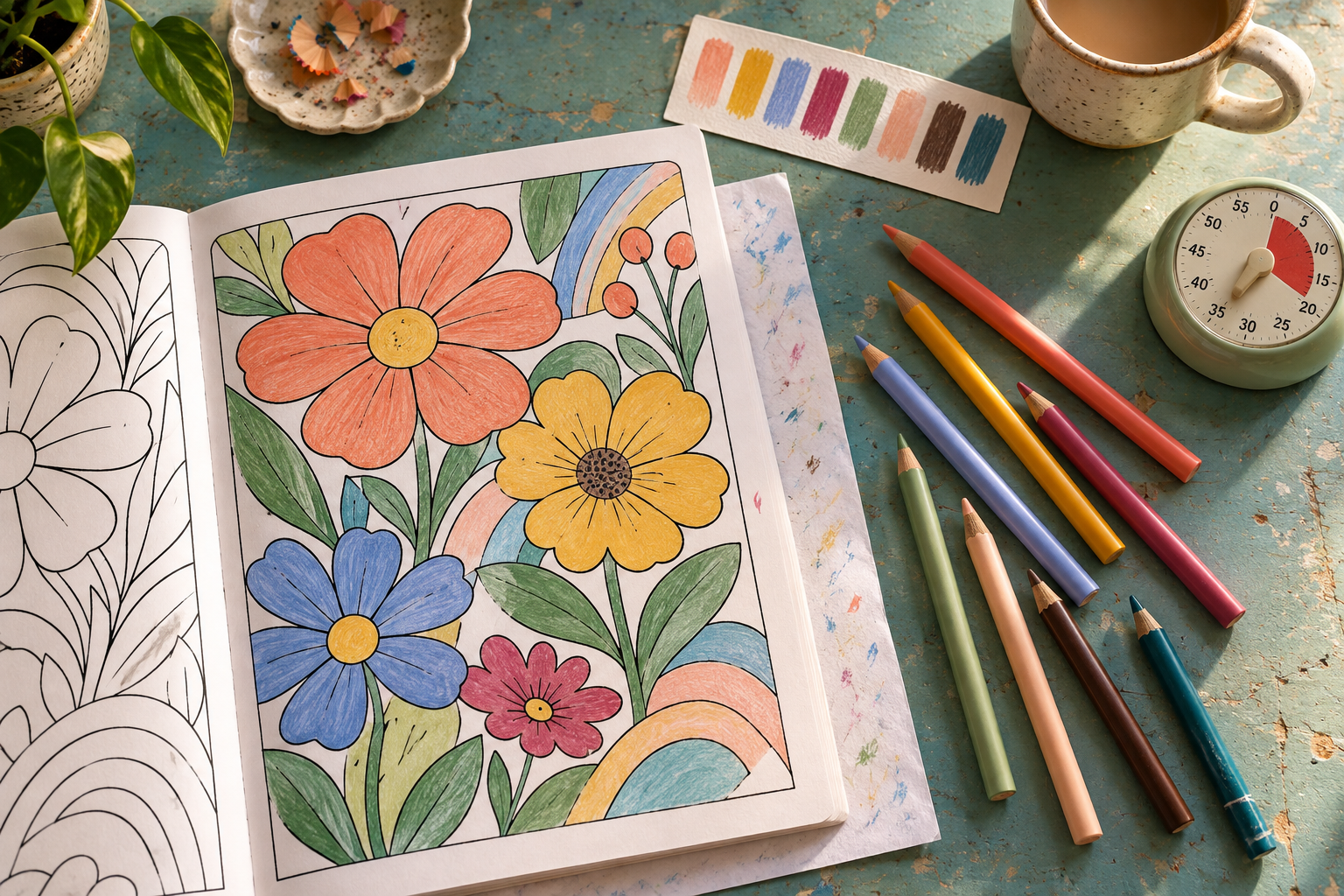
Colored pencils, water-based markers or alcohol markers?
Colored pencils
Best for: control, layers and almost no bleed-through.
Watch for: hand pressure. Build color lightly instead of pressing hard from the first stroke.
Water-based markers
Best for: accessible color with less bleed than many alcohol markers.
Watch for: going over one spot too many times, which can rough up thin paper.
Alcohol markers
Best for: smooth, saturated color and easy blends.
Watch for: bleed-through. Protect the next page and expect the back of the sheet to show color.
The five-color formula that removes the guessing
When every marker looks good, choosing can become the hardest part. Pick just five roles:
- One dark anchor: deep berry, brown, navy or forest green.
- One medium main color: coral, teal, blue or leaf green.
- One light version: peach, pale blue, butter yellow or mint.
- One playful accent: mustard, purple or bright pink.
- One quiet neutral: cream, tan, gray or soft brown.
Repeat each color in two or three places. That repetition makes a page feel intentional even if you picked the palette in thirty seconds.
A 20-minute coloring session for real life
- Choose one section, not one whole page. A window, plant cluster or character is plenty.
- Make five quick swatches. Place the colors beside one another before committing.
- Fill the largest shapes first. Use light pressure with pencils or one steady layer with markers.
- Add one small detail. Try a shadow, a pattern on a mug or a white highlight—only if it feels fun.
- Stop when the timer ends. Leave the book open if you want an easy invitation back tomorrow.
What if you “mess up” the page?
Most coloring mistakes are just design decisions that arrived early.
- Color outside the line? Thicken the outline around that shape or add a tiny border.
- Patchy marker? Let it dry before deciding. Add a simple dot, stripe or checker pattern instead of scrubbing the paper.
- Do not like the palette? Introduce one darker color in several places to connect everything.
- Page bled through? Keep the scrap sheet behind the next page. If the book is single-sided, the back was probably never the point.
- Truly hate it? Cut out the best little piece and use it in a journal, card or collage.
Make it social without turning it into an event
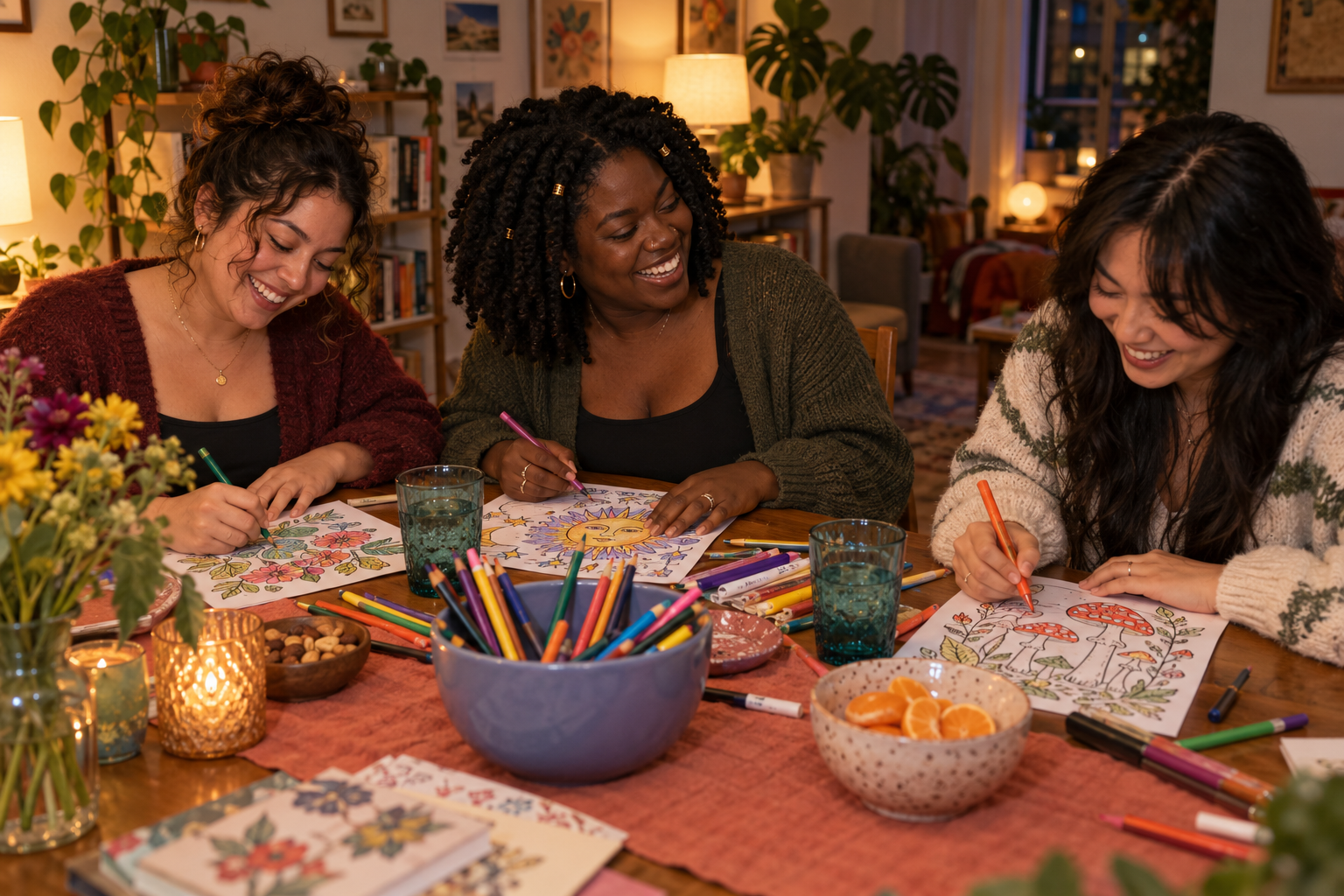
A coloring night does not need matching supplies or a perfect snack board. Ask each person to bring one page and whatever colors they already have. Put extras in the middle, make tea or open a bag of popcorn, and let conversation come and go.
For a family version, print the same large-shape page at different sizes or let everyone choose a different one. Adults can use their preferred supplies while children use age-appropriate, washable options. The goal is parallel play, not identical results.
What not to buy yet
- A giant marker set before you know whether you enjoy markers.
- Every book in the same viral series.
- Special blending tools before trying light pressure and layered color.
- A storage cart for a hobby that currently fits in one pouch.
- Anything that makes starting feel more complicated than coloring.
If you keep reaching for the hobby after a few weeks, then upgrade the thing that bothers you most: paper that bleeds, pencils that feel scratchy or a palette missing the colors you love. Let use—not the feed—build the collection.
Your smallest possible first step
Pick one bold page tonight. Choose five colors. Fill one shape before deciding whether you are “a coloring person.” That is enough information for day one.
If you like hobbies that travel, add a tiny coloring kit to your analog bag. If paper play is your thing, try junk journaling with what you already have. Prefer fabric and thread? Slow stitching gives the same permission for imperfect, unhurried making.
Trend notes & sources
- The Sunday Times: Bestsellers of 2026 so far — NielsenIQ BookScan figures through April 25, 2026.
- The Bookseller: Coco Wyo bucks the trend in handicrafts — published November 7, 2025.
- Better Homes & Gardens: Michaels’ 2026 crafting trends — analog-hobby and social-crafting search signals.
- Coco Wyo: What “bold and easy” coloring means — publisher description, updated April 13, 2026.
A gentle note: Coloring can be an enjoyable creative and screen-free activity, but it is not a substitute for medical or mental-health care. Choose materials appropriate to your age, space and ventilation needs, and follow the manufacturer’s safety directions.
The Sunday Soft Reset
A calmer start to your week.
Get Lifvyt’s weekly collection of gentle wellness reads, nervous-system resets and practical tools — plus the free 5-Minute Nervous System Reset Guide.
By signing up, you’ll receive the free guide and one gentle Lifvyt email each week. Unsubscribe anytime.