
OFFLINE HOBBIES · SOMETHING LOVELY TO RECEIVE
A real note. A tiny drawing. An envelope that is not trying to sell someone new gutters.
A snail mail hobby can begin with one person you like and a short letter about ordinary life. You do not need beautiful handwriting, an exciting announcement or a stationery collection with its own storage furniture.
This guide takes you from “I should send her something” to a finished note: what to write, three easy card designs, how to mail it and how to keep the whole thing enjoyable.
Why this old-fashioned hobby feels right again
Pinterest included “Pen Pals” in its 2026 trend forecast, published December 9, 2025, highlighting interest in letters, stationery and decorated envelopes among Gen Z and millennials. That gives this everyday craft a timely place in the return to hands-on hobbies.
The appealing part is easy to understand: you make something specific for someone, and they can keep it. A note about your ordinary Tuesday can become a lovely interruption to theirs.
Choose a person before choosing the paper
Start with someone you already know: the friend who moved, a cousin you mostly see in the group chat, your sister or a colleague who helped you through a busy week. Ask privately for their current mailing address. People move; an old holiday-card list is not a tracking device.
A simple message works: “I’m trying a little letter-writing hobby. Can I send you a note? No need to send anything back.” If you want an ongoing exchange, ask that separately rather than quietly enrolling someone in a monthly assignment.
Make a kit that fits in one envelope-sized pouch
- Paper: a notebook sheet, writing paper or a blank greeting card. Check that it fits the envelope before decorating.
- A pen you enjoy using: test it on a scrap first, especially on textured card.
- An envelope: a plain rectangular paper envelope is a straightforward starting point.
- One optional decoration: a colored pencil, a few flat stickers or paper scraps with a glue stick.
- Postage: choose it for the finished item and destination, not just the prettiest stamp.
Leave bulky embellishments for a later project. If handwriting is uncomfortable, type and print your note, use a larger pen grip if helpful, or write a shorter card. The personal part is what you say.
Write your first note in about 20 minutes
Spend the first few minutes choosing the person and one thing you want to tell them. Then use this loose sequence:
- Open with why they came to mind. “I passed the café where we used to meet.” Specific is warmer than impressive.
- Tell one little story. Describe a funny moment, something you made, a book you abandoned or a small thing you enjoyed.
- Add something meant for them. Mention a shared memory, a detail you appreciate or a recommendation that fits their taste.
- Ask one easy question. “What have you been making lately?” gives them a starting point if they want to reply.
- Close naturally. Use the sign-off you would actually say. Add the date if you want the note to be a small record of this moment.
A short letter you can adapt
Dear Maya,
I saw a blue bird on the fence this morning and thought of how you always notice things before I do. I tried your soup suggestion this week. It was excellent, and I only used every spoon in the kitchen once.
I still laugh about our rainy bookstore trip. Thank you for making even the slightly chaotic plans fun. What are you reading at the moment?
No rush to reply. I just wanted something nice to find its way to you.
Love,
Your friend
Use this as a starting shape, not a script you have to copy. An honest “I thought you would like this” can carry a whole card. Save the last few minutes for checking the address and getting the envelope ready.
Three easy ways to make the outside feel like you
These are greeting-card fronts that go inside an envelope, not examples of correctly addressed postal postcards. Pick one design and leave room for your message inside.
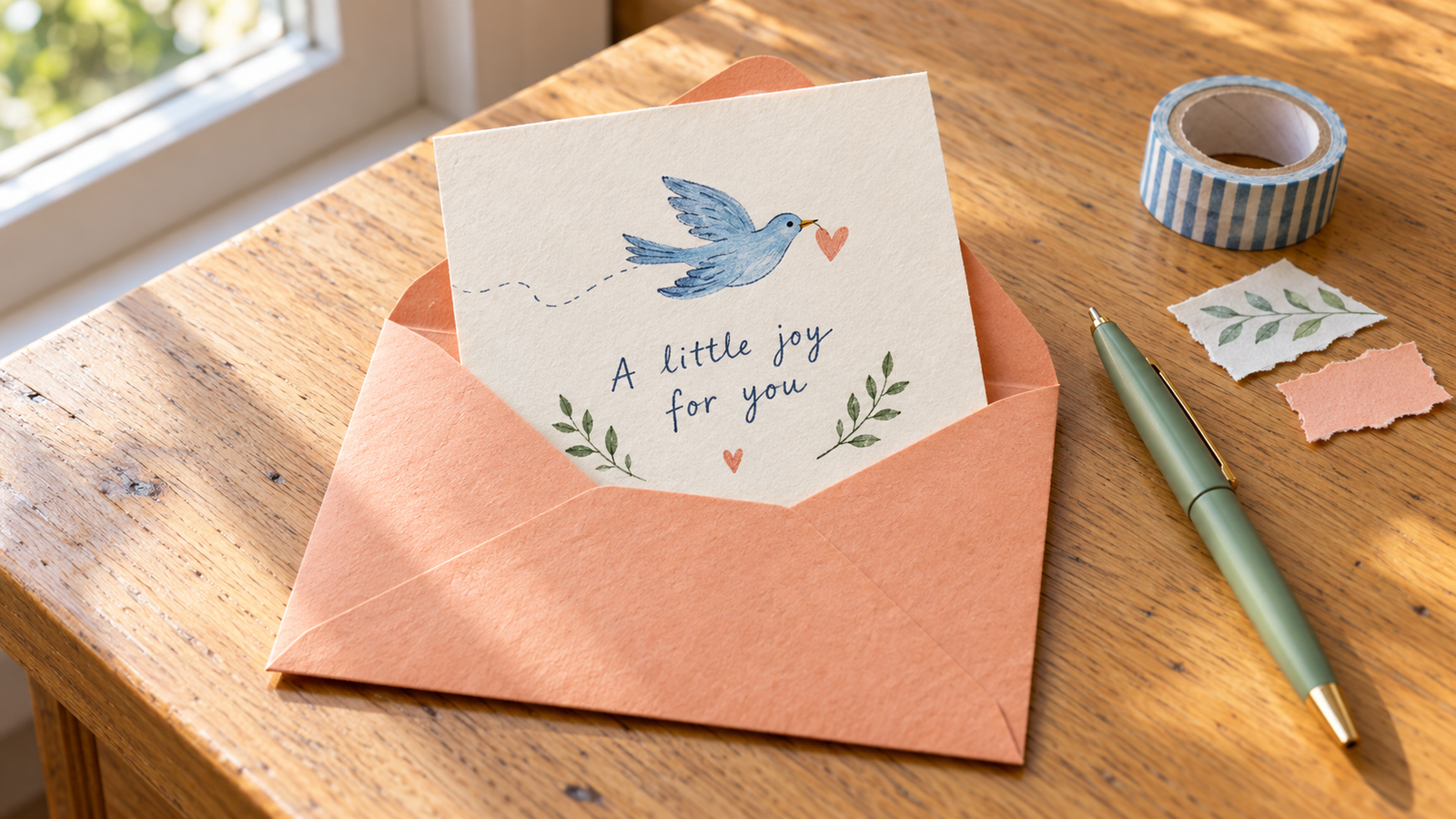
1. A border and one tiny heart
Draw a loose rectangle near the edge with a green pencil. Add a coral heart or two small leaves. Slightly wobbly lines make it look handmade because it is.
Try writing: “A little joy for you.”
2. A three-piece paper collage
Tear three small shapes from colored paper. Arrange them before gluing, then glue every edge flat. Let the glue dry fully before stacking or putting the card away.
Try writing inside: “Something bright for your week.”
3. A bird with a tiny opinion
Draw an oval body, a small head, a triangular beak and two stick legs. Add a wing and a few tail strokes. It can be charming without looking like a field-guide illustration.
Try writing: “Good mail. Zero meetings.”
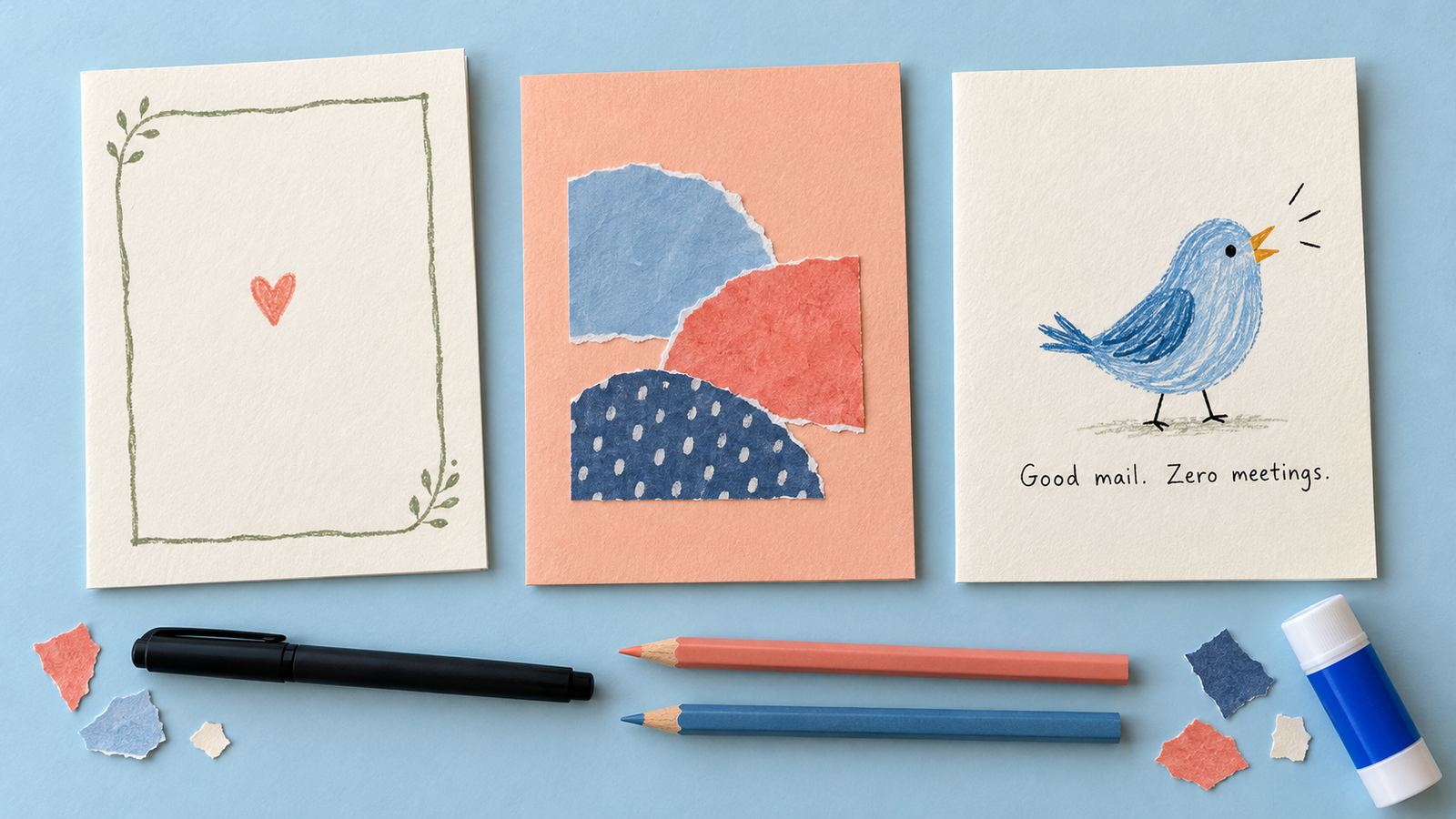
Start with dry pencils or markers if you want to finish in one sitting. For more ways to arrange scraps, our junk-journaling guide explores paper play. Here, the goal is one sendable piece rather than a whole decorated notebook.
Mail it without guessing
For U.S. domestic letters, USPS recommends flat, flexible contents. Put the return address at the upper left, the recipient’s address toward the lower center and postage at the upper right. Keep addresses clear and readable.
A domestic Forever stamp covers a qualifying one-ounce letter; extra weight or an unusual shape can require more postage. Square, rigid or lumpy envelopes can cost more. Check the finished piece against the USPS letter-and-postcard guide or bring it to the counter. International mail has separate requirements.
Keep wax seals, ribbon and other raised decoration protected inside an outer envelope rather than exposed. For your first project, a flat card is simpler. A homemade card is not automatically eligible for postcard pricing—size and thickness matter.
Check the address, seal the envelope and plan a real drop-off. The table beside your keys is not a postal service, despite its impressive collection of outgoing items.
Want people to write to? Choose your kind of connection
If finding a comfortable place to spend time is the first step, browse our guide to third places for adults. Keep other people’s addresses out of photos you post online.
Make it a little afternoon with a friend
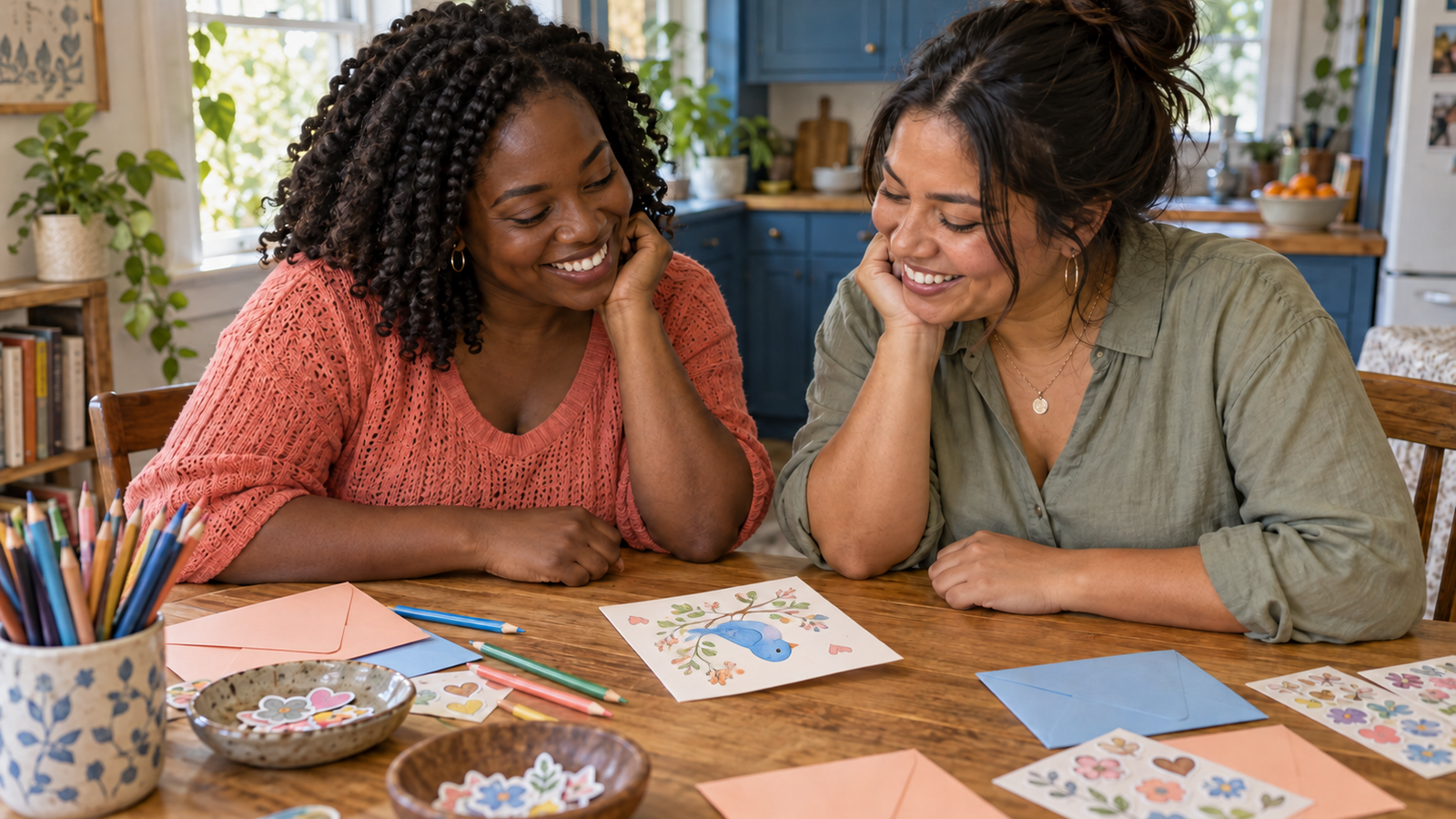
Ask a friend to bring the address of someone they would like to write to. Put a few blank cards, pens and paper scraps on the table. You can make different things side by side; nobody needs to lead a workshop.
Write privately for a little while, then decorate together. Share the drawings if you like and keep the letter contents private unless someone volunteers. Finish by checking what each envelope needs for postage. Having company should not turn anyone’s personal note into a group performance.
Keep it enjoyable after the first envelope
Start with one letter this month. Keep a small note of whom you wrote to and when, especially if you enjoy regular exchanges. Store supplies together so next time does not begin with a twenty-minute search for the pen.
If someone does not reply, let the note remain a gift. If you want to check that it arrived, one friendly message is enough. For an ongoing exchange, agree that busy weeks and short replies are normal.
You can also rotate the format: a postcard from an ordinary day out, a thank-you card with one specific memory, a short printed letter or a drawing with a few lines. If words keep getting stuck, our beginner journaling guide offers a private place to practice noticing everyday details before sharing them.
Your first little delivery of joy
Choose one person. Tell them one thing you noticed or appreciate. Add a small drawing if it sounds fun, check the mailing details and send it. The lovely part is that it came from you.
The Sunday Soft Reset
A calmer start to your week.
Get Lifvyt’s weekly collection of gentle wellness reads, nervous-system resets and practical tools — plus the free 5-Minute Nervous System Reset Guide.
By signing up, you’ll receive the free guide and one gentle Lifvyt email each week. Unsubscribe anytime.